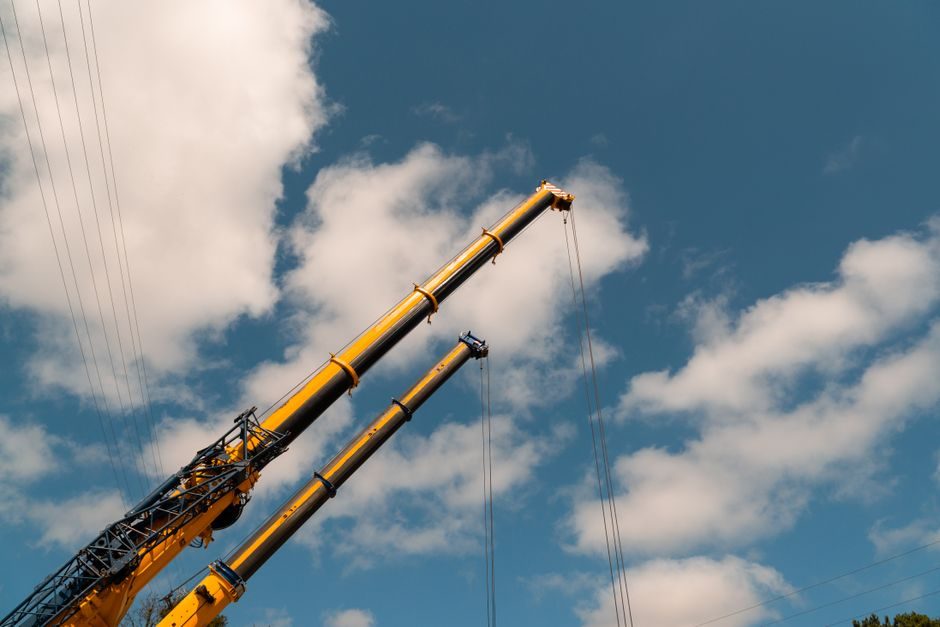
Global hydraulic cylinder market value is set to grow from $20.02 billion in 2025 to $21.11 billion in 2026, on track for $26.06 billion by 2030 at a 5.4% compound annual growth rate [S1]. Asia-Pacific is the largest and fastest-growing region, with China and India absorbing demand from Western OEMs that outsource [S1][S2].
The same market is also tracked at a 5.1% CAGR through 2030, reaching $19.50 billion under a narrower segmentation, illustrating how scope choice (mill-type vs. telescopic, mobile vs. industrial) swings the headline by more than $6 billion [S2]. For a working definition, a hydraulic cylinder is a fluid-powered linear actuator; it sits inside the broader hydraulic actuator category and is fed by a hydraulic pump through a hydraulic valve manifold.
Segment Sizing: Function, Specification, Bore
The market splits cleanly along three axes: function (single-acting vs. double-acting), specification (telescopic, tie-rod, mill-type, welded), and bore size (under 50 mm, 50–150 mm, over 150 mm) [S1]. Tie-rod cylinders are the fastest specification slice, forecast to grow above 6.2% by 2030 on agricultural and light-industrial demand [S2].
Mobile-equipment applications — excavators, loaders, telehandlers, agricultural tippers — are set to expand above 6.4% by 2030, ahead of stationary industrial equipment [S2]. This tracks with Chinese OEM catalogues that lead volume in telescopic single-acting dump-truck cylinders at FOB unit prices as low as US $30–1,000 per piece, MOQ 1 [S3]. For context on how this stacks against other heavy-industry sourcing decisions, see the Die Casting Machine Selection for Hardware Manufacturing: 2026 Spec Map reference for adjacent spec-driven buying patterns.
Price Bands and Manufacturer Listings, August 2026
Live factory price ranges from Chinese suppliers on 2026-08 listings cluster as follows: customised double-acting reciprocating cylinders US $130–2,000/piece, MOQ 1; heavy-duty mining RAM cylinders (carbon steel, double-acting) US $260–1,500/piece, MOQ 1; single-acting multistage telescopic cylinders for tipper trucks US $30–1,000/piece, MOQ 1 [S3]. Welded-body custom rams from a Shandong supplier list at US $68/piece at MOQ 2, ISO 9001-certified, carbon-steel construction [S4].
A Guangdong-based OEM (Guangzhou Henghuan Machinery) offers 2026 hydraulic cylinder lines with FOB, EXW, CFR, CIF, DDP and DAP Incoterms, peak-season lead time of one month, off-season under 15 working days, and T/T / PayPal / Western Union settlement [S5]. Parallel product traffic on brake-master cylinders from Terbon Auto Parts lists US $16–20/box (MOQ 1 box) and Guangzhou Top Intelligent at US $15/piece (MOQ 100 pieces) for Hyundai/Kia OEM reference numbers [S6]. Where buyers are consolidating fluid-power skids, a hydraulic power unit build-out typically pairs these cylinders with a hydraulic motor for rotary loads.
Tariff Impact and Sourcing Realignment
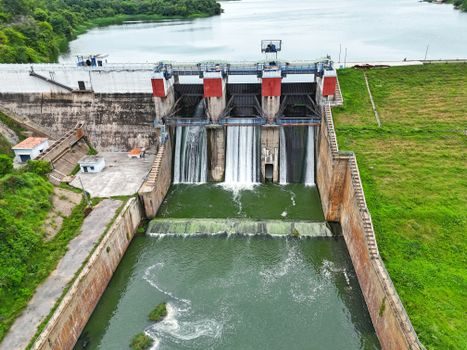
Tariffs on imported steel tubes, precision piston rods, seal kits and machined components are raising landed cost in North America and Europe, while reducing Asia-Pacific export competitiveness in the opposite direction [S1]. The net effect is localisation: Western OEMs are qualifying second-source suppliers in Mexico, Eastern Europe and India to shorten lead time and absorb duty exposure [S1].
Lead-time pressure is visible in factory disclosures: off-season build slots of under 15 working days are now marketed as a competitive lever, with peak-season at one month [S5]. For buyers mapping parallel risk in upstream raw materials, the Ferrosilicon 2026: Supply, Spec Bands, and Sourcing Map note tracks the alloy side of the same steel-cost story.
Product-Type Comparison on Decision Criteria
Selecting a cylinder type against four decision criteria — load class, stroke length, duty cycle, unit cost — gives a defensible shortlist. Telescopic single-acting units win on long stroke in compact retracted length (tipper trucks, dump trailers), with entry pricing near US $30/piece but limited to lower pressure classes [S3]. Tie-rod double-acting units dominate factory automation and agricultural implement lifts, balancing serviceability with mid-range pressure capability and the strongest 6.2%-plus forecast growth [S1][S2].
Mill-type welded cylinders carry the heaviest mining, offshore and press duties, with heavy-duty carbon-steel RAMs at US $260–1,500/piece and operating envelopes from −30 °C to 80 °C on standard builds; specialty high-temperature runs reach 300 °C [S3]. Welded custom rams at US $68/piece (MOQ 2) fit short-run, low-cost replacement work but sacrifice the serviceability of a tie-rod design [S4].
Standards, Sealing and Smart-Cylinder Adoption
ISO 9001 is the baseline certification carried by most export-ready Chinese suppliers in the 2026 catalogue pool, with CE, GS and RoHS appearing on European-bound lines [S3][S4]. Operating-temperature ratings on standard medium-pressure product runs are typically −30 °C to 80 °C, with extended-range seals pushing to 300 °C for metallurgical and steam-adjacent service [S3].
Position-sensor-instrumented cylinders are moving from optional to specified on heavy-industry, mobile-equipment and subsea builds, as OEMs look for closed-loop control and predictive maintenance hooks [S2]. Smart-sensor integration pairs naturally with the hydraulic valve electronics layer for CAN-bus or IO-Link feedback, and is the leading driver of the “advanced sealing technologies” line in the 5.4% CAGR forecast [S1][S2].
End-Use Demand Drivers Through 2030
Construction, material handling, agriculture, mining, oil and gas, and marine are the named end-user verticals pulling volume; the strongest 2024–2030 tailwinds cited are automation in heavy equipment, expansion of construction fleets, demand for energy-efficient hydraulics, and growth of electric and hybrid machinery [S1]. Agricultural mechanisation remains the structural backbone — hydraulic equipment has reduced farm-labour demand and pushed workers into other sectors, while sustaining unit demand for tractor-lift and implement cylinders [S2].
Custom-engineered, long-service-life cylinders are flagged as the dominant product trend, with renewable-energy installation equipment (blade-tilt actuators, pitch systems) cited as a fresh demand pool in the 2026 outlook [S1]. For buyers benchmarking adjacent factory-floor automation, the Roller Conveyor Spec Map for Food and Beverage Lines reference covers a comparable motion-control spec-buying pattern.
Limits, Failure Modes and Specification Pitfalls
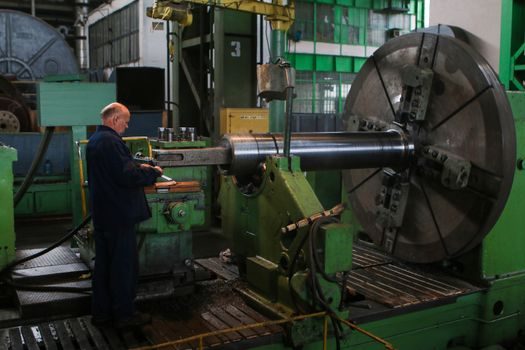
Three failure modes recur in field reports: seal extrusion at sustained pressures above the medium-pressure rating, rod scoring from side-load misalignment, and rod-galvanic pitting when chrome plating is specified below 25 µm — though coating thickness data must be requested per build, not inferred from catalogue photos [S3]. Buyers should treat working-temperature and pressure ratings as independent variables: a −30 °C to 80 °C-rated standard build is not interchangeable with the 300 °C-capable variant, even at identical bore and stroke [S3].
MOQ traps exist at both ends: ultra-low MOQ 1 listings at US $130–2,000/piece are sample/development pricing and rarely reflect 100-piece run rates, while MOQ 2 at US $68/piece carries a customisation premium that disappears on repeat runs [S3][S4]. Specifying telescopic stages (2-, 3-, 4-, 5-stage) without confirming retracted length versus installation envelope is the single most common returnable-defect cause in mobile tipper-truck builds [S3].
Trackable signals over the next two quarters: any second-half 2026 revision to the 5.4% CAGR baseline as Q3 OEM order books close, and any new BIS or CE-RED enforcement note on Chinese-exported fluid-power assemblies landing in EU ports [S1][S2].