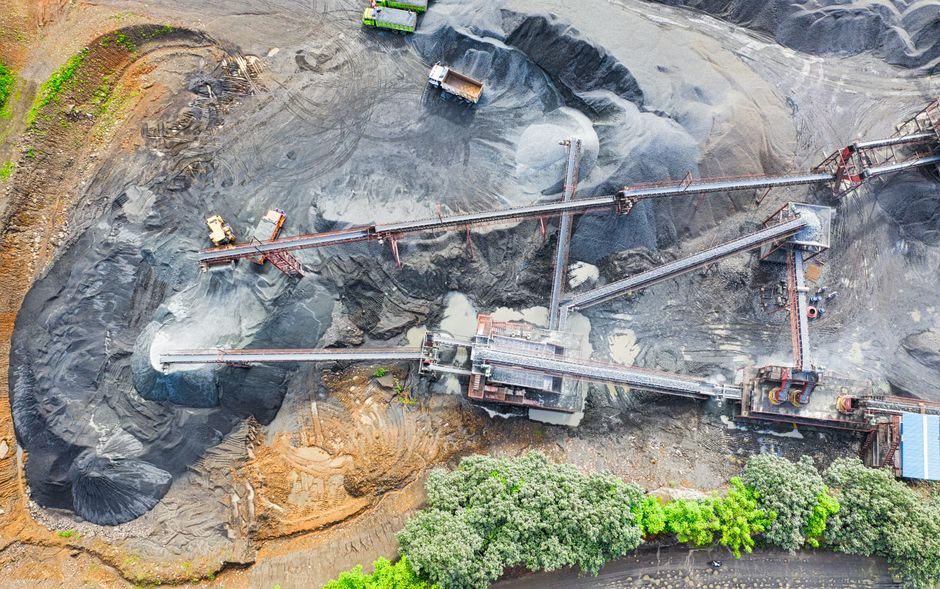
Ferrosilicon demand tracked a 3.4% CAGR from 2023 to a projected USD 12.9B by 2028, off a USD 10.9B 2023 base, with the 15-90% silicon-content grade range underpinning steel deoxidation and inoculant consumption [S1].
China remains the structural supply anchor: provincial capacity and output data published through mid-2026 and full-year 2025 export flows under HS 720221 (>55% Si) set the price and availability baseline for global buyers [S2][S4]. Buyers in 2026 are balancing three forces — tightening environmental compliance, the silicon-content/particle-form decision tree, and Asia-Pacific logistics risk — and this map lays out the decision framework behind each.
Silicon Content Bands and Form Factors
FeSi grades are defined by silicon weight-percent, with commercial products spanning roughly 15% to 90% Si [S1]; the material acts as a deoxidizer in steel manufacturing [S1] and is also used as an inoculant in cast iron [S6]. Atomized and milled particle forms are distinct purchase lines: atomized FeSi gives high bulk density and rapid dissolution for steel ladle additions, while milled FeSi — finer particle size distribution — is specified where inoculant surface area or magnesium-reaction kinetics matter [S1].
Selection rule: match the Si band to the metallurgical job first, then pick the form factor. A deoxidizer duty in a basic-oxygen or EAF steel shop almost always wants FeSi75 in lump or atomized form, while ductile-iron inoculant specifications typically call for milled 72-75% Si or specialized lower-Si grades with controlled Al, Ca, and trace-element ceilings. Pairing the wrong form with the duty is the single most common spec error on inbound purchase orders, and it surfaces as ladle-slag carryover or poor nodule count in ductile iron.
End-Use Demand Mix Driving 2026 Volumes
Carbon and other alloy steel, stainless steel, electric steel, and cast iron together account for the bulk of FeSi consumption, with stainless and carbon-steel deoxidation the largest single end-use segment and magnesium reduction (Pidgeon process) the second-tier volume pull [S1][S6]. The automotive, construction, and general manufacturing sectors sit upstream of the steel pull — when those three end-markets soften, FeSi tender volumes at the integrated mills soften within a single procurement cycle, typically 30-60 days [S1].
The 2026 setup is therefore a derivative trade: FeSi tonnage tracks crude-steel output, which tracks construction and auto demand, with magnesium-ingot economics adding a secondary swing factor on the supply side. For procurement teams, that means the right monitoring signal is monthly Chinese crude-steel output plus magnesium-ingot operating rates, not the FeSi spot price alone — see the China Magnesium Ingot Suppliers 2026 spec map for the magnesium-side spec bands that flow back into FeSi demand.
China Provincial Capacity: The Supply-Side Anchor
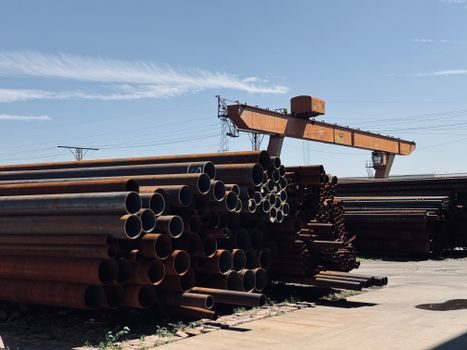
China's domestic FeSi capacity is concentrated in a handful of provinces, and the May 2026 provincial output dataset — published by CBCIE in mid-June 2026 — remains the cleanest near-real-time read on global supply availability [S2]. The four structural supply provinces are Inner Mongolia, Ningxia, Qinghai, and Shaanxi, with Inner Mongolia the largest single contributor thanks to low-cost hydroelectric and coal-based power; Sichuan, Guizhou, and Yunnan round out the secondary tier, often swing producers whose output responds first to power-rationing policy [S2].
What this means at the PO stage: when a Chinese provincial output number moves more than ~10% month-on-month, expect a corresponding 2-4 week lag before it shows up in the export tender book under HS 720221 [S2][S4]. That lag is the buyer's hedging window — the same window the 2025-2026 export dataset covers in the Ferrosilicon Market 2026 outlook.
Environmental Compliance and Plant Upgrades
Submerged-arc furnace (SAF) FeSi smelting is energy-intensive and emits CO, SO2, NOx, and particulate matter; EPA emissions standards in the United States and the equivalent rules under China's ultra-low-emission retrofit programme are forcing capacity rationalisation rather than expansion [S1]. Compliance is therefore a structural ceiling on new capacity additions, not a transient headwind — plants without baghouse, desulfurization, and waste-heat recovery are being shuttered or required to retrofit, which is why 2024-2026 industry commentary points to a flatter supply curve rather than a capacity surge [S1].
For buyers, the practical consequence is lead-time: compliant FeSi75 from certified producers now runs 4-8 weeks for spot orders and 10-14 weeks for contracted annual volumes, against a 2-4 week spot baseline that was common pre-2020. The supply-side discipline also explains why FeSi75 spot prices have held a relatively tight band despite volatile silica and coke inputs, and why tender bids have been compressing toward a smaller pool of audited producers [S1].
Selection Criteria: Comparing the Main FeSi Purchase Options
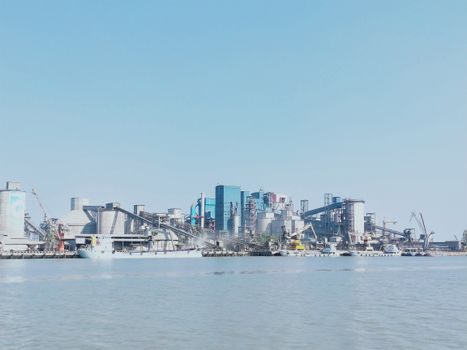
The decision tree for a 2026 FeSi purchase lines up cleanly across four criteria — silicon band, form factor, end-use fit, and lead time: [S1]
• Milled FeSi75 — the inoculant-grade line for ductile iron and magnesium ferrosilicon nodularizer production; narrower supplier pool, higher unit price, finer particle-size QC required.
• Atomized FeSi, fine mesh — for wire-injection and cored-wire applications; premium pricing, dedicated atomization lines, MOQ-driven economics.
Export Logistics and HS 720221 Documentation
Export documentation under HS 720221 (>55% Si by weight) governs the cross-border trade flow, with 2025 full-year export-by-country data providing the most recent baseline for shipping allocation, port-of-loading choices, and tariff exposure [S4]. The HS line is also where silicon-content disputes surface at customs — anything below 55% Si reclassifies to a different code with a different duty rate, so the mill test certificate (MTC) silicon figure must match the commercial invoice within the analyst tolerance of the importing customs authority [S4].
Practical 2026 sourcing pattern: most Asian and European buyers pull from Tianjin, Lianyungang, or Inner Mongolia rail-border crossings; US-bound tonnage increasingly routes via Vietnamese and Indonesian transshipment to manage anti-dumping exposure, with corresponding 7-14 day transit additions [S2][S4]. That routing shift is part of why the Ferrosilicon Market 2026 Asia-Pacific outlook is the more useful regional read for US and EU procurement teams than a global headline figure.
Trackable 2026 Indicators
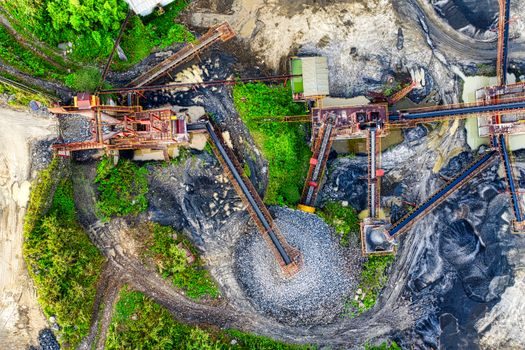
Two signals are worth monitoring month-on-month through the second half of 2026: the CBCIE provincial FeSi output series (May 2026 data published 2026-06-15 is the current node) [S2], and the HS 720221 export-by-country annual refresh published 2026-01-24 with the 2025 baseline [S4]. A second-node trigger is the FerroAlloyNet 2025 Silicon Manganese & Ferrosilicon Industry Development Forum programme (published 2026-06-15), which sets the price-discovery and tender calendar for the second-half contract cycle [S5]. For procurement teams, the next 60-day question is whether Inner Mongolian summer power availability holds — that single variable decides whether FeSi75 spot prices stay in the current compressed band or break higher in Q3 2026.
Spec-level background on the components involved: pressure transmitter, flow meter, and industrial valve.