Elkem ASA, Ferroglobe PLC, Eurasian Resources Group (ERG), China Minmetals Corporation, and OM Holdings Ltd. head the 2026 global ferrosilicon supplier roster across primary merchant FeSi output [S4]. IMARC Group's 2026 production-plant DPR lists Elkem, RFA International, DMS Powders, Ferroglobe, and Eurasian Resources Group as the benchmark plant economics references for new merchant capacity [S3].
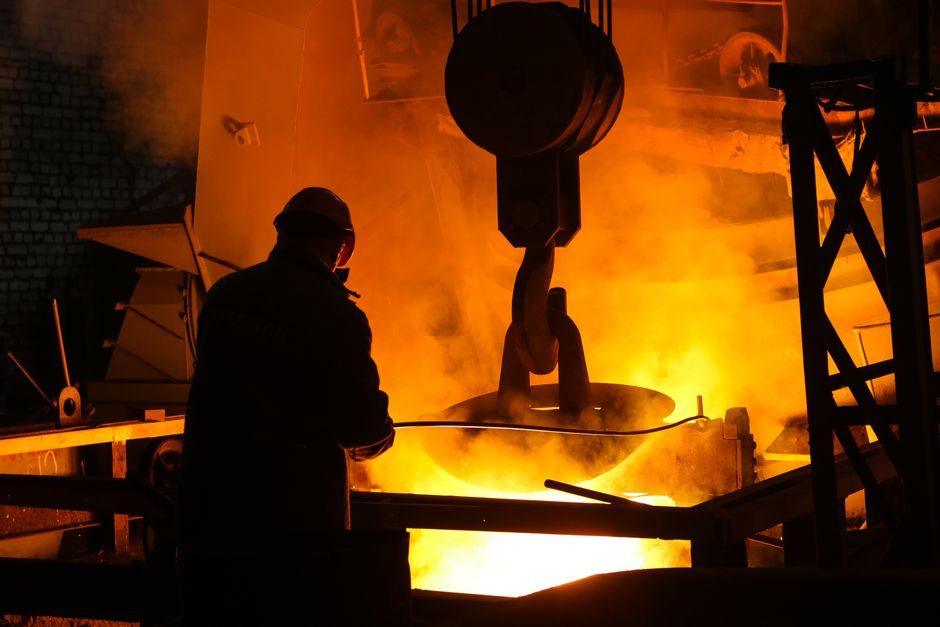
Commercial ferrosilicon is produced in submerged-arc furnaces operating above 2,000°C by carbothermic reduction of quartz with metallurgical coke, coal, or charcoal plus iron scrap, yielding standard grades FeSi 45%, 65%, 70%, and 75% silicon [S3]. The 75% grade dominates global steelmaking consumption, with FeSi 45% and 65% serving foundry inoculation and magnesium reduction duties respectively [S3].
Leading Suppliers and Capacity Footprint
The Persistence Market Research supplier panel for 2026 ranks China Minmetals Corporation, Elkem ASA, Ferroglobe, Eurasian Resources Group, OM Holdings Ltd., Finnfjord AS, DMS Powders, AMG CHROME, SAKURA FERROALLOYS, and Tata Steel among the leading merchant producers [S4]. PR Newswire's 2022 baseline release of 39 covered players (executive pool 1,197) listed Elkem, Ferroglobe, Rima Group, M&M Alloys, Imexsar, Sinoferro Dense Medium Powders, Anyang Xinchuang Metallurgy Material, DMS Powders, Westbrook Resources, Eurasian Resources Group, FACOR, Mechel, and Finnfjord as core merchant suppliers — a roster that still anchors 2026 industry coverage [S5].
Production economics references for 2026 capacity planning treat Elkem, RFA International, DMS Powders, Ferroglobe, and ERG as the standard plant DPR benchmarks, covering multi-sector demand in steel manufacturing, foundries, automotive, construction, electrical and electronics, and metallurgy [S3]. Detailed product, lead-time, and grade data for these suppliers is broken out in the Ferrosilicon 2026 Supply, Spec Bands, and Sourcing Map.
Market Size, End-Use, and Growth Signals
Global ferrosilicon demand is projected at USD 15.7 billion in 2026 [S4]. IMARC's separate estimate places the 2025 market at USD 12.8 billion with a USD 15.4 billion 2034 outlook and a 2.0% CAGR over 2026–2034, while Precedence Research sizes the same market at USD 15.65 billion by 2035 with a 2026 base year [S3][S6]. Application segmentation in the Precedence model splits the volume into deoxidizer, inoculants, and other uses across carbon and alloy steel, stainless steel, electric steel, cast iron, and miscellaneous end-uses [S6].
End-use pull is concentrated in construction, automotive, infrastructure, renewable energy, electrical steel for transformers and motors, and welding-electrode manufacture [S3][S4]. A purchasing engineer weighing casting quality versus deoxidation cost will find a direct grade-versus-function match: FeSi 75% for steel deoxidation and silicon alloying of stainless and electrical grades, FeSi 65–70% for ductile-iron inoculation, and FeSi 45% for dense-medium separation and magnesium reduction [S3].
Production Process and Grade Specification Bands
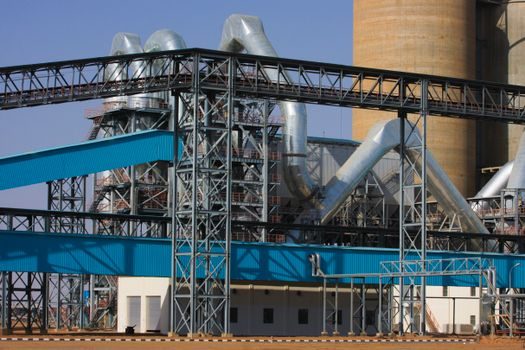
Standard merchant FeSi chemistry spans 15% to 90% silicon depending on end-use requirement, with FeSi 45%, 65%, 70%, and 75% as the four commercial reference grades [S3]. Furnace feed is quartz or quartzite plus carbon reductant (metallurgical coke, coal, or charcoal) plus iron scrap or mill scale, and tapping temperatures exceed 2,000°C in high-power submerged-arc units [S3]. DMS Powders and Sinoferro Dense Medium Powders are the dominant atomized FeSi suppliers for the coal-preparation dense-medium cycloning market, with powder grades typically cut from FeSi 15% atomized stock [S3][S5].
For metallurgical selection, the most cited criteria are silicon content (±1% tolerance is the typical mill standard), aluminium and carbon tramp limits, phosphorus ceiling, and sizing (10–50 mm for steelmaking lump, 0–3 mm for powder applications) [S3]. Buyers comparing two FeSi 75% offers from different suppliers should match on Al (≤1.5% for standard, ≤0.5% for electrical steel), C (≤0.1%), P (≤0.04%), and S, since these tramp controls govern inclusion behaviour in liquid steel and downstream mechanical properties.
Comparison of Major Supplier Profiles
Across the 2026 supplier panel, four decision criteria separate the merchant producers: regional concentration, vertical integration, end-use focus, and grade range [S3][S4][S5]. Eurasian Resources Group and China Minmetals are the integrated mining-to-FeSi players with captive quartz and iron-ore control, while Elkem, Ferroglobe, and Finnfjord concentrate on Scandinavian low-cost hydro-power smelting with broad FeSi 45–75% coverage [S3][S4]. DMS Powders, Sinoferro, and Westbrook Resources are atomized-powder specialists serving coal-preparation rather than bulk steel deoxidation, and AMG CHROME plus SAKURA FERROALLOYS focus on regional Asian merchant supply [S4][S5].
On a 2×4 decision matrix, integrated miners (ERG, China Minmetals) win on raw-material security, Scandinavian smelters (Elkem, Ferroglobe, Finnfjord) win on energy cost and low-carbon smelting claims, atomized specialists (DMS, Sinoferro) win on coal-preparation fit, and Asian regionals (SAKURA, AMG CHROME, Tata Steel) win on logistics to South and East Asian steel mills [S3][S4][S5]. This split is consistent with the Ferrosilicon 2026 supply and spec band map treatment of merchant-versus-integrated supply.
Sourcing Risks, Constraints, and Failure Modes
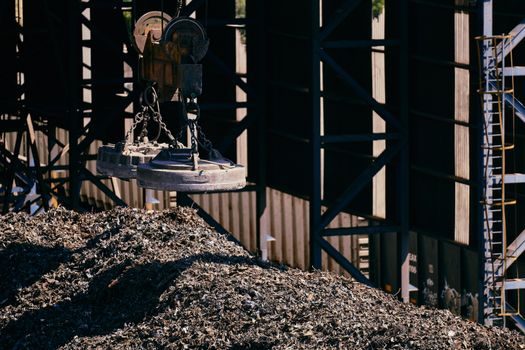
Three failure modes dominate 2026 ferrosilicon sourcing risk: power-price exposure, tramp-element drift, and logistics bottlenecks [S3][S4]. Submerged-arc furnace economics scale directly with electricity cost, so Scandinavian and Inner-Mongolian smelters see margin compression whenever grid tariffs spike, and Norwegian hydro and Chinese coal-fired power both face tightening carbon-cost overlays in 2026 reporting [S3]. Buyers should require a mill test certificate (MTC) reporting Al, C, P, S, and Si on every heat, plus a sizing distribution for lump orders.
A second constraint is silicon-content tolerance drift on FeSi 75% lots, which causes over-siliconization in electrical-steel melts when tramp Al climbs above 1.5%, increasing inclusion content and degrading transformer core loss [S3]. Third, dense-medium FeSi 15% atomized powder supply remains tight because DMS Powders, Sinoferro, and a small number of Chinese atomizers control the global cyclone-feed inventory, and coal-preparation plants cannot easily substitute [S3][S5].
Standards, Specifications, and Selection Anchors
Ferrosilicon grade and chemistry are typically specified against ISO 5445 for ferrosilicon nomenclature, with FeSi 75% and FeSi 65% as the most commonly referenced merchant designations in 2026 plant DPRs [S3]. Lump sizing for steelmaking generally follows 10–50 mm screen cuts, and powder grades for dense-medium separation are atomized to specified PSD bands below 0.5 mm [S3]. For a purchasing engineer drafting a 2026 RFQ, the minimum spec envelope is: Si grade (45/65/70/75%), Al max, C max, P max, S max, sizing distribution, and MTC per heat.
For applications outside bulk FeSi, the Aluminum Manufacturing Quality Standards: 2026 Spec Map covers the parallel alloy-tramp discipline that drives FeSi specification for Al-Si alloy lines. Foundry and casting buyers should also cross-reference the Ready-Mix Concrete Selection for Commercial Buildings: 2026 Spec Map when FeSi is used as an inoculant in ductile-iron pours for construction components.
Track the next two data points before locking 2027 supply: (1) Q3 2026 capacity-utilisation disclosures from Elkem and Ferroglobe quarterly reports, which will confirm whether Scandinavian smelting is running above 90% nameplate; (2) the next IMARC and Precedence Research update, which will reconcile the USD 12.8 billion (2025) and USD 15.65 billion (2035) trajectories [S3][S6].
Spec-level background on the components involved: pressure transmitter, flow meter, and industrial valve.