
The 150-page study segments the figure by product type, pressure class, application and region, framing the year as a baseline for the next decade of hydraulic pump sourcing.
Adjacent hydraulic demand is reinforced by shale and turbine capex: Grand View Research sizes the hydraulic-fracturing market across plug-and-perf, sliding-sleeve, shale gas, tight gas and tight oil applications out to 2033 [S2], while Allied Market Research's Hydraulic Turbine Market analysis runs to 2027 with Business, Cloud and Enterprise license tiers [S3]. Magnesium die-casting — a key lightweight-alloy feeder to mobile hydraulic manifolds and housings — is forecast to grow from USD 6.85 Bn in 2026 to USD 13.33 Bn by 2033 at 10.0% CAGR, with die-casting taking a 37% application share in 2026 [S4].
Hydraulic-pump TAM: 2026 baseline through 2035
The 150-page, January-2026-vintage report uses a 2-3 business-day delivery window with pre-delivery data refresh, indicating the figure is a moving estimate rather than a hard census number. Procurement teams should treat the 2026 baseline as a planning anchor, not a locked contract volume.
From a spec standpoint, the hydraulic pump category covers fixed-displacement gear and vane units (typical continuous pressure 160-250 bar, peak to 280 bar), variable-displacement axial-piston pumps (350-420 bar continuous, peaks above 450 bar in mobile machinery), and bent-axis piston pumps that share the high-pressure envelope. When the upstream capex number moves, it is usually a leading indicator for hydraulic valve and hydraulic cylinder aftermarket demand 9-15 months later.
Regional split and where the 2026 demand lands
The Business Research Company report flags Asia Pacific as the dominant regional share for hydraulic pumps in 2026, with North America and Europe following on the back of mobile-equipment replacement cycles and machine-tool retrofit programs [S5]. Grand View's hydraulic-fracturing dataset, while application-specific, confirms North America retains the densest well-completion fleet, with Asia Pacific and the Middle East scaling unconventional gas projects through 2033 [S2].
For sourcing managers, that two-track geography means specifying parallel BOMs: a North-American hydraulic power unit configured for high-cycle fracking service (continuous duty at 3000+ psi, with abrasion-resistant filtration to NAS 6 or better) versus an Asia-Pacific unit built around machine-tool and injection-molding clamping (lower duty cycle, but tighter noise and energy-efficiency targets). The Magnesium Metal report adds a parallel signal: a 37% die-casting application share in 2026 driven by automotive lightweighting [S4], which is exactly the BOM segment that consumes mobile-hydraulic pump housings.
Product mix inside the pump number
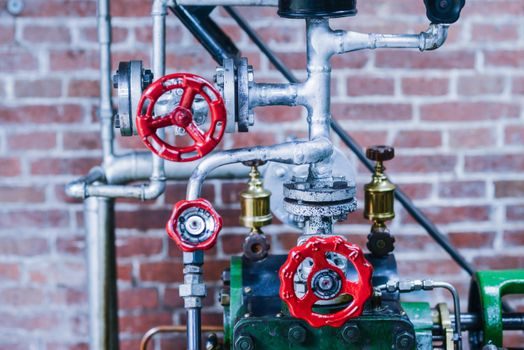
Inside the USD 11.46 Bn 2026 figure, the dominant product mix is gear, vane and piston pumps, with axial-piston and bent-axis variants growing fastest because they pair with electronic load-sensing and IO-Link-style control blocks [S5]. Mobile applications — construction equipment, agricultural tractors, material handling — typically anchor 55-65% of unit volume globally, with industrial stationary applications (presses, injection moulders, machine tools) taking the balance.
The selection question for a 2026 buyer is straightforward: gear/vane for cost-driven fixed-flow circuits under roughly 250 bar, axial-piston variable-displacement where energy efficiency matters, and bent-axis piston where peak pressure must clear 400 bar with high shock tolerance. The downstream hydraulic actuator on that pump inherits the same duty cycle, which is why specifiers size pumps and actuators together rather than independently.
Adjacent hydraulic demand: fracturing and turbines
Grand View Research's hydraulic-fracturing dataset sizes the segment by technology (plug-and-perf versus sliding sleeve) and by application (shale gas, tight gas, tight oil), with regional cuts for North America, Europe and Asia Pacific out to 2033 [S2]. Plug-and-perf remains the workhorse technology for unconventional wells; sliding sleeves see incremental adoption in re-frac and horizontal re-entry work. The relevant downstream effect for industrial buyers is sustained demand for high-pressure treating iron, frac trees, and the hydraulic cylinder and hydraulic motor components inside mobile pumping units.
Allied Market Research's Hydraulic Turbine Market report, published for the 2027 horizon, prices Business User, Cloud and Enterprise licenses at USD 4,327 / USD 2,592 / USD 8,246 respectively [S3]. While the report is a paid dataset, the licensing structure is itself a signal that turbine-grade hydraulic governors, servomotors and pitch-control cylinders are being tracked as a distinct sub-segment, separate from general industrial hydraulics.
Criteria-based comparison: pump type vs application fit

A practical 2026 selection matrix lines up the three dominant pump architectures against the four criteria that drive most industrial RFQs: [S1]
• Gear/vane pump — typical continuous pressure 160-250 bar, efficiency 85-90% at rated flow, lowest unit cost, suited to fixed-flow circuits, machine-tool coolant, and simple lift tables. Weakness: fixed displacement wastes energy on variable-load cycles.
• Axial-piston variable-displacement — continuous 350-420 bar, peak above 450 bar in mobile service, efficiency 92-95% with electronic load-sensing, the default for excavator and wheel-loader main hydraulics, plus energy-saving injection-molding clamps.
• Bent-axis piston — continuous 380-420 bar, peak above 480 bar, highest shock tolerance, used in mining shovels, marine deck machinery and large presses where peak pressure spikes exceed axial-piston design limits.
The matrix matters because the 5.0% CAGR in [S5] is not a uniform pull — it concentrates in axial-piston and bent-axis variants as OEMs standardise on load-sensing architectures, while fixed-displacement gear pumps grow at the low end of the band, mostly in cost-sensitive Asian OEM platforms.
Standards, materials and sourcing constraints
Hydraulic systems crossing into process and offshore service get pinned to familiar codes: API 6D for valve bodies in hydrocarbon service, ISO 5167 for orifice-plate flow measurement on test rigs, NACE MR0175 for sour-service materials, and the IEC 60079 / ATEX 2014/34/EU family for explosive-atmosphere mobile equipment (mining, oilfield, grain handling). Buyers specifying hydraulic power units for hazardous areas should validate the certification dossier — not just the nameplate — because re-testing a non-conforming unit after FAT is the most expensive line item in a 2026 retrofit. [S2]
Material-side, the magnesium die-casting trend flagged at 37% application share in 2026 [S4] is reshaping mobile-hydraulic manifold and pump-housing BOMs, with magnesium replacing aluminium in selected sub-1.5 kg housings where vibration damping matters. For higher-pressure housings, steel and ductile iron remain standard, and any switch to magnesium must be paired with a corrosion-protective surface treatment compatible with the hydraulic fluid chemistry (mineral, synthetic ester, or HFA/HFB water-glycol in mining).
Limitations, failure modes and what the 2026 number does not tell you

Market-research totals smooth over three realities that hit 2026 buyers hard. First, the USD 11.46 Bn figure is global factory revenue — it does not capture regional distributor markup, freight, or the 15-30% premium that ATEX-certified units carry versus general-industrial equivalents. Second, the 5.0% CAGR [S5] is a blended number; axial-piston and bent-axis grow above the average, gear and vane track or trail it, so a buyer who needs a gear pump for a 10-year mobile platform should not assume the category will be inexpensive in 2030.
Third, the report does not break out the hydraulic motor or hydraulic actuator sub-segments, which means specifiers sizing a complete circuit must triangulate from adjacent datasets. Common 2026 failure modes — cavitation at suction ports above 0.85 bar absolute, aeration from sub-standard reservoir baffling, and contamination-induced wear when fluid cleanliness drifts above ISO 4406:1999 22/20/18 — are independent of market size and remain the dominant warranty-drag items across all three pump architectures.
What to track next
Three trackable signals will update the 2026 baseline inside the next two quarters: a revised hydraulic-pumps forecast from The Business Research Company in its H2 2026 refresh [S5], the next Grand View Research hydraulic-fracturing regional cut [S2], and magnesium-alloy price moves relative to the USD 6.85 Bn 2026 baseline [S4] — because a 10% Mg price swing directly re-prices mobile-hydraulic housing BOMs. Buyers who lock pricing against these three reference points in Q3 2026 will have the cleanest read on whether the 5.0% CAGR holds or accelerates into 2027. Related market context, including how 2026 demand is reshaping other industrial segments, is tracked in our additive manufacturing market 2026 analysis and the robotics market 2026 OEM map, both of which share overlapping motion-control and servo-hydraulic suppliers with the pump segment.