
Allied Market Research sizes the global industrial robotics market at USD 38 billion in 2020 and projects USD 163 billion by 2032, a 12.6% CAGR over 2023-2032, anchored by reprogrammable multi-axis arms used across discrete and process production lines [S3].
Adjacent automation segments are tracking in the same direction. Warehouse robotics, laser processing, vision-guided robotics, electric linear cylinders and harmonic drives are all forecast with positive CAGRs through 2026-2033, signalling that the robotics build-out is pulling upstream components and downstream cells with it [S1][S6][S7][S8][S10].
Industrial robotics baseline: USD 38B (2020) to USD 163B (2032) at 12.6% CAGR
Allied's industrial robotics study segments demand around reprogrammable, multi-axis manipulators that handle welding, material handling, painting, assembly and pick-and-place duties in production environments [S3]. The 12.6% CAGR through 2032 is one of the highest growth rates in the discrete-automation complex, and it sits well above the 9.6% CAGR Allied reports for the broader retail automation market (USD 11.24B in 2018 to USD 23.58B by 2026) [S2][S3].
For a process engineer reading the macro number, the more useful question is what is being pulled into the build. The same 2026 vintage of research points to a stacked bill of motion-control hardware: harmonic drives for high-ratio gear reduction in robot joints [S8], electric linear cylinders for linear speed bands below 0.1 m/s, 0.1-0.5 m/s and above 0.5 m/s [S1], and vision-guided robotics cells that bolted cameras onto robots and grew from USD 3,834 million (2015) to a projected USD 7,718 million by 2022 at a 10.7% CAGR [S10]. A spec-driven buying flow for the linear side is covered in the linear module 2026 buying guide.
Warehouse robotics: pick-and-place, transport and packaging cells
The Business Research Company's 2026 warehouse robotics report organises the segment by type (parallel robots, mobile robots, gantry robots) and by function (pick-and-place, transportation, packaging), with end-users spanning e-commerce, automotive, food and beverage, electronics, and metals/machinery [S6]. The report is priced at USD 4,490 for a single-user PDF and runs 150 pages, with publication dated January 2026 and a stated 2-3 business-day delivery window before the data is refreshed [S6].
The practical point for integrators is that warehouse robotics overlaps heavily with industrial robotics on the arm side, but mobile and gantry categories introduce AGV/AMR navigation, fleet management and conveyor hand-off constraints that traditional six-axis cells do not. A spec-driven buying flow for the conveyor side, where warehouse cells hand off to packaging lines, is broken out in the conveyor chain 2026 buying guide.
Harmonic drives: USD 2.8B (2020) base, gearing the robot joint

IndustryARC values the harmonic drives in robotics market at USD 2.8 billion in 2020, with a 2021-2026 forecast window that tracks gear-reduction components used in robot joint modules [S8]. Harmonic drive units combine a wave generator, flexspline and circular spline to deliver high reduction ratios in a compact, zero-backlash form factor, which is the property that makes them a default for collaborative and surgical robot joints as well as higher-payload arms.
The pricing benchmark for the report is USD 4,250 for a single-user licence [S8]. For buyers, the meaningful comparison is not harmonic drives versus planetary reducers on cost alone, it is zero-backlash behaviour, torque density per kilogram, and input-speed ceiling. Where the joint architecture requires a stiff, low-backlash output, harmonic drives remain the default despite a unit-cost premium; the report's 2021-2026 horizon should be read as the period in which that architectural default is being locked into a wider class of mid-payload arms [S8].
Vision-guided robotics: cameras bolted on, 10.7% CAGR to 2022
Allied's vision-guided robotics study counts robots with built-in cameras used for object recognition, inspection, guidance and quality control; the segment grew from USD 3,834 million (2015) to a projected USD 7,718 million by 2022 at 10.7% CAGR [S10]. Vision guidance is one of the few retrofittable upgrades in an industrial robot cell, because a 2D or 3D camera plus lighting and a vision controller can be added to an existing arm without changing the mechanical axis stack.
For a process engineer specifying a 2026 cell, the meaningful comparison is between pure-mechanical fixturing, 2D vision guidance, and 3D vision guidance, weighed against three criteria: part-mix variability, changeover time, and per-part inspection rejection rate. As the parts mix gets less deterministic and lot sizes shrink, 3D vision guidance typically wins on changeover time but loses on per-cell cost and integration hours [S10].
Electric linear cylinders: speed bands and vertical demand mix
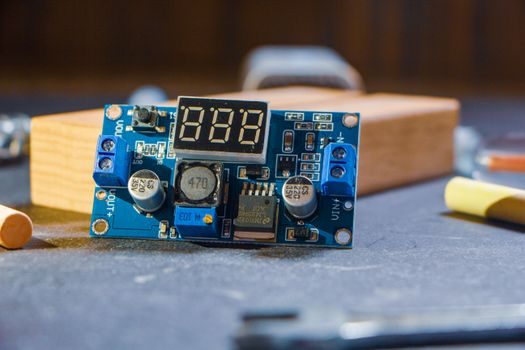
Coherent Market Insights segments the electric linear cylinders market by linear speed into three bands: less than 0.1 m/s, 0.1-0.5 m/s, and above 0.5 m/s, with verticals broken out as food and beverage, automotive, healthcare and pharmaceuticals, and others [S1]. The report is structured as a 2026-2033 forecast with historical data from 2020, sold in Excel and PDF at CMI3031 with a 250+ page count [S1].
The honest spec question for a buyer is what linear speed band actually maps to the application. Sub-0.1 m/s is the band for indexing, dosing and precision positioning, typically paired with a stepper or low-speed servo; 0.1-0.5 m/s is the workhorse band for general machine automation; above 0.5 m/s is where electric cylinders start competing with pneumatics on cycle time, and where servo servo motors and high-resolution encoders are non-negotiable. Selecting a cylinder from this stack without first pinning the speed band is the most common sourcing mistake in this category [S1].
Adjacent automation pull: laser processing, retail automation, interactive displays
The same 2026 vintage of research frames the broader automation pull. Coherent sizes the laser processing market at USD 30,862.1 million in 2026, reaching USD 62,075.1 million in 2033 at a 10% CAGR, driven by precision manufacturing, cutting and welding operations, and growth in automotive, electronics, aerospace and medical applications [S7]. Allied sizes retail automation at USD 11.24 billion (2018) to USD 23.58 billion (2026) at 9.6% CAGR, and the interactive display market at USD 14.63 billion (2018) to USD 29.19 billion (2026) at 8.80% CAGR [S2][S9].
For robotics sizing, these adjacent numbers matter because they are the downstream demand sinks. Laser processing cells are typically paired with six-axis arms for cutting and welding, retail automation pulls mobile robots and AGVs into fulfilment centres, and interactive displays feed the HMI and vision-guidance side of the same robot cells. When the adjacent segments are growing at 8-10% CAGR, the 12.6% CAGR for industrial robotics starts to look like a consensus rather than a stretch number [S2][S3][S7][S9].
Sourcing gates and what to track next

The verifiable next node is the Q3 2026 refresh of the warehouse robotics report by TBRC, which is described as a January 2026 publication that gets updated with the latest data and news before delivery within a 2-3 business-day window [S6]. A second trackable signal is Coherent's CMI3031 electric linear cylinders forecast, structured as a 2026-2033 outlook with historical data from 2020, sold in Excel and PDF at 250+ pages [S1]. A third signal is IndustryARC's 2021-2026 harmonic drives in robotics report, anchored at the USD 2.8 billion 2020 base value [S8].
For the next planning cycle, the practical gate is to lock the joint architecture (harmonic versus planetary versus cycloidal), the linear speed band, and the vision-guidance tier before sizing the cell bill of materials. Once those three are pinned, the PLC choice, the servo motor selection, and the industrial valve count on the process side become deterministic line items rather than open-ended variables, and the 12.6% CAGR in the industrial robotics forecast becomes a usable input for capex modelling rather than a marketing headline [S3].