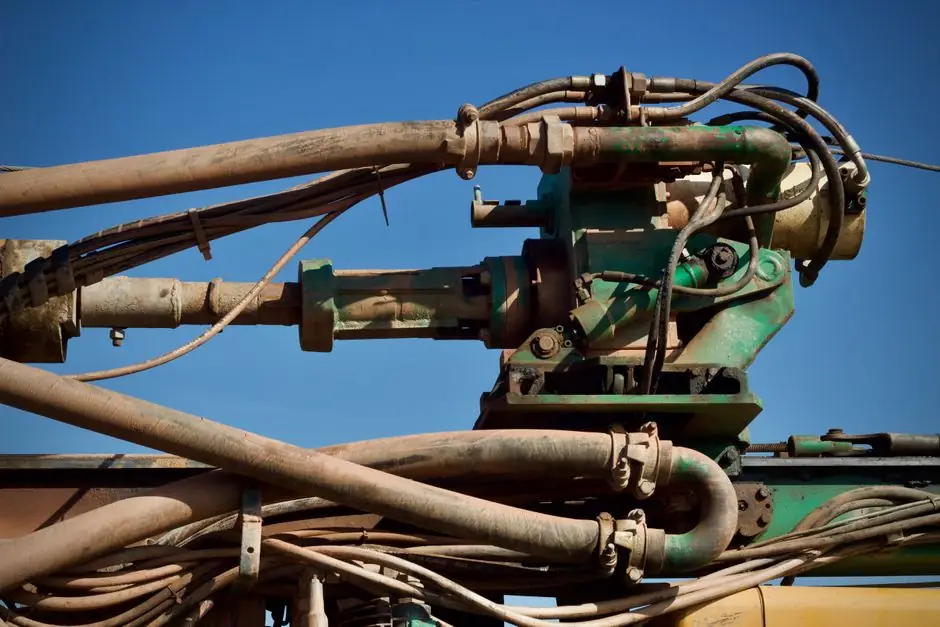
Hydraulic pumps split into two displacement classes that decide everything downstream: positive-displacement units (gear, vane, piston, screw, gerotor) deliver a near-constant volume per revolution, while non-positive centrifugal designs trade pressure for flow and cap out around 20 bar [S4].
Across the four families that dominate industrial and mobile hydraulics, operating pressure follows a clear ladder: external gear pumps at 160 to 200 bar, internal gear pumps at 200 to 250 bar, vane pumps at 150 to 175 bar, axial piston pumps at 350 to 500 bar, and radial piston pumps at 400 to 550 bar [S1][S4]. Displacement ranges, speed bands, and efficiency figures all scale with that pressure tier, which is why the type choice is the first spec gate in any hydraulic-pump selection.
Positive-Displacement Pump Family: Operating Envelope
External gear pumps carry fluid between meshing gear teeth, run fixed-displacement only, and hold a 160 to 200 bar ceiling with volumetric efficiency in the 80 to 90 percent band [S1][S4]. Internal gear pumps add a crescent-shaped partition that quiets the discharge and lifts the ceiling to 200 to 250 bar, while accepting higher-viscosity fluids than the external variant [S4]. Vane pumps use a slotted rotor running inside an eccentric cam ring, with sliding vanes forming chambers that expand and contract each revolution, hitting 150 to 175 bar and 85 to 95 percent volumetric efficiency [S1][S4].
Axial piston pumps sit at the top of the envelope: 5 to 500 cc/rev displacement, 1,000 to 4,000 rpm rated speed, 10 to 600 L/min flow, and maximum operating pressure up to 480 bar (7,000 psi) in both swashplate and bent-axis designs, with fixed, variable, pressure-compensated, and load-sensing control options [S8]. Radial piston pumps extend the ceiling further to 400 to 550 bar at the cost of a larger footprint and the highest unit price in the family [S4].
Non-Positive and Specialty Designs: Where They Fit
Centrifugal pumps are non-positive: an impeller imparts kinetic energy, flow drops sharply as pressure climbs, and the practical ceiling sits at ≤20 bar, which confines them to water supply, cooling circuits, and low-pressure fluid transfer [S4]. Diaphragm pumps use a mechanically or hydraulically driven flexible membrane, run fixed-displacement, and cap at ≤80 bar, with chemical resistance as the main reason to pick them over gear or vane units.
Screw pumps and gerotor (orbital) pumps round out the specialty set. Screw designs handle high-viscosity fluids with low pulsation, while gerotor units pair an inner rotor with an outer star for compact, quiet fixed-displacement delivery in lubrication and low-pressure circuits [S4][S5]. Peristaltic pumps appear in metering and abrasive-slurry service rather than general hydraulics, so they sit outside the four-family industrial selection matrix.
Criteria-Based Comparison: Gear vs Vane vs Piston
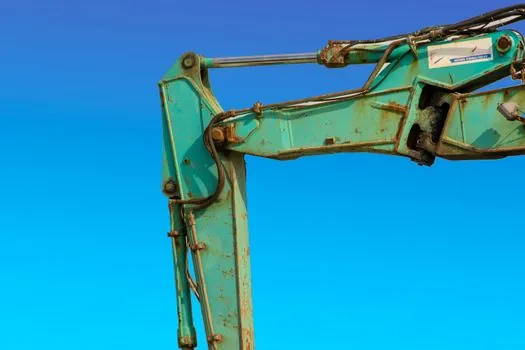
Three decision criteria separate the workhorse families for a B2B buyer: maximum continuous pressure, volumetric efficiency at rated speed, and contamination tolerance. External gear pumps win on cost and dirt tolerance but lose on noise and pressure ceiling; vane pumps trade higher contamination sensitivity for a quieter, near-pulsation-free flow; axial piston pumps take the efficiency crown at 95 percent or above but demand the cleanest fluid and the cleanest budget [S1][S2][S4].
A second cut adds footprint and control granularity. Gear units are the smallest per kW, vane units sit in the middle, and piston units dominate high-power-density mobile circuits because variable-displacement and load-sensing controls are standard [S1][S8]. For an excavator or injection-molding press, that control headroom is what unlocks energy recovery and reduced throttling loss, the two reasons axial piston pumps displaced gear pumps from premium mobile hydraulics over the last decade [S1][S7].
Selection Workflow: Matching Type to Duty Cycle
Selection starts with three numbers: required pressure in bar, peak flow in L/min, and duty cycle profile. Industrial lubrication, machine-tool coolant, and simple mobile circuits under 200 bar map to external or internal gear pumps [S1][S3][S4]. Machine tools, presses, and power-steering circuits at 150 to 175 bar map to vane pumps, where low noise and near-pulsation-free flow justify the contamination sensitivity [S1][S3].
Excavators, cranes, hydrostatic transmissions, and injection-molding machines at 350 bar and above map to axial piston pumps, with bent-axis units favored for high-speed service and swashplate units favored where variable-displacement control is required [S4][S8]. Radial piston pumps earn their slot in presses, mining hydraulics, and other very-high-pressure fixed installations where 400 to 550 bar and a multi-year service interval matter more than footprint [S4].
Materials, Standards, and Efficiency Bands

Standardized dimensions and test methods anchor cross-vendor comparison. ISO 3019 covers hydraulic-pump mounting flanges and shaft ends, and ISO 4391 defines hydraulic-pump performance test methods, the two reference documents most procurement teams cite when qualifying suppliers [S3]. Common materials include EN8 carbon steel for gears and shafts, A2-70 stainless steel for corrosion-resistant components, EN AW-6082-T6 aluminium for lightweight housings, and cast iron for the main body of industrial gear and vane units [S3].
Volumetric efficiency is the headline number on every OEM data sheet. External gear pumps land in the 80 to 90 percent band, vane pumps in the 85 to 95 percent band, and modern axial piston units at 95 percent or higher, with overall mechanical-hydraulic efficiency a few points lower once friction and case-drain losses are counted [S1][S2]. Operating temperature windows reflect those efficiency bands: gear units from -40 to +80 °C, vane units to +90 °C, and piston units to +120 °C in industrial trim, with aerospace-grade piston units rated from -60 to +125 °C [S3].
Industrial and Mobile Applications
Construction equipment splits the duty cleanly. Excavators and skid-steer loaders use variable-displacement axial piston pumps in closed-circuit hydrostatic loops, where the swashplate angle controls both direction and flow, and where load-sensing variants cut throttle loss during low-demand phases [S4][S7]. Smaller machines, agricultural tractors, and forklifts lean on gear pumps for steering and implement circuits, and on vane pumps where cab noise is a specification line item [S1][S3].
Manufacturing plants run injection-molding machines on high-pressure axial piston pumps at 350 to 500 bar, hydraulic presses on radial piston pumps at 400 to 550 bar, and machine tools on vane pumps for low-noise spindle and clamp circuits [S1][S4]. Aerospace hydraulic systems specify piston pumps rated for the full -60 to +125 °C window, while shipboard steering gear and deck machinery typically uses axial piston units in the 250 to 350 bar band [S3].
Limitations, Failure Modes, and Sourcing Watch-Points
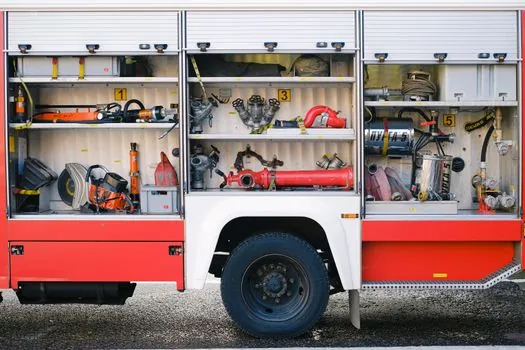
Each family has a documented weak point. External gear pumps pulse, lose volumetric efficiency above 200 bar, and tolerate contamination that would wreck a piston pump in a season [S1][S4]. Vane pumps are sensitive to abrasive particles and vane-tip wear above 175 bar, which is why filter beta ratios matter more for vane circuits than for gear circuits [S3].
Axial piston pumps demand the cleanest fluid (typically ISO 4406 18/16/13 or better), the highest procurement budget, and precision swashplate components whose replacement is a workshop job, not a field job [S1][S7]. Centrifugal and diaphragm units sidestep most of those issues but trade away pressure, so they belong only on low-pressure utility circuits and chemical-transfer service [S4]. For a wider view of how pump spec gates stack against other process equipment, the sewage-pump spec map for 2026 covers the wastewater side of the same selection workflow.
Brand-side sourcing concentrates around four names: Bosch Rexroth, Parker, Eaton, and Danfoss, with Chinese OEMs including Raydafon and Pinxin supplying gear, vane, and axial piston units in the same pressure tiers at lower price points [S2][S3][S7]. For buyers comparing construction-machinery pump packages, the motor grader versus skid-steer loader spec cut for 2026 shows how pump choice maps to machine class. The underlying hydraulic-pump encyclopedia entry and the broader hydraulic-system reference cover the system-level context for these component choices.
For component-level specifications, see construction machinery and equipment.