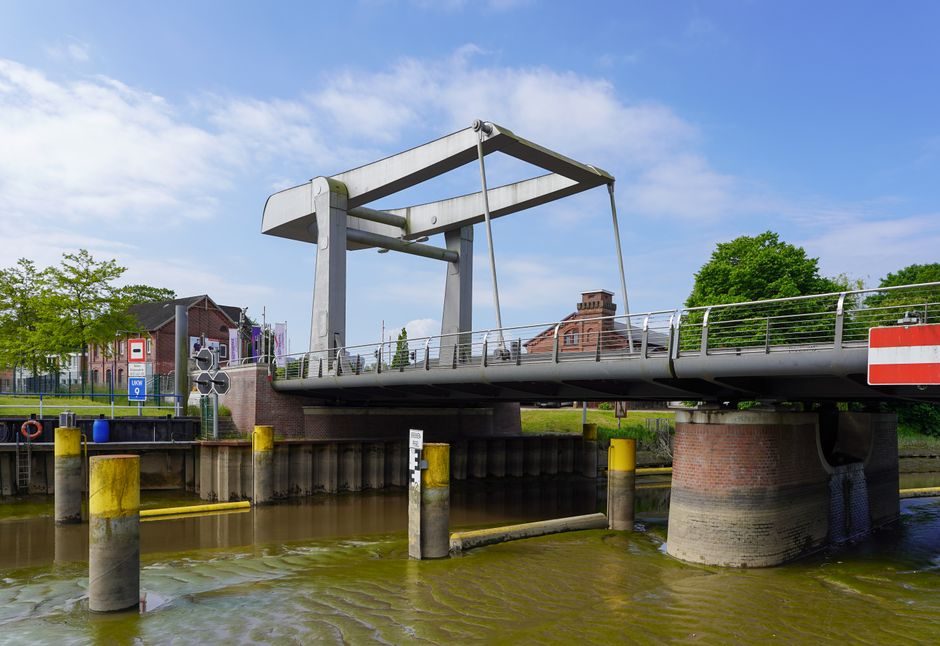
A hydrostatic level transmitter is a submersible pressure-based sensor that converts liquid head into a 4-20 mA or HART signal, with current production models spanning 0-300 m level ranges and process pressures from 0.01 bar to 40 bar [S1][S2][S3][S6]. A dock leveler is a mechanical or hydraulic platform that bridges a fixed warehouse floor to a variable truck-bed height; it shares no measurement principle, output signal, or installation environment with a level transmitter.
These two product categories only collide in MRO procurement when a buyer searches a generic "level" keyword or reuses an existing vendor blanket order — a level transmitter cannot raise or lower a forklift, and a dock leveler cannot output an analog signal to a PLC. The spec-first selection map below separates them by decision criteria so engineers can route each RFQ to the right vendor.
Definition and Operating Scope
Hydrostatic level transmitters use a submersible ceramic, stainless, or piezoresistive cell at the bottom of a tank or well; the liquid column above the diaphragm produces a pressure proportional to ρgh, and the cell electronics transmit 4-20 mA, HART, RS-485, or Modbus [S1][S2][S3][S4][S6]. The MJK EXPERT 3400, for example, exposes a ceramic capacitive measuring system with built-in air-pressure equalisation, ships in a PPS housing for aggressive liquids, and is approved for ATEX and UL hazardous areas up to 300 m level range and 40 bar process pressure [S1]. The Fuji Electric FKE FCX-AIV V6 series widens the operating window to -40 to +150 °C process temperature, 0.01 to 30 bar, and adds ATEX/IECEx dual approval with IP66/IP67 housing [S3].
A dock leveler is a structural steel or aluminium plate — typically 6-10 tonnes rated, 2.0-2.5 m long — that pivots or extends to span the gap between dock and truck bed. It has hydraulic or electro-mechanical actuators, mechanical safety legs, and a deck lip that drops onto the truck bed. There is no analog loop, no HART, no IP68 rating, and no level cell. The two devices overlap only in the English word "level."
Selection Criteria for Hydrostatic Level Transmitters
Five criteria drive the spec for a hydrostatic level transmitter: required level range, process temperature window, hazardous-area certification, output protocol, and mechanical ingress protection. The SGM LEKTRA KPL covers deep-well and wastewater use with a 1-200 m range, IP67/IP68 rating, 2-wire 4-20 mA output, and -40 to +80 °C process temperature [S6]. The Holykell HPT604-A adds 2-wire/3-wire flexibility, RS-485 and Modbus in parallel with 4-20 mA, and an IP68 stainless body for borehole and OEM applications [S4].
For aggressive chemicals, specify a corrosion-resistant wetted material; the FKE series uses stainless construction and a reinforced seal for extended immersion and corrosive media [S3]. For sewage plants with rags and grit, the MJK EXPERT 3400 PPS housing is built without sharp edges to prevent rag build-up, and its ceramic capacitive cell tolerates acid, bases, and iron chloride [S1]. The Celmi MPM4700 is a full-stainless, vented-cable, HART/RS-485 submersible with digital temperature compensation and RoHS compliance for water-industry retrofits [S2].
Selection Criteria for Dock Levelers
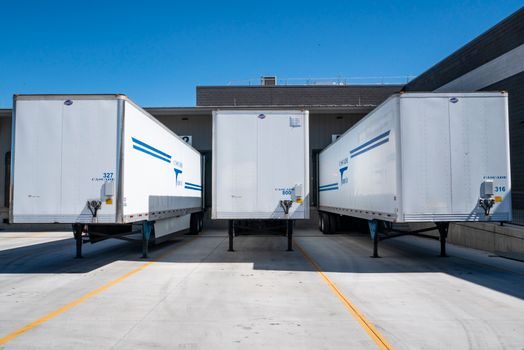
Dock leveler specifiers work from a separate dataset: rated capacity (6-12 tonnes typical), platform length and width, lift range (typically ±300 mm from the stored level), lip extension (typically 400-500 mm), power source (hydraulic, electro-hydraulic, mechanical/air-bag), duty cycle, and traffic direction (straight, edge-of-dock, vertical-storing). There is no analog signal and no IP68. The two equipment lines share only the words "level" and "industrial." [S1]
Procurement should treat them as separate commodity trees. A plant specifying a MJK EXPERT 3400 for a 40 m wet well at a wastewater pump station [S1] and a separate 10-tonne hydraulic dock leveler for the loading bay should issue two distinct RFQs, to two distinct vendor pools, with two distinct QA documentation packages (ATEX/IECEx vs CE Machinery Directive / EN 1398).
Who a Hydrostatic Level Transmitter Is For (and Is Not For)
A hydrostatic level transmitter is the right pick when the deliverable is a continuous analog or digital level reading in a tank, well, basin, or process vessel — typical users are water utilities, wastewater plants, chemical tank farms, and OEM skid builders [S1][S3][S4][S6]. It is the wrong pick when the deliverable is point-level switching (use a tuning-fork or RF admittance switch), volumetric flow measurement (use a magnetic flowmeter), or material level in bulk solids (use a guided-wave radar or capacitance probe). A 2-wire 4-20 mA hydrostatic transmitter also cannot drive a hydraulic cylinder, so it is the wrong tool for any "level" that requires mechanical motion.
Buyers who source a pressure transmitter family and want one platform for tank level plus pipeline pressure should confirm that the chosen hydrostatic model supports the same HART revision as the pressure transmitter on the same DCS/PLC — HART is FSK-modulated on a 4-20 mA analog loop and coexists with point-to-point 4-20 mA wiring, but it is not native to Foundation Fieldbus or PROFIBUS PA segments [S1][S3]. Specifiers should also check that the submersible cable is vented (a reference-tube design that compensates for atmospheric pressure changes) when the well is open to atmosphere; both the MJK EXPERT 3400 and the Celmi MPM4700 use this approach [S1][S2].
Decision Matrix: Hydrostatic Level Transmitter vs Dock Leveler
The comparison below is intentionally stark because the two devices share almost no decision criteria in common. A real specifier would discard this matrix after the first row — the products solve different problems. [S3]
Function: hydrostatic level transmitter outputs a continuous level signal in m or %; dock leveler provides a moving structural platform for forklift traffic [S1][S2][S3]. Output signal: 4-20 mA, HART, RS-485, or Modbus versus hydraulic cylinder force / mechanical deck motion. Hazardous-area approval: ATEX/IECEx intrinsically safe variants exist for transmitters [S1][S3]; dock levelers are governed by machinery safety standards, not ATEX. Power: 2-wire loop-powered, 24 VDC typical; or 3-wire 24 VDC [S1][S4][S6]; dock levelers use 3-phase 400 VAC hydraulics or 24 VDC electro-mechanical actuators. Installation: tank/well suspension on a cable versus pit-recessed steel frame bolted into a concrete dock. A reader who needs a level instrument should follow the capacitance level transmitter, magnetostrictive level transmitter, or differential pressure transmitter branches; none of them point to a dock leveler.
Limitations, Failure Modes, and Constraints
Hydrostatic level transmitters fail by membrane fouling, surge spikes, lightning-induced loop damage, and reference-tube moisture ingress — the MJK EXPERT 3400 mitigates the first two with a rugged PPS housing and ceramic capacitive cell, while the Celmi MPM4700 mitigates the third with a fully sealed stainless body and vented waterproof cable [S1][S2]. Process-pressure ceilings also cap the practical range: the MJK EXPERT 3400 spans 4-40 bar depending on variant, and the FKE FCX-AIV V6 caps at 30 bar; the DIVATEC DV401, with a 40 mm OD ceramic sensor in a polypropylene body, tops out at 10 bar and is therefore unsuitable for high-head clean-water risers [S5].
Dock levelers fail by hydraulic seal leaks, lip-cylinder fatigue, and structural overload from mis-driven forklifts — none of those failure modes is detectable by an analog 4-20 mA loop. A facility that tries to monitor dock-leveler safety-leg position with a hydrostatic level transmitter will get a signal proportional to the leg's hydraulic-fluid column, not the truck-bed gap; that is the wrong physics and the wrong loop. For deeper context on the GWR/non-contact alternative sometimes pitted against hydrostatic probes in level-only RFQs, see the guided-wave radar vs dock leveler selection map.
Sourcing, Standards, and Procurement Signals
Hydrostatic level transmitter sourcing runs through process-instrumentation distributors and OEM-direct channels; the DirectIndustry listings verified 2026-06-06 to 2026-06-17 include MJK (Denmark), Fuji Electric France, Holykell, DIVATEC, SGM LEKTRA, and Celmi as active suppliers with current datasheets [S1][S2][S3][S4][S5][S6]. Hazardous-area buyers should require ATEX 2014/34/EU and/or IECEx certificates traceable to the serial number, plus a Declaration of Conformity to any applicable EMC and RoHS directives; the Celmi MPM4700 lists RoHS certification explicitly, and the MJK EXPERT 3400 lists both ATEX and UL hazardous-area approvals [S1][S2].
Dock leveler sourcing, by contrast, runs through materials-handling integrators and is governed by EN 1398 (safety of mobile loading ramps) and the EU Machinery Directive, not the ATEX or IECEx schemes. Buyers building a single RFQ should split it into a "process instrumentation — level and pressure" package and a "loading equipment — dock leveler" package, and route each to the correct vendor pool. Two trackable signals to watch: an expansion of 2-wire HART 7 + WirelessHART variants in submersible level transmitters through 2026-Q4, and a wave of EN 1398 third-party-certified dock leveler SKUs tied to electric-truck fleet conversions through 2027.