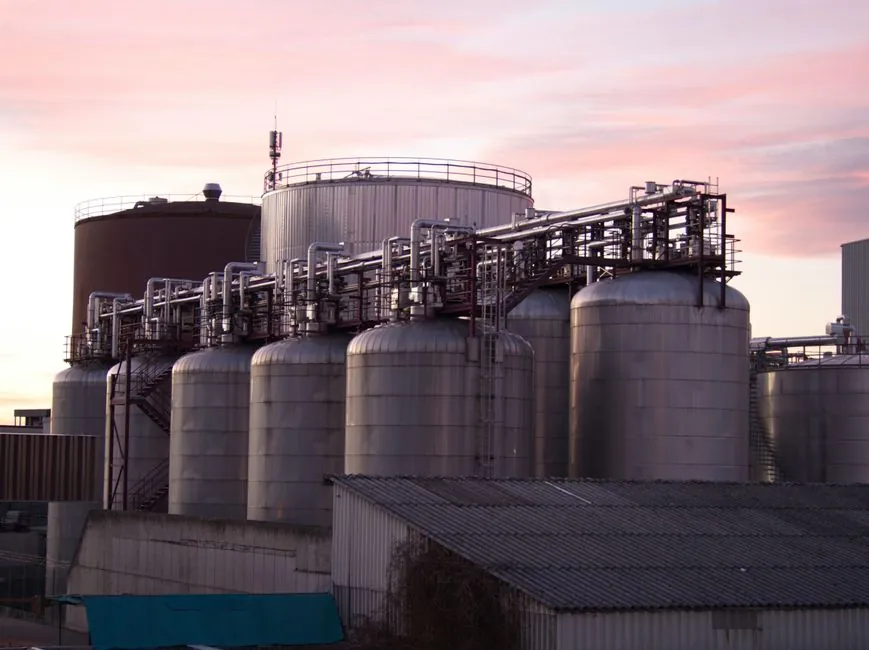
Electronics manufacturing uses IBCs primarily to feed bulk chemistries (process water, etchants, plating solutions, ultra-pure solvents) into a cleanroom envelope, and the spec conversation is dominated by electrostatic discharge (ESD) control, extractable leachables, and stainless interior finishes rather than the commodity chemical-compatibility checklist most selection guides start from [S1].
Standard commercial sizes of 275 and 330 gallons on a 45 in × 45 in footprint remain the working baseline, with HDPE bottles inside a galvanized cage dominating the fleet, and 304/316L stainless variants reserved for higher-purity or heated service [S3][S5]. Electronics fabs should treat those baseline units as a starting point, then constrain material, grounding, and finish on top.
Why an Electronics Fab Cannot Use a Generic IBC
Standard HDPE totes carry a surface resistivity in the static-dissipative-to-insulating range, which is the wrong answer for flammable solvents or any area where a charged liner can attract sub-micron particles onto wafer-handling components [S1]. Electronics-grade operations therefore add a conductive or static-dissipative additive package to the HDPE bottle, or specify a stainless 316L vessel with a verified ground path, so that charge bleeds off in under the typical <2 second target for zone-0 transfer [S1].
Interior finish is the second divergence. Commodity HDPE is rotationally molded and acceptable for general liquids, but semiconductor wet-etch and CMP slurry loops demand a smoother, lower-leachable surface; the practical move is a virgin-resin HDPE bottle (no recycled content) or a 316L stainless tank with an electropolished interior (commonly Ra ≤ 0.5 µm, project-dependent) [S3][S5]. A 275-gallon HDPE tote stacked four-high replaces twenty-four 55-gallon drums on the same two-pallet footprint, so the space savings carry directly into cleanroom mezzanines where floor tile pricing runs in the thousands per square meter [S3].
Spec Comparison: HDPE, Composite-Caged, and Stainless 316L
For an electronics-handling application, the three realistic options on a 45 in × 45 in footprint line up against ESD, cleanliness, chemistry range, and cost as follows. The numbers below are pulled from the cited spec references, not from a single vendor datasheet.
HDPE bottle in galvanized steel cage (275 or 330 gal): lightest of the three, lowest acquisition cost, and dominant in the fleet, but requires a conductive/dissipative additive package to control static and a virgin-resin bottle to keep extractables low [S1][S3]. Composite-caged (galvanized frame, HDPE inner): same chemistry range as all-poly but with added structural rigidity, useful when the tote will be moved by forklift over uneven cleanroom sub-fab floors; corrosion of the cage is the long-term failure mode, not the bottle [S3]. Stainless 304 or 316L (typically 304 for general, 316L for chloride-bearing chemistries): the only realistic answer where heated solvents above roughly 60 °C, repeated CIP/SIP, or ultra-low extractables are specified, with 316L preferred for HCl-bearing plating and stripping baths [S3][S4][S5].
For the chemistry itself, all-poly rigid IBCs remain the standard for hydrochloric acid storage in industrial settings, with NSF/ANSI 61 compliant units required for any potable-water crossover [S4]. Electronics fabs rarely fall under the NSF/ANSI 61 envelope directly, but the same all-poly logic applies to the bulk HCl commonly fed into wet benches, and a 316L upgrade is the usual call when temperature or trace-metal cleanliness is non-negotiable [S4].
Selection Criteria Specific to Electronics Lines
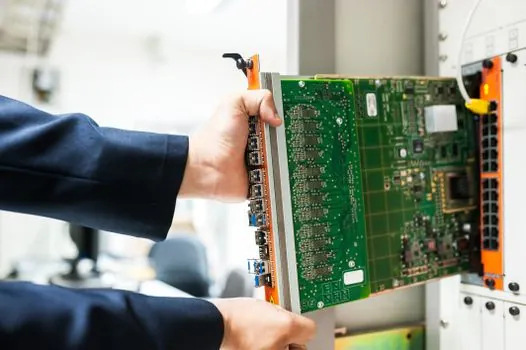
Five criteria should drive the purchase order. First, ESD performance: insist on a stated surface-resistivity band (conductive <10⁵ Ω/sq, or static-dissipative 10⁶-10⁹ Ω/sq) and a documented ground path on the cage, with the bottle material data sheet cross-referenced, not inferred from the supplier catalog copy [S1]. Second, extractables: specify virgin HDPE resin, no post-consumer recycled content, and request lot-traceable FDA-grade or higher resin documentation if the loop touches any chemistry that can back-stream into a final rinse [S3][S5].
Third, valve and seal package: the integrated 2 in butterfly or ball valve is the leak-prone component; EPDM seals suit most aqueous chemistries, while FKM or PTFE is required for strong acids and solvents, and a quick-disconnect with a captive dust cap is the practical answer for cleanroom transfer [S5]. Fourth, handling integration: confirm two-way or four-way forklift entry on the pallet base, and that the loaded unit weight (a 330-gal HDPE filled with water is roughly 1,140 kg / 2,500 lb) sits inside the rated capacity of the in-house pallet jack and the mezzanine floor load [S2][S3]. Fifth, instrumentation hookup: where in-line mass measurement is required, IBC container scale platforms sized to the 45 in × 45 in footprint are a standard drop-in, and 4-20 mA plus HART output is the typical integration path into the pressure transmitter layer feeding the fab's process historian [S6].
Service Life, Cleaning, and Failure Modes
IBCs are designed for repeated service, not single-use, and the typical lifespan moves with cleaning discipline rather than calendar time [S2]. The maintenance sequence that holds up in practice is: rotate the fleet so no single unit sits idle for more than a few weeks, inspect valves/seals/corners before and after each use, clean after every product change with chemistry-compatible agents, and verify that the venting valve on the top cap is clear so pressure cycling does not bulge the bottle [S2].
Failure modes follow the geometry. The valve and gasket area is the most common leak point, with corrosion of the galvanized cage the next most common at sites storing chloride-bearing chemistries, and stress cracking at fork-entry pockets a recurring issue where the wrong forklift class is used [S2]. For electronics lines, an additional failure path is residue carryover from a prior chemistry, which is why most fabs run a dedicated tote per chemistry and document the assignment at the receiving step rather than relying on cleaning alone [S2][S3]. On the IBC tank side, the choice of stainless 316L with an electropolish raises the cleaning ceiling but also raises the unit cost several-fold, so it is reserved for chemistries that actually demand it rather than deployed fleet-wide [S3][S5].
What Not to Spec: Common Mistakes in Electronics Procurement

Three errors recur in fab procurement. Specifying a standard HDPE tote with recycled content for a wet-etch loop, which raises extractables and trace-metal background; relying on a generic catalog copy that lists "antistatic" without a numeric surface-resistivity band; and using a carbon-steel IBC for any chloride-bearing chemistry, where pitting corrosion will breach the vessel well inside one service year [S1][S3].
Equally common is buying a stainless 316L tote and then parking it on the same fork-truck path as HDPE units, causing cross-contamination from residual fluids in the fork-entry pockets [S2]. The mitigation is a segregated material handling lane, color-coded cages, and a per-chemistry tare weight logged on every fill so a baseline drift flags residue build-up before it becomes a wafer-killing event [S2][S6].
Standards, Documentation, and Where They Apply
For the chemistry list itself, all-poly rigid IBCs are the recognized baseline for mineral acids, with NSF/ANSI 61 documentation required for any loop that can cross into a potable-water system [S4]. General chemical processing and agricultural use cases expect EPA and OSHA alignment, and the standard HDPE-on-galvanized-cage construction is treated as compliant for those frameworks out of the box [S5].
Electronics-specific standards sit one layer up, in the form of the fab's own contamination-control specification and SEMI guidelines for process chemical distribution, rather than on the IBC itself, so the procurement document should name the resistivity band, resin grade, finish (where stainless is specified), and the valve/seal compound, then reference the tank container and storage handling frameworks that the receiving site already runs. Cleaning-side, mobile or fixed tank cleaning machine units sized to the 45 in × 45 in footprint and rated for the chemistry's flash point are the practical answer for high-turnover chemistries, and the related mechanics of the cleaning cycle for larger vessels carry over to port and terminal operations as covered in Tank Cleaning Machines for Ports and Terminals: Specs and Selection [S2].
Trackable signals to watch: published surface-resistivity bands on HDPE bottle data sheets (still uneven across the vendor base as of 2026-09), and the rate at which 316L electropolished units replace HDPE in new fab wet-etch mezzanines. Both are concrete procurement indicators a buyer can log quarter over quarter.