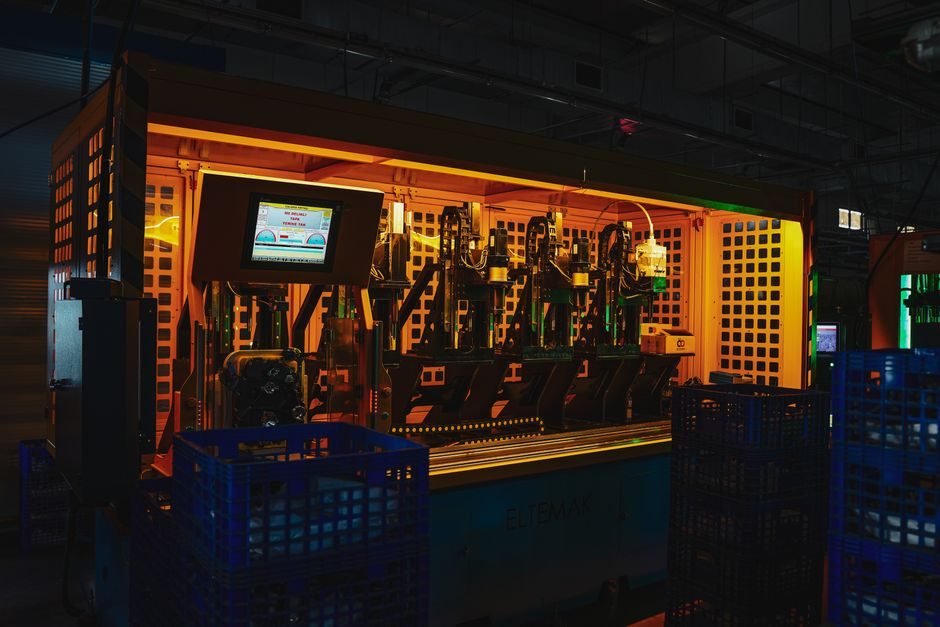
IGBT and SiC power-module buyers should treat OEM and ODM as a decision on design ownership, IP, and NRE spend, not as a pricing question [S1][S2]. The two models diverge on who holds the bill of materials, the gate-drive pinout, and the thermal stack-up — the three things that determine whether a 1200 V half-bridge module is drop-in or bespoke [S3].
For a power-electronics buyer sourcing modules for drives, UPS, or traction inverters, OEM means the buyer supplies the electrical and mechanical specification; ODM means the factory supplies a validated reference design and the buyer brands, labels, or lightly modifies it [S1][S2][S3]. Both routes exist inside the same fabs, and many Tier-1 IGBT assemblers in Asia run parallel OEM and ODM lines against the same die sources [S3].
Decision Matrix: OEM vs ODM on 6 IGBT-Specific Criteria
Design origin, IP, NRE, lead-time, MOQ, and modification rights are the six axes that move when an IGBT module is sourced under OEM versus ODM terms, per the standard sourcing-framework comparison [S2]. On a 1200 V / 600 A half-bridge platform, ODM lead-time is materially shorter because the DBC substrate, wire-bond pattern, and silicone gel fill are pre-validated; OEM requires a full design verification cycle before any production build [S2][S5]. Initial tooling cost for OEM — substrate fixtures, custom pin-map moulds, and burn-in fixtures — is typically higher, while ODM tooling is amortised across the supplier's platform [S2][S3].
For a 1700 V IGBT stack, OEM is the only practical path if the buyer specifies a non-standard creepage distance, a custom baseplate alloy, or a Press-Pack outline, because these parameters are baked into the ODM platform's mechanical and thermal design [S1][S4]. MOQ behaviour follows the same logic: ODM runs at the platform's minimum batch size, while OEM buyers usually commit to a higher per-build quantity to amortise fixture cost [S2][S3].
When OEM Is the Right Path for an IGBT Module
OEM is the correct route when the buyer needs a distinct electrical or mechanical specification — for example, a custom 750 V automotive-grade module, a press-pack IGBT with a non-standard force distribution, or a SiC hybrid co-pack that pairs the supplier's die with a buyer-specified gate-drive ASIC [S1][S4]. In these cases the buyer brings the schematic, the thermal model, and the qualification plan; the factory brings the bond-line process, vacuum soldering, and the AOI/X-ray inspection chain [S1][S2].
IP control under OEM is a hard advantage when the buyer is filing patents on a novel gate-drive topology, a new substrate layout, or a proprietary cooling interface, because the customer-owned design cannot be resold to a competing inverter brand without consent [S1][S5]. Buyers with strong design capability and a clear 5–7 year product roadmap consistently land on OEM, even at higher upfront cost, because long-term product ownership outweighs the saving of an ODM shortcut [S2][S4]. A buyer sourcing for industrial PLC output stages or flow-meter signal-conditioning rails typically already owns the surrounding IP and extends that ownership through OEM into the switching device.
When ODM Is the Right Path for an IGBT Module
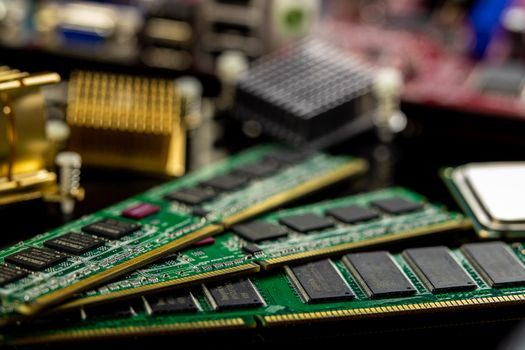
ODM is the correct route when the buyer's priority is speed, a known-good electrical platform, and a lower engineering footprint — for example, a 1200 V EconoDUAL-style module for a string inverter or a standard 34 mm Six-Pack for a servo drive [S2][S3]. The supplier's existing design has already passed HTRB, HTGB, and power-cycling tests, and the buyer can usually request certificates of conformance and the underlying test data [S1][S2].
ODM makes sense for market entry, demand validation, and for products where the inverter topology is commodity — the buyer adds value in firmware, gate-drive firmware, or system integration rather than in the module itself [S3][S4]. For buyers that need to ship a pressure sensor or pressure transmitter conditioner card with a power section attached, ODM keeps the engineering bandwidth focused on the sensing side and outsources the switching device. IP risk is the offsetting concern: the ODM base design is the supplier's, and the same platform can be sold to a competitor [S2][S5].
Manufacturing Strategy Trade-offs Specific to Power Modules
IGBT and SiC power modules carry manufacturing constraints that magnify the OEM/ODM choice: vacuum soldering of the DBC, ultrasonic wire-bonding of 200–500 µm Al or Cu wires, silicone gel or epoxy potting, and burn-in all sit on a single line, so the qualification status of that line travels with the chosen model [S1][S2]. Time-to-market under ODM is shorter because pre-validated designs skip the design-verification stage; OEM projects require complete design verification before production [S2][S5].
Process-engineering depth shifts as well: under OEM the buyer's engineers own the failure-mode review, the FMEA, and the reliability demonstration plan; under ODM the supplier owns those and the buyer reviews them [S1][S5]. For industrial valve actuator stacks and other harsh-environment drives, OEM is the dominant path because the customer must sign off on partial-discharge and insulation-coordination tests, while commodity motor-drive stacks are routinely sourced as ODM [S2][S4].
Sourcing Footprint and Where the Capacity Sits

Most of the world's largest ODM electronics manufacturers by revenue are based in Taiwan and mainland China, and IGBT/SiC module assembly follows the same geographic concentration, reflecting the depth of Asia's contract-assembly ecosystem [S3]. OEM relationships are also concentrated in this region, but with European and Japanese power-semiconductor specialists holding niche roles in Press-Pack IGBTs and 6.5 kV+ traction-grade devices [S2][S3].
For buyers outside Asia, the practical sourcing pattern is OEM design in-house, contract-manufactured in-region via an ODM-adjacent assembler, or pure ODM of a catalog platform [S2]. Contract manufacturing does not define who owns the design — that is the OEM/ODM split — and an OEM buyer can still use a contract assembler, just as an ODM buyer can [S2]. The choosing rules from the CNC-machining and consumer-electronics sectors transfer directly: OEM when the product is unique and long-lived, ODM when the platform is the product [S2][S4].
Selection Checklist Before the RFQ
Before issuing an IGBT-module RFQ, lock down the four engineering inputs that drive the OEM/ODM call: blocking voltage class (typically 650 V, 1200 V, 1700 V, or 3.3/6.5 kV), current rating, baseplate or direct-bond-copper outline, and the qualification regime (industrial, AEC-Q101 automotive, or traction) [S1][S2]. If any of those four inputs is non-standard, OEM is the only viable path; if all four match a catalog platform, ODM is faster and cheaper [S2][S3].
Confirm IP ownership in writing — for OEM the buyer should retain design rights; for ODM the supplier retains the base design and grants a private-label or modification license, and the same platform can be sold to competitors unless exclusivity is contractually carved out [S2][S5]. The next trackable signals are the supplier's published HTRB/PC-sec data for the candidate platform, the MOQ and NRE quote breakdown, and a documented change-control process for any post-award modification request.
This topic is covered further in Platform Trolley vs Order Picker for Certificate Traceability: Spec Map.