
Total cost of ownership for an impact drill is dominated by energy, consumables, downtime and service over a 3–5 year service life — the unit purchase price typically accounts for under one-third of total spend on a continuous-shift industrial deployment, while the remainder is split across electricity or compressed air, bit and chuck wear, scheduled service and indirect labour during failure [S1][S3].
The framework is generic — Gartner popularised TCO as a multi-stage ownership model covering acquisition, operating, maintenance and opportunity costs [S3] — but the cost-line weights change sharply between corded electric, cordless Li-ion and pneumatic architectures, so the comparison must be done architecture-by-architecture, not by sticker price alone.
Corded 800–1500 W Electric: Where the Watt-Hours Go
Brush wear on brushed universal motors is the next-largest line: brushes need replacement at roughly 200–400 operating hours, with armature commutator turning or replacement usually required between 1500 and 2500 hours depending on load profile and dust ingress.
For high-cycle production users the practical service life of a corded 1000 W-class impact drill sits in the 1500–3000 hour range before motor-bearing failure or chuck-jam events make a full replacement cheaper than a service; at €0.50–0.80 per hour of all-in operating cost including amortised purchase, energy and average repair, the three-year TCO on a 1500-hour-per-year loading lands at €2250–3600 per tool position [S1][S3].
Pneumatic Impact Drills: Compressor Air Is the Hidden Bill
Pneumatic impact drills — and the related air impact wrench class — are specified for hazardous-area, oil-contamination-sensitive and continuous-duty assembly cells, but the purchase price is misleading: a typical 3/8″ or 1/2″ industrial pneumatic drill consumes 100–600 L/min of free air at 6.3 bar (90 psi), and the compressed-air cost line is 5–10× the tool's purchase price over its life [S1].
The other two pneumatic-specific lines are lubricant carry-over (pneumatic tools consume 1–3 drops of oil per minute and the resulting contamination of the workpiece or downstream process can be a hidden six-figure cost in painting, electronics or clean-assembly cells) and exhaust-noise exposure, which is the typical reason facilities add silencers or rethink the tool class entirely. A practical three-year pneumatic TCO per tool position lands in the €1800–4500 range once compressed-air cost is honestly costed.
Cordless 18–36 V Li-Ion: Battery Cycle Is the Dominant Variable

A two-battery kit running at one pack-in-use / one-pack-charging is the standard industrial setup, and that doubles the battery-cost line over a single-shift deployment. [S1]
Brushless cordless platforms (now standard in 18 V and 36 V professional lines) extend motor life to 3000–5000 hours by eliminating brush wear, but they do not eliminate the battery-replacement cadence — that is set by chemistry, not motor type. A 3-year cordless TCO on a 1500 h/year loading lands at €1200–2800 per tool position when battery refresh and charger-share are properly accounted; going under €1000 per position is almost always a sign that battery replacement has been left out of the model.
Consumables, Downtime and Hidden Cost Lines
Across all three architectures the non-power cost lines follow a common pattern: drill-bit and driver-bit consumables (€0.10–2.50 per cycle depending on material and bit grade), scheduled service intervals of 200–500 operating hours, mean-time-between-failure windows of 500–1500 hours for industrial-grade electric and 1500–4000 hours for industrial pneumatic, and a labour-rate line that is the largest single number on the spreadsheet once a failure takes a line down — typical industrial maintenance labour loaded at €45–85/h means that a 2-hour unplanned stop on a production cell already costs more than a replacement chuck [S1][S3][S5].
The four cost lines that reliably drive real spend — energy or air, consumables, planned service, and unplanned downtime — mirror the release agent TCO pattern, where each line typically needs a dedicated metering or ticket system to surface honestly, and the same lesson holds for the excavator TCO breakdown where fuel, undercarriage, filters and residual value are tracked separately rather than averaged.
Three-Architecture Comparison: Decision Criteria
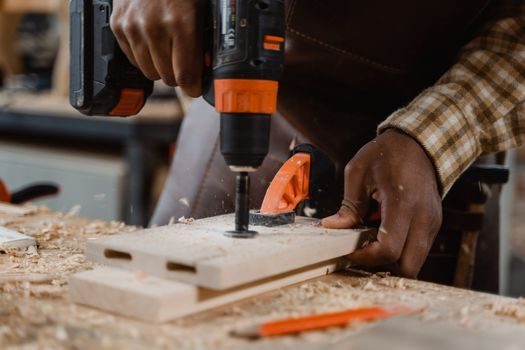
The honest comparison is architecture × decision criterion, not brand × price. Corded electric wins on lowest total energy cost at low duty cycles (under 500 h/year) and on capital-line predictability, while cordless 18 V/36 V brushless wins on operator throughput, safety (no trailing air hose, no trailing power lead) and on TCO at intermittent duty cycles where compressed-air plumbing would be the dominant installed cost. Pneumatic wins on intrinsic safety in ATEX/IECEx zones, on weight-per-watt and on mechanical simplicity — but only if the compressed-air supply is already there; building a dedicated compressor room for two or three tools is the classic TCO trap. [S2]
Spec-level decision gates that should be locked in writing before any quote: (1) target 3–5 year operating hours and confirm the architecture can reach that without mid-life motor or battery replacement; (2) cost compressed-air delivery in €/m³, not in compressor nameplate, and use that number to size pneumatic TCO; (3) lock the battery-replacement schedule and unit price in the vendor quote for any cordless deployment, since leaving that out of the comparison biases the result toward cordless; (4) book a duty-cycle-loss contingency of 5–10% of operating hours for bit-jam and chuck events, because it is the line item that quietly pushes TCO above the model in most plant audits.
Limits, Failure Modes and What the TCO Cannot Tell You
TCO is a cost-side tool — it cannot rank benefits, productivity gains or ergonomics, only the price of each option once benefits are held constant [S3]. For an impact drill deployment the common failure mode is using TCO to compare a cordless to a pneumatic unit without normalising the ergonomic or trip-hazard delta, which produces a number that is technically correct and operationally misleading. The other common failure is averaging across duty cycles: a tool running 200 h/year and a tool running 2500 h/year have different dominant cost lines, and the breakeven between corded and cordless shifts depending on which one you are sizing.
Two trackable signals to watch over the next planning cycle: vendor moves toward brushless-cordless platforms with multi-volt battery sharing across 18 V and 36 V tools, which compresses the cordless TCO line and forces a re-cut of any existing corded-vs-cordless model; and the steady cost-down on brushless cordless motors, which has been pulling the breakeven duty cycle for cordless adoption down into the 300–500 h/year band, where corded 230 V used to dominate on TCO alone.
For component-level specifications, see total station.