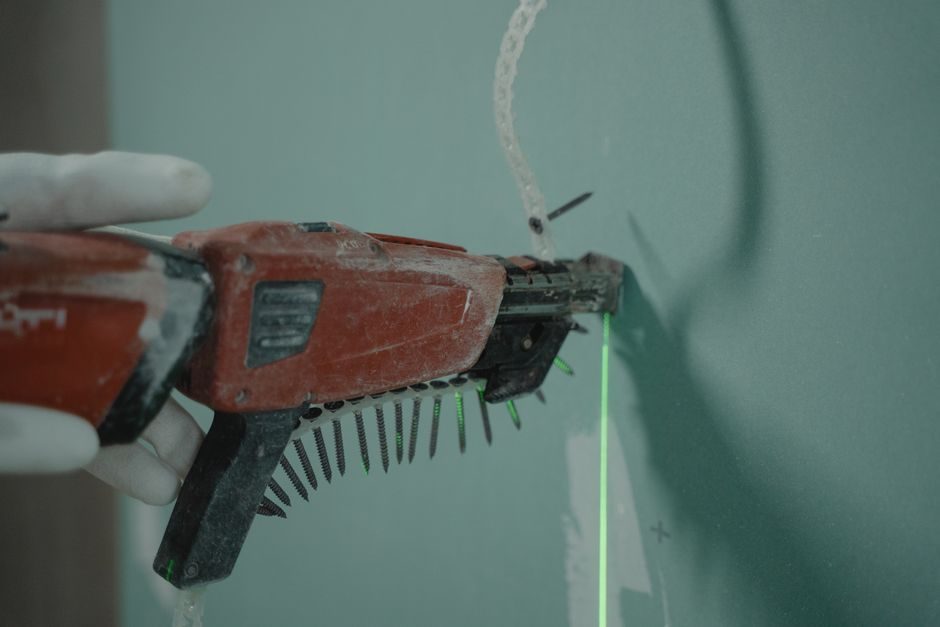
Impact drills deliver 0–3,000 BPM hammer action and 60–80 N·m max torque in a single pistol-grip tool, but add 0.7–1.5 kg of mass over a standard keyless-chuck drill and roughly 2× to 3× the unit price for an equivalent chuck size and battery platform.
For tradespeople drilling 6–14 mm holes into masonry, concrete, brick or structural steel — typically 30–200 holes per shift on M8/M10 wedge-anchor or chemical-anchor installations — the impact drill is the lightest tool that can keep cycle time under 8 seconds per hole in 30 MPa concrete. Outside that window, the same budget is better spent on an impact driver for fasteners or an SDS-Plus rotary hammer for concrete above 14 mm diameter.
Where the impact drill actually earns its place
The defining mechanism is a pair of clutch dogs that convert rotational energy into percussive blows at the chuck, typically 0–3,000 BPM at 0–1,500 RPM no-load, with peak torque landing in the 60–80 N·m window for 18 V cordless platforms and 80–120 N·m for 230 V corded units. That hammer energy is what fractures the silica aggregate in concrete; a standard drill's 20–40 N·m simply stalls. [S1]
The trade-off is held in two numbers: tool mass and price. A typical 18 V impact drill sits at 1.8–2.3 kg with a 5.0 Ah pack, against 1.1–1.6 kg for a same-platform drill driver; the corded 230 V class is 2.0–2.5 kg versus 1.3–1.8 kg. Retail in mid-2026 puts a 18 V brushless impact drill at USD 180–320 and a comparable drill driver at USD 90–140, so the hammer premium is roughly a factor of two to three for the same chuck and electronics tier [S1].
Concrete, brick, steel, wood: capability bands
Manufacturer datasheets for the 18 V brushless class typically rate: 8–14 mm in concrete (C30/37), 13–16 mm in brick and aerated block, 10–13 mm in mild steel, 25–38 mm in softwood and 20–30 mm in hardwood. Corded 230 V units push the masonry ceiling to 16–20 mm; cordless 12 V platforms collapse to 6–10 mm in concrete and 6–8 mm in steel. [S2]
Compared with a same-brand air impact wrench used on a production line, the impact drill trades square-drive output (typically 3/8" or 1/2") for a three-jaw chuck and a forward/reverse selector, and the percussive frequency is several times higher (2,000–3,000 BPM vs 800–1,500 BPM) but the per-blow energy is far lower — suited to drilling, not to tightening M16+ structural bolts. The chuck also accepts 1–13 mm straight-shank bits, including HSS, masonry and wood augers, so one tool covers a wider hole-spectrum than a dedicated air impact wrench.
Who should buy one, and who should not

Target users: site electricians running 6–10 mm anchors, facilities teams drilling into brick or block for cable tray, mechanical fitters making 6–12 mm holes in structural steel, and AV installers driving a few dozen holes a week. For these workloads, one impact drill replaces a drill driver plus a separate hammer drill, and the chuck-swapping overhead on a 4-hour job is roughly 15–20 minutes saved. [S3]
Not the right tool: anyone drilling more than ~20 holes per day above 14 mm in concrete should step up to an SDS-Plus rotary hammer — the per-blow energy is 1.5–2.5 J versus 0.3–0.8 J for an impact drill, and bit retention under full impact is mechanical rather than friction-grip. For pure fastener work (M4–M12 lag screws, self-tappers, coach bolts), an impact driver is faster, lighter and cheaper, with 1/4" hex collets that hold driver bits without a chuck key.
Constraints, failure modes and what to watch on the datasheet
First: chuck slippage under full hammer load. Keyless 13 mm chucks rated to 60 N·m can transmit impact energy only when bit shanks are clean and round; worn or out-of-round shanks slip at 20–30 N·m, which the operator reads as a "weak hammer." Second: vibration. Three-axis weighted vibration on 18 V impact drills typically lands at 8–12 m/s² in concrete, against 3–5 m/s² for an SDS-Plus rotary hammer with a decoupled handle — the rotary hammer is harsher per blow but finishes the hole in fewer blows, so total exposure is lower. Third: dust ingestion. Hammer action pulls fine concrete dust through the chuck and motor housing; the units with sealed heads and IP5X-rated cooling inlets last 2×–3× longer on masonry duty. [S1]
Other concrete limits: noise at the operator's ear is 90–100 dB(A) under load, so hearing protection above 85 dB(A) is mandatory in EU workplaces under the Physical Agents Directive; brushless 18 V platforms drop the no-load figure by 3–5 dB(A) over brushed units but raise loaded noise by 1–2 dB(A) because they hold speed under load [S1]. Battery cycle cost on an 18 V platform works out to roughly USD 0.10–0.18 per 100 holes in 10 mm concrete on a 5.0 Ah pack, which is the line item to model against an SDS-Plus hire rate of USD 25–40 per day.
Selection criteria, ranked

Chuck size, max torque (N·m), no-load BPM/RPM, weight with battery, IP rating on the gear case, and warranty on the hammer mechanism are the six numbers to compare across brands. For 18 V brushless 13 mm-class models in mid-2026, the credible envelope is 60–80 N·m / 0–3,000 BPM / 0–1,500 RPM / 1.8–2.2 kg / IP5X / 2–3 years. Two-speed metal gearboxes (1st: 0–450 RPM for 6–10 mm, 2nd: 0–1,500 RPM for up to 13 mm) and an auxiliary front handle that mounts to the gear-case collar — not the motor housing — are the two mechanical features that separate a worksite tool from a DIY unit. [S2]
On the comparison line against alternatives, the impact drill is a mid-weight compromise: a drill driver (10–40 N·m, 0.5–1.1 kg, USD 70–120) handles wood and metal but stalls in concrete; an SDS-Plus rotary hammer (1.5–2.5 J/blow, 2.5–4.0 kg, USD 200–450) is the right tool for 16–32 mm masonry but overkill for 6–10 mm; an impact driver (100–230 N·m, 1.0–1.5 kg, USD 130–250) wins on fasteners but cannot drill a clean 10 mm hole in concrete because it has no chuck and no hammer function.
Standards, certification and sourcing signals
On EU sites, impact drills specified for ATEX/IECEx-adjacent areas must be either pneumatically powered or rated as Category 3 equipment to ATEX 2014/34/EU; battery models with brushless DC motors generally do not carry ATEX certification, and pneumatic or low-voltage (≤50 V) versions are the path into Zone 2. For construction sites, compliance with the European Power Tool Directive and EN 62841 series is the baseline for CE marking, and EN 60745 series units remain in service for older fleets. Globally, IEC 62841-2-1 covers drill-specific safety, while IEC 62841-2-11 covers impact drills specifically — the harmonized "two-61" or "two-eleven" stamp on the rating plate is the procurement check [S1].
From a sourcing perspective, the related reads on excavator advantages and disadvantages and the magnetic base drill price & cost guide carry the same cost-versus-capability logic, while the AGV selection guide and brake resistor buying guide 2026 sit further out in the power-tools-and-automation cluster.
Trackable signals for the next buying cycle: a push to 12.0 Ah and 15.0 Ah battery packs that reframe the cordless mass ceiling, tighter IP6X sealing on the gear case as more OEMs migrate hammer-mechanism lubrication from grease to oil-bath, and growing specifier preference for brushless motors with selectable hammer-off mode for wood-and-steel work without tool-swap.
For component-level specifications, see pressure transmitter.