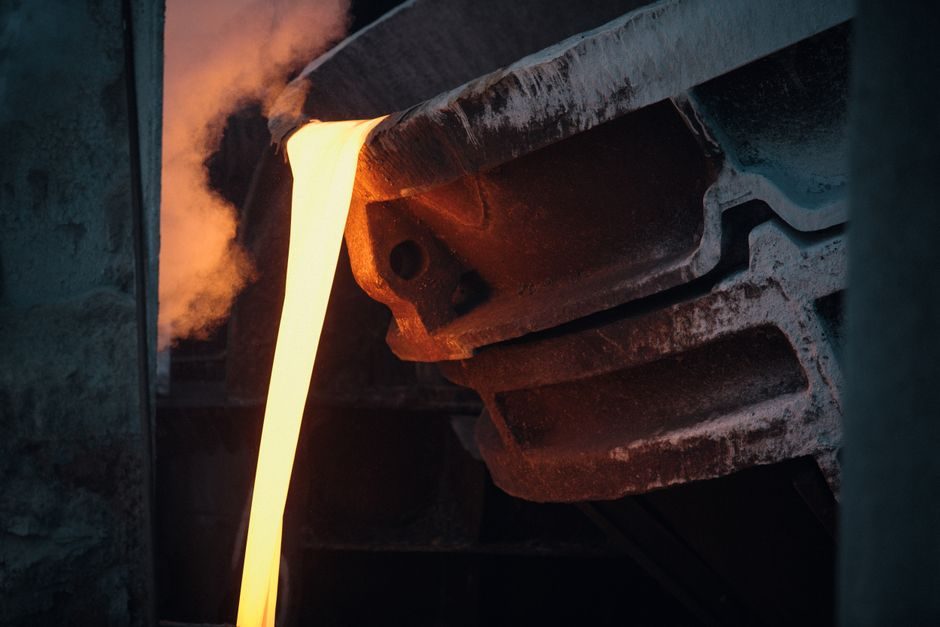
A 10-20 t/h induction or gas-fired melting furnace rarely costs more at the moment of purchase than it will cost to operate across its service life; process engineers evaluating capital projects should plan on opex dominating lifecycle spend, with the furnace class and refractory strategy setting the trajectory [S3][S4].
Total Cost of Ownership (TCO) in industrial procurement is the sum of acquisition, operation, maintenance, support, and end-of-life costs over the asset's useful life, and it routinely exposes line items — refractory rebuilds, electrode consumption, gas-vs-electricity arbitrage — that a capex-only budget leaves invisible [S3][S8]. For a melting furnace, the practical question is not "what does the unit cost," but "what does a tonne of molten metal cost over the next decade."
TCO Framework: What Actually Counts for a Melting Furnace
A TCO model for thermal-processing equipment splits lifecycle cost into five buckets: acquisition, installation, operation, maintenance/support, and disposal — and for furnace assets the operation bucket is structurally larger than the others [S3][S4]. The USPS Supplying Principles manual frames TCO as the tool that "exposes the hidden costs easily overlooked during budget planning," and a 2024 medical-equipment procurement study applies the same five-bucket model to high-temperature sterilizers, where energy and maintenance similarly dominated [S3][S5]. For a foundry, forge, or aluminum casthouse, the parallel is direct: refractory brick consumption, burner/electrode wear, and utility contracts are line items that an RFQ almost never prices correctly on the first pass.
Quantitative anchor: across multiple industrial TCO studies, acquisition cost is repeatedly shown to represent 15-30% of lifetime spend, with operation and maintenance making up the remaining 70-85% [S3][S4]. Toolshero's practitioner reference defines TCO explicitly as covering "direct and indirect costs of a system over its life cycle," and recommends building the model on realistic service-life assumptions rather than vendor-stated MTBF [S4]. For furnaces, service life is governed by shell integrity and refractory campaign length, not by the controls package.
Cost Driver 1 — Energy and the Electricity-vs-Gas Decision
Energy is the single largest opex line for almost every furnace class, and the choice between a gas aluminum melting furnace, an induction unit, or a crucible furnace is fundamentally a choice about which energy vector the plant can buy cheapest per unit of useful heat delivered to the bath [S3].
For electric induction, the dominant variables are specific energy consumption (typically 550-620 kWh/t for steel melting, lower for aluminum holding), power factor penalty in the utility bill, and demand charges during melt-down peaks. For gas-fired reverberatory and crucible furnaces, the variables are calorific value of the fuel, excess-air ratio at the burner, recuperator effectiveness (modern regenerative burners recover 50-70% of flue-gas heat), and NOx-related permitting cost. The TCO model should price energy on delivered-heat (kWh useful into the metal), not on nameplate burner input — a 30% efficient gas furnace burns roughly twice the fuel a 60% efficient regenerative design does for the same tonnage [S3][S4].
Cost Driver 2 — Refractory Campaign and Lining Cost per Tonne

Refractory is the second-largest opex item, and the refractory campaign — months or years between full relines — is the metric that ties lining cost to production volume [S4].
Refractory life is set by bath temperature, slag chemistry, metal type, and campaign cycle count. A coreless induction lining for steel typically delivers 200-400 heats before a full re-line; aluminum-melting induction linings push higher (500-1500+ heats) because of the lower bath temperature and less aggressive FeO slag attack. A holding furnace lining, by contrast, runs at lower thermal stress and routinely exceeds two years between rebuilds. The cost-of-lining-per-tonne calculation (re-line cost ÷ tonnes melted between rebuilds) is the figure to compare across furnace options, not the quoted re-line price. The 2024 medical-equipment TCO study found that consumable-life math dominated their sterilization-equipment model in the same way, with planned component replacement every N cycles being the dominant cost lever [S5].
Cost Driver 3 — Electrodes, Burners, and Wear Parts
Wear-parts spend — electrodes on arc and induction furnaces, burner nozzles and recuperator tubes on gas units, water-cooled panels on electric arc — is small in unit terms but accumulates predictably across a 10-year horizon [S3][S4].
For an electric arc or induction furnace, graphite electrode consumption is typically 1.5-2.5 kg/t for steel, with each electrode joint and break representing a maintenance event that costs more in lost production than in the electrode itself. For a cupola furnace, the cost drivers shift to coke bed, tuyeres, and refractory patching; the TCO exercise must include the metallurgical cost of carbon pickup in the iron. A-dec's 2026 TCO write-up for dental equipment restates the same lesson — "the cost of your equipment goes far beyond the initial acquisition price" — and treats planned component replacement as a first-class line item rather than a maintenance overhead [S8].
Cost Driver 4 — Installation, Footprint, and Stacking with Plant Utilities
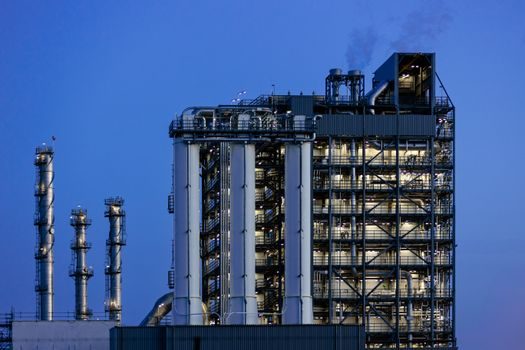
Installation cost is a single non-recurring spike that is often underestimated by 20-40% on a first-pass RFQ, particularly for induction where power-factor-correction, harmonic filtering, and water-cooling skids are routinely treated as "site work" but are actually scope [S3].
For a gas-fired melting furnace, installation cost is dominated by the stack, gas train and safety shutoff valves, burner management system, and the foundation pit for a hydraulic-tilting or drag-out launder. A melting furnace installation that ignores the refractory dry-out and first-heat commissioning schedule will underbudget by weeks of lost production. The Oracle Communications Suite deployment guide uses the same logic when it asks "more, smaller hardware systems or fewer larger ones" — the engineering trade-off is fixed-cost distribution per unit of throughput [S6]. For a foundry, that means asking whether two 10 t/h furnaces give better availability than one 20 t/h unit, because the spare-furnace strategy has a direct TCO line attached.
Cost Driver 5 — Downtime, Availability, and the Hidden "Lost Tonnage" Line
For thermal-processing equipment, downtime is the most under-priced cost in the entire TCO model — a single unscheduled refractory failure can cost more in lost tonnage than the re-line itself [S3][S4].
Industry rule of thumb: a 1% availability loss on a 20 t/h furnace running two-shift equates to roughly 100 lost tonnes/week, valued at the metal margin, not the gross selling price. Planned-downtime scheduling (predictive refractory inspection, burner tuning on a fixed interval) is the cheapest availability lever; unplanned downtime on a cast-iron crucible furnace that drops a crucible is the most expensive. The IDTechEx medium-van TCO evaluation and the Springer powertrain-TCO study both treat availability as a first-class variable on the same footing as fuel cost, and a furnace buyer should do the same [S1][S2].
Side-by-Side Comparison: Three Furnace Classes on TCO Levers
The table below lines up three common furnace classes against four TCO decision criteria. Numbers are typical operating bands, not vendor quotes; the relative ranking is what the engineer should act on, not any single cell [S3][S4].
Criteria → Furnace class A: Medium-frequency induction (steel, 10-20 t/h). Furnace class B: Gas-fired regenerative reverberatory (aluminum, 15-30 t/h). Furnace class C: Cupola furnace (iron, 10-25 t/h). Energy intensity: A — 550-620 kWh/t, electricity-dominated; sensitive to power-factor and demand charges. B — 2.8-3.5 GJ/t (gas), with recuperator dropping effective cost 30-45% vs non-regenerative. C — 8-10% coke rate on metal, with iron-coke price spread driving the lever. Refractory campaign: A — 200-400 heats steel, 500-1500 aluminum. B — 12-36 months depending on bath flux and dross practice. C — campaign-driven, tuyere and bed refractory patches scheduled. Wear-parts spend: A — graphite electrode or coil copper replacement on a 3-5 year cycle. B — burner nozzles, recuperator tubes, door seals, annual. C — coke, tuyeres, patching clay, continuous. Downtime risk profile: A — single-point failure on coil or power supply; spare inverter common. B — burner BMS and refractory failure modes; on-site spare parts kit expected. C — tuyere breakouts and water-leak events; high consequence, lower frequency. The same comparison logic that IDTechEx applies to electric-van TCO across powertrain types [S1] applies here — pick the class that wins on the two or three drivers that dominate your plant's cost stack.
10- and 20-Year TCO Bands and How to Read Them
For a 15 t/h steel-melting induction furnace, a defensible 15-year TCO range puts the unit at roughly 3-5× the capex, with energy typically 50-60% of the lifetime spend, refractory and electrodes 10-15% combined, and maintenance labor plus downtime the remainder [S3][S4]. A gas aluminum melting furnace of comparable throughput typically lands in a similar 3-4× capex multiple, but with gas rather than electricity dominating and a longer refractory campaign compressing the per-tonne lining cost.
The TCO framing matches the rebar bender TCO 2026 approach — five cost lines drive 5-year spend, and the ranking of those lines, not their absolute values, is the decision input. For furnaces the same five lines are: energy, refractory, electrodes/burners, planned maintenance labor, and downtime opportunity cost. The Toolshero practitioner reference and the USPS procurement manual agree on the same hierarchy: model the opex lines with realistic service life, then compare vendor options on total cost per unit of throughput over the planned life [S3][S4].
Standards, Sourcing Discipline, and What NOT to Fabricate
There is no single ISO or IEC standard that prescribes a furnace TCO calculation; the methodology comes from procurement practice, not from a normative document, and the engineer should treat any TCO spreadsheet that quotes a standard number for the formula itself as suspect [S3][S4]. Equipment-side standards that DO govern a melting-furnace TCO are the safety and emissions ones — burner management to IEC 61508 / IEC 61511 functional-safety expectations, electrical installations to IEC 60364, and stack emissions to local air-quality permits — and those constrain the design envelope rather than the cost model.
Sourcing discipline for a furnace TCO: request energy-consumption data at rated throughput, refractory campaign length under your slag and temperature profile (not the vendor's brochure campaign), electrode or burner wear per tonne, and a recommended spares list with pricing. Reject any quote that prices only the capex line — the melting furnace types and classifications map is the right starting point for which class even belongs in the model, but the TCO math is what selects between vendors within that class.
When NOT to Use a TCO Model — and Common Failure Modes
A TCO model is the wrong tool for a one-off prototype heat, a pilot-line furnace with a service life under three years, or a project where the bottleneck is physical footprint rather than cost per tonne [S3]. A 2024 tin bronze selection reference makes the parallel point for alloy selection — the model is only as honest as the inputs, and the inputs are the production schedule, the energy contract, and the maintenance crew.
The ferrochrome furnace automation write-up treats the same end-of-campaign cliff in MES terms — the cost curve is non-linear, and the model has to admit that.
Decision Map: Matching Furnace Class to TCO Profile
Use this three-question filter before selecting a furnace class on TCO grounds: (1) is the plant electricity- or gas-constrained — if electricity is cheap and gas is metered with delivery constraints, induction wins on TCO; if gas is interruptible cheap and power demand charges are punitive, a gas aluminum melting furnace wins. (2) Is the duty cycle continuous or batch — a continuous two-shift operation rewards refractory and electrode life; a single-shift intermittent duty rewards fast start-up and low no-load losses, which often pushes toward a holding furnace plus a smaller melter. (3) Is metal-mix flexibility required — a coreless induction handles alloy swaps with a 30-60 minute crucible change, while a cupola furnace is essentially a single-recipe asset and only wins on TCO at high utilization on that one recipe [S3][S4].
For a TCO-focused buy, the second-pass ask is always the same: ask each vendor for a 10-year parts-and-energy cost projection, with refractory campaign length under your slag and temperature profile, and a downtime-MTBF number backed by a reference plant. The vendor who refuses the 10-year ask is the vendor whose TCO will surprise you first. See the melting furnace installation reference for the commissioning-cost line that almost every RFQ underprices, and the broader melting furnace types selection map for the upstream class-level trade-offs.
Trackable signals for the next procurement cycle: utility tariff changes (electricity demand charges vs. gas interruptible rates) — these move the induction-vs-gas crossover by 10-20% in TCO terms; refractory lead time — alumina-silica brick lead times of 16-24 weeks are now common and force earlier refractory-procurement decisions; and emissions-permitting cost — NOx and particulate caps on a cupola furnace retrofit can swing a 15-year TCO by a capex equivalent. Any of these three flipping is the trigger to rerun the model.