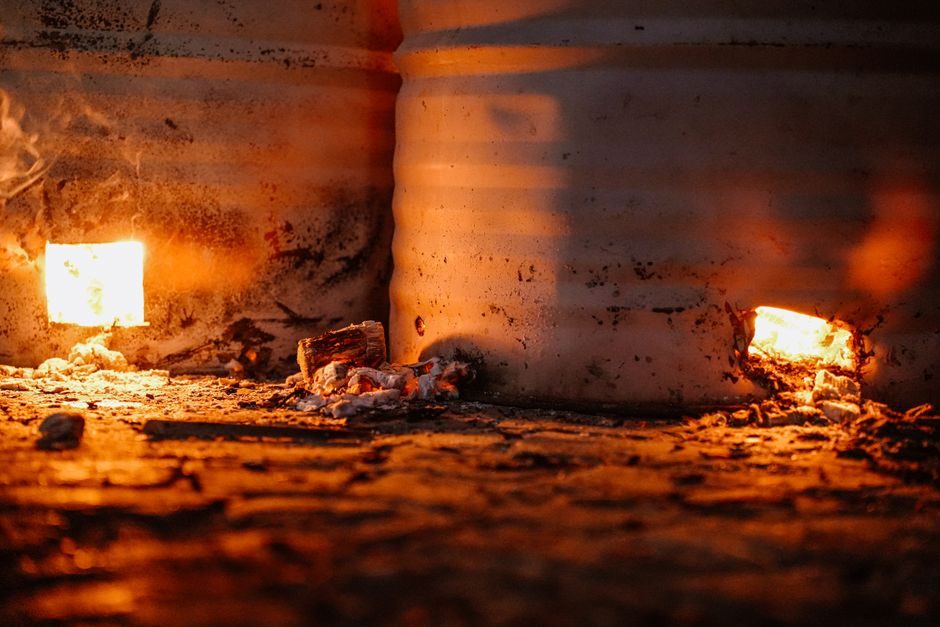
An induction furnace is sized by three linked variables — installed kW, net melt rate in kg/h (or t/h), and crucible working capacity in tonnes — and the right combination is dictated first by the metal you melt (ferrous vs non-ferrous, conductivity, melt point) and second by your duty cycle (continuous cast feed, batch foundry, holding) [S3][S5].
The two physical families that cover 95% of industrial buying are the <p>coreless induction furnace
channel induction furnace
Coreless vs Channel: Sizing Math That Decides the Build
Coreless furnaces are specified in the 100 kg to 60 t crucible range, with installed power typically 200 kW to 25 MW; specific power runs 300-800 kW per tonne of molten metal held, which sets both the melt rate and the lining wear budget [S3]. A 1 t steel coreless at 750 kW delivers roughly 0.9-1.1 t/h tap-to-tap, while a 10 t unit at 6 MW is engineered for 6-8 t/h on continuous cast feed [S5].
Channel furnaces are sized the opposite way — large bath (10-200 t), modest installed power (500 kW to 4 MW) — and are used predominantly for holding and duplexing rather than cold-charge melting. Thermal efficiency of a well-tuned channel furnace sits above 90% at holding setpoint, versus 60-70% for a coreless unit on a cold melt, and this is the engineering reason a foundry will keep a 40 t coreless on melt duty and park a 60 t channel on the spout for thermal buffering [S3][S5].
For a spec engineer, the short-list decision tree is: (1) need to cold-melt → coreless; (2) need to hold >4 h at temperature with a stable bath → channel; (3) need both → coreless + channel duplex. Frequency selection inside the coreless branch (line-frequency 50/60 Hz for big ferrous melts, medium-frequency 150-2500 Hz for steel and larger cast-iron melts, high-frequency 3-10 kHz for small ferrous and most non-ferrous) is the second spec lever and tracks directly to magnetic penetration depth in the charge [S6].
Frequency, Penetration and What It Does to Your Coil Sizing
Medium-frequency (MF) coreless furnaces are defined in Chinese and Russian technical literature as operating in the 150 Hz to 2500 Hz band, with 1000 Hz being a common steel-melt default; high-frequency units run 3-10 kHz, line-frequency (LF) units run on the grid at 50/60 Hz [S6]. The relationship that matters to a spec is penetration depth δ (mm) = 503 × √(ρ / (μr × f)), where ρ is resistivity (Ω·m) and μr relative permeability — for cold steel at 50 Hz, δ is roughly 70 mm, dropping to ~7 mm at 10 kHz [S3].
That physics is why a 50 Hz coreless is sized 8 t and up (larger molten pool needed to absorb the deeper field), and why a 1 kHz MF coreless can be built down to 100 kg crucible for jewellery and laboratory work; halving the frequency roughly increases the required minimum charge mass for efficient coupling, which is the rule of thumb Chinese induction-furnace suppliers use to bracket their product lines [S1][S6].
Power, Melt Rate and Energy: The Numbers That Hit the Capex Case
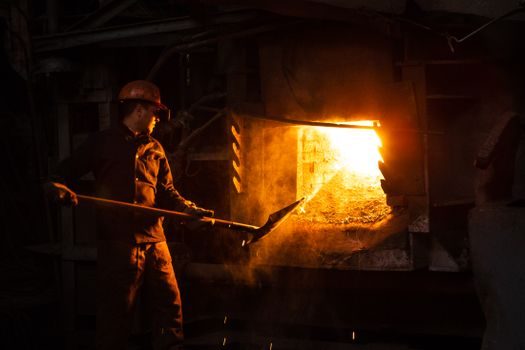
A working spec table for a foundry-scale coreless induction furnace, taken from manufacturer data on coreless and crucible designs, looks like this: 0.5 t / 400 kW / ~0.55 t/h steel, 1 t / 750 kW / ~1.0 t/h, 3 t / 2000 kW / ~2.7 t/h, 5 t / 3000 kW / ~4.0 t/h, 10 t / 6000 kW / ~7.5 t/h; specific energy consumption runs 530-620 kWh/t for steel, 600-720 kWh/t for ductile iron, and 320-420 kWh/t for copper alloys [S3][S5].
Channel furnace holding consumption is a different animal — typically 25-40 kWh/t·h at 1450 °C hold, 4-6 kW per tonne of bath to maintain a steady setpoint once the channel is primed — and this is the figure that justifies the capex premium when the duty is duplexing or continuous casting tundish holding [S5]. For a 30 t channel holding furnace, nameplate 900 kW is normal, with 70-90% of that available as trim during steady-state hold.
Refractory, Cooling and the Hidden 20% of the Spec
The crucible lining is the consumable that decides operating cost: dry-vibrated alumina (Al2O3 85-90%) for iron and steel, magnesia-spinel or MgO for basic slags, silicon carbide for copper and brass, and graphite-clay ramming mixes for precious-metal work [S3]. Typical campaign life on a 5 t iron-melt coreless is 200-400 heats before reline, with wear rate roughly 1-2 mm per 100 heats on the slag line — the single most monitored dimension on a running furnace.
Cooling water is the other line item spec engineers underestimate: a 1000 kW coreless at 50% electrical efficiency dumps ~500 kW into a closed loop, and at the standard 25-35 °C rise across the coil, that is 12-17 m³/h of demin water at <200 µS/cm conductivity to stay clear of creepage and copper-tube pitting [S3]. Skid-mount chillers sized at 1.2-1.5× the furnace waste-heat number is the rule of thumb; undersizing the chiller shows up as coil hot-spots, premature hose failures, and inverter trips on over-temperature interlocks.
Where Induction Wins, Where It Doesn't
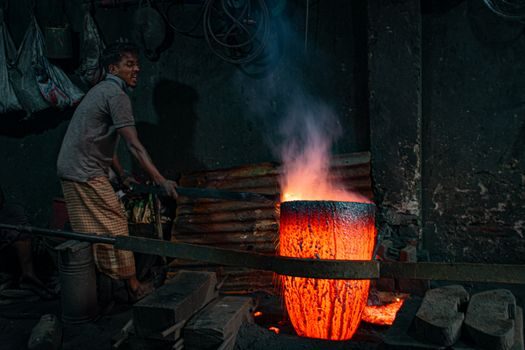
Induction is the default choice for ferrous foundries needing clean steel (low nitrogen, controlled carbon), for copper and brass continuous casting where channel or MF coreless provides the precise temperature stability a CCRC line demands, and for any process where batch-to-batch alloy changeover is frequent (a coreless can swap from iron to steel with a reline, no warm-keep on a refractory-laden cupola) [S3][S5]. The economics on a 5-20 t/h ferrous melt are 10-25% lower specific energy than a gas-fired cupola, with the trade-off of higher installed cost and electricity-dependence.
It is the wrong tool when the process needs very large molten baths above ~200 t, when fuel cost per kWh is dramatically lower than grid cost (in some gas-rich regions a gas-fired reverberatory still wins on $/t), or when the melt is a high-resistivity ceramic or slag rather than a metal [S3]. For a related cross-process read on furnace selection logic, this spec-first guide to chemical-process melting furnaces covers the non-induction side of the same decision tree.
Selection Checklist and Trackable Next Signals
Spec engineer's shortlist, in order: (1) define metal + required tap weight + melt rate; (2) pick family — coreless for cold-melt, channel for hold/duplex; (3) pick frequency band by penetration depth math; (4) size kW = (t/h × specific energy kWh/t) / 0.9; (5) check chiller capacity = furnace kW × (1 − ηelectrical) × 1.2; (6) specify crucible lining by metal and slag; (7) budget refractory reline and coil-hose wear in the OpEx sheet [S3][S6].
For background on the underlying equipment, the induction furnace reference page covers construction, working principle and application-side terminology; for the holding-furnace branch the holding furnace entry is the right starting point on continuous-cast and tundish-side duties.
Next trackable signals for a buyer in the back half of 2026: IGBT medium-frequency inverter pricing (a 2000 kW/1 kHz MF stack from a Jiangsu supplier cited on made-in-china sits in the 75-95 kUSD bracket as of mid-2026) and SiC-based rectifier retrofits that drop specific energy on legacy coreless units by 5-8%, with vendor pilots visible on Chinese copper-CCR lines [S1][S5]. Refractory lead time and copper-coil copper-vacuum-casting capacity are the two real supply-chain bottlenecks to watch in the next 6-12 months.