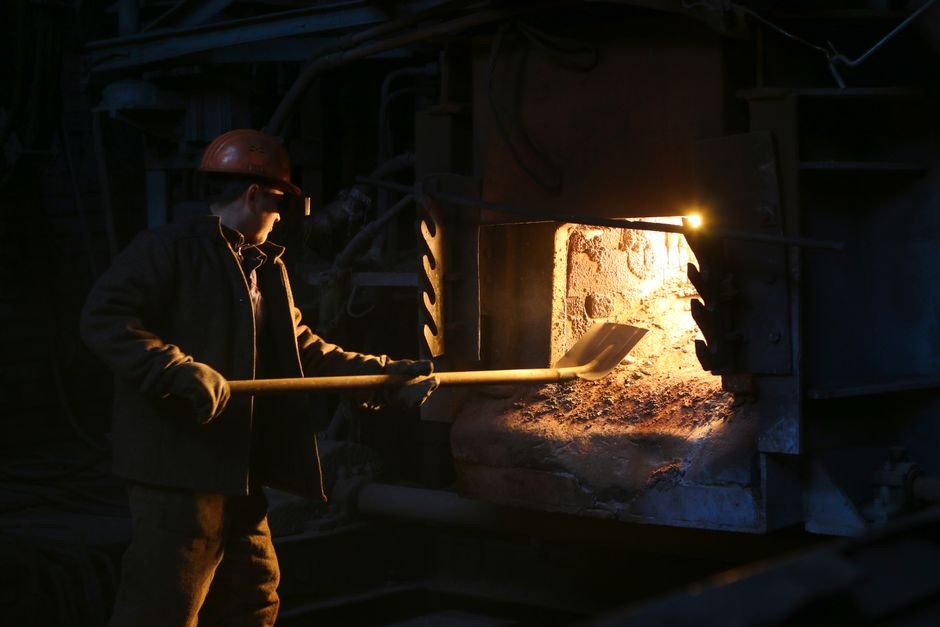
An induction furnace is an electrical furnace in which heat is applied by electromagnetic induction to a conductive charge held in a water-cooled crucible, with mains-frequency, medium-frequency (≈300 Hz to 20 kHz) and high-frequency (tens of kHz and above) variants each mapped to different melt masses and alloy chemistries [S4][S9].
Sourcing in mid-2026 is dominated by Chinese OEMs offering audited ISO 9001:2015 builds at US$2,000-US$3,500 per set for small precious-metal / copper-iron-aluminium units and US$6,550-US$80,000 per set for higher-power industrial melting and forging lines on 1-set MOQ [S7][S8].
Frequency Class and What It Forgives
Grid-frequency (50/60 Hz) channel-type induction furnaces are the default for ferrous melts of several tonnes where deep stir and high superheat tolerance are needed, while medium-frequency (MF) coreless units in the ≈300 Hz to 20 kHz band drive the majority of steel, iron, copper and aluminium foundry melts where clean metallurgy and fast start-up dominate [S9].
High-frequency (HF) units above roughly 20 kHz, typically transistorised at 50-200 kHz, are used for small precious-metal and laboratory melts where the Ajax-Northrup-style "boil platinum in ten seconds" heating profile is acceptable but stir is shallow [S6][S7].
Selection rule: pick the lowest frequency that still keeps the coupling depth adequate for your largest charge piece, because lower frequency means deeper penetration, more vigorous bath stirring and better tolerance for dirty, oily, or chunky scrap, at the cost of larger coil and heavier capacitor bank [S4][S9].
Capacity, Power Density and the 1-Set MOQ Reality
Real 2026 China-Mainland induction furnace capacity bands span from a few kilograms in HF benchtop units up to multi-tonne coreless and channel furnaces, with the bulk of export offers sitting in the 100 kg to 5 t melt range and rated input power from roughly 30 kW to 3,000 kW depending on coil and frequency [S7][S8].
Typical specific power for an MF coreless iron-melting furnace sits in the 300-700 kW-per-tonne window, which gives melt rates of roughly 30-90 minutes per heat on a 1-tonne furnace; specifying below this band extends tap-to-tap time, while pushing well above it shortens coil and refractory life [S4][S9].
Pricing on Made-in-China.com in 2026 clusters into three practical brackets: US$2,000-US$3,500 per set for small precious-metal and copper-iron-aluminium melting machines from Foshan and similar Tier-2 makers, US$6,550-US$80,000 per set for general industrial MF melting and forging units from Henan and Shanghai audited ISO 9001:2015 suppliers, and offers above US$100,000 per set for higher-power industrial casting or reheating lines [S7][S8].
Coreless vs Channel vs Crucible Topology
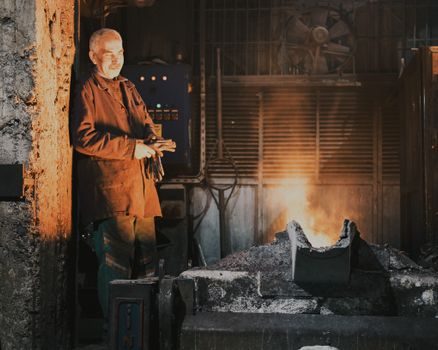
Coreless induction furnaces use a cylindrical water-cooled copper coil surrounding a refractory-lined crucible, which makes them ideal for batch melting, alloy changes and dirty scrap charges, with the trade-off of lower electrical efficiency and higher refractory wear per ton than a channel furnace [S4][S9].
Channel (or "submerged-arc-channel") induction furnaces hold a molten heel in a closed loop channel that acts as the secondary of a transformer, giving them higher electrical efficiency, lower specific power consumption, and a longer bath life, but they are poor at handling solid-charge cold starts and frequent alloy changeovers [S4].
Crucible-style vacuum or controlled-atmosphere induction furnaces sit at the top of the spec pyramid and are reserved for superalloys, titanium and aerospace-grade nickel where melt cleanliness and vacuum degassing matter more than throughput [S4].
Refractory Lining, Coil Cooling and Who Should NOT Specify an Induction Furnace
Induction furnace linings are typically dry-vibrated alumina (Al2O3 ≥ 90%) for steel and iron, magnesia-based (MgO) for basic melts and high-chromium alloys, and silica or alumina-magnesia spinel for copper, with campaign life commonly rated at 100-400 heats for a well-sintered coreless lining on a 1-3 t furnace [S4][S9].
Coil cooling is closed-loop deionised water with conductivity held below roughly 5 µS/cm to prevent electrochemical attack on the copper, and water flow is sized so the coil temperature rise stays under ≈10-15 °C per pass on a properly tuned MF unit [S4][S9].
An induction furnace is the wrong tool for very small batch sizes below roughly 50 kg where resistance or fuel-fired crucible furnaces win on cost, for ultra-high-melting-point refractories (above ≈1,700 °C in air for long campaigns), and for foundries with very dirty, oil-soaked charge that needs preheating to avoid explosive slag events, where a gas-fired cupola furnace or crucible furnace may be more forgiving [S4].
Comparison: Frequency vs Capacity vs Duty
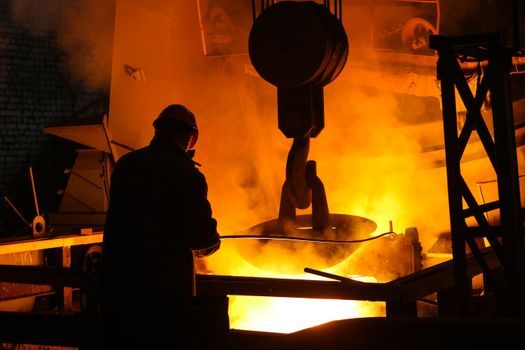
Three practical options lined up against the usual selection criteria, drawn from 2026 OEM offerings: HF benchtop (US$2,000-US$3,500 per set, 5-100 kg, precious-metal and lab melts, highest cost-per-tonne but cleanest start-up), MF coreless industrial (US$6,550-US$80,000 per set, 100 kg-5 t, steel-iron-copper-aluminium foundry work, the most common all-rounder), and grid-frequency channel (typically quoted above US$80,000 per set, multi-tonne continuous melt, highest electrical efficiency and longest campaign life, but weak on alloy changeovers) [S4][S7][S8].
For a greenfield ferrous foundry producing 5,000-30,000 t/year, the MF coreless in the 1-3 t class with 600-1,500 kW input is the default hit; for a copper or aluminium mill that runs one alloy 24/7, the channel furnace pays back faster on energy even at the higher capex; for a precious-metal caster or R&D melt shop, the HF unit is almost always the right answer despite the worst specific energy figure [S7][S8].
Standards, Power Quality and Sourcing Watch-outs
Buyers should specify compliance with the OEM's rated IEC/EN electrical safety regime, demand an ISO 9001:2015 quality-management certificate for the manufacturer, and require a written efficiency and power-factor figure at nameplate load, since uncompensated MF units draw large reactive kVAr that distort the plant PCC unless filtered [S7][S8].
Cooling-water interface (pressure, temperature, flow, conductivity limits), coil-turn short-to-ground protection, and tilt-hydraulic interlock are the three failure points that kill more induction furnaces than coil or capacitor failures, so the OEM's written commissioning checklist is the single most important document to demand before signing a 2026 PO [S4][S7].
For long-term sourcing, the more relevant peer article on broader supply-chain tier mapping sits in the industrial valve upstream and downstream map, while the practical question of zinc die casting machine suppliers often runs on the same Chinese OEM tier list as induction-melt packages — worth cross-referencing when a single vendor is asked to supply both.
Trackable 2026 signal: Henan and Shanghai audited ISO 9001:2015 MF coreless builders are still quoting 1-set MOQ at US$6,550 floor, with delivery running 30-60 days for standard builds, so any procurement spec written in July 2026 should hold price validity through at least Q3 2026 [S7][S8].
For component-level specifications, see induction furnace.