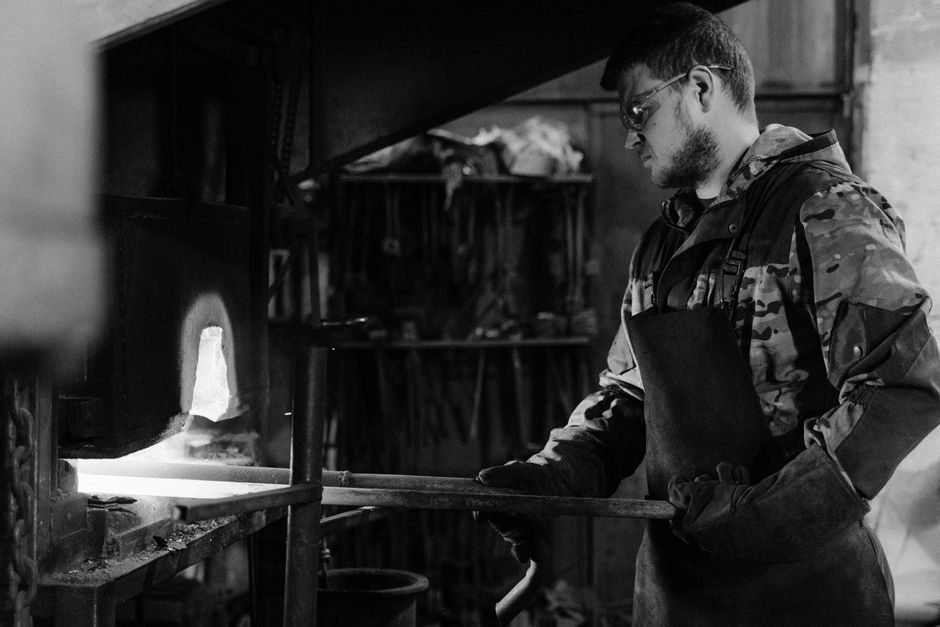
A correctly sized melting furnace is defined by three numbers: required metal output in kg/h, charge form (solid ingot, scrap, chips, or return-rate biscuit), and the tap-to-tap superheat target above the alloy's liquidus — typically 50°C to 120°C for aluminum, 80°C to 150°C for copper, and 150°C to 250°C for steel [S1][S3].
Selection then drops into one of four mechanical families: gas- or oil-fired crucible furnace units for small foundries and aluminum holding, medium- and high-frequency induction furnaces for steel and copper with melt rates from 0.5 t/h to over 20 t/h, gas aluminum melting furnace reverberatory stacks for high-volume die-casting plants, and electric melting furnace chamber / muffle units for precious metals and laboratory work up to 1,400°C [S1][S3][S6].
Step 1 — Quantify throughput, energy, and footprint
Thermal demand in kW follows from mass flow × specific heat × ΔT plus latent heat: aluminum at 660°C liquidus needs roughly 0.36 kWh/kg from 25°C ambient to 750°C tap, while steel at 1,535°C liquidus consumes about 0.55–0.65 kWh/kg to 1,650°C tap, making the energy bill the dominant operating cost in nearly every foundry audit [S1][S3].
Footprint scales with capacity: a 1,000 kg hydraulic-tilt aluminum crucible furnace typically occupies 2.5 m × 2.5 m of floor plus a 1.5 m charge zone, while a 5 t/h induction melting furnace with a 3,000 kW medium-frequency power supply needs an 8 m × 6 m cell plus a 2-ton crane rail for lid and coil handling [S3][S6].
Lead time is the sleeper variable: Chinese furnace builders quote 30–60 days for standard crucible and induction units, 90–150 days for engineered cupola furnace rebuilds and SCR parallel intermediate-frequency sets, and 4–6 months for vacuum induction melting furnace installations used for superalloys and aerospace-grade nickel-iron [S2][S7].
Step 2 — Match furnace family to alloy and charge
Aluminum and zinc are almost always processed in crucible furnace or gas reverberatory units, with hydraulic-tilt scrap melters holding 300–1,500 kg and regenerative-burner holding furnaces cutting gas use by 30–45% versus fixed-stack designs at comparable 50–200 t/month throughput [S3][S4][S5].
Steel and copper belong in induction: medium-frequency (200–2,000 Hz) coreless units dominate iron foundries, SCR parallel inverter topologies (one supply feeding two furnaces) are the standard 2024–2026 build for jobbing steel mills, and vacuum induction melting adds a 10⁻³ mbar or better chamber for nickel-base superalloys and aerospace cleanliness lots [S2][S6][S7].
Precious metals, assay labs, and small-batch jewelry work use chamber / muffle electric furnaces: the Carbolite Gero SCF series, for example, ships in 905/1,230/1,350 mm widths, 850–1,025 mm heights, hits 1,400°C maximum, and is explicitly rated for melting, cupellation, and digital control of gold, silver, and platinum-group charges [S1].
Step 3 — Compare the four families on engineering criteria
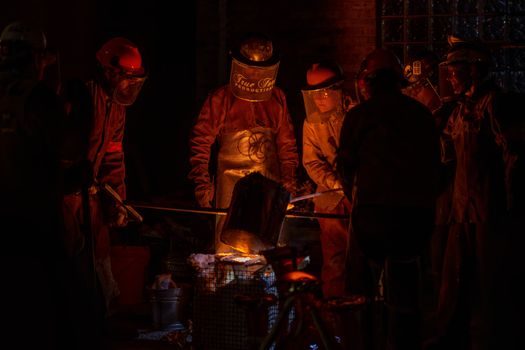
On a like-for-like 1 t/h duty point, the four families line up roughly as: crucible (low capex ~$30k–$80k, slow melt 60–90 min, high manual labour), induction (capex $150k–$400k, fast melt 30–45 min, high electrical demand ~600 kW), gas reverberatory aluminum (capex $200k–$500k, continuous operation, 30–45% fuel savings with regenerators), and vacuum induction (capex $1M+, aerospace cleanliness, batch cycle 2–4 h) [S1][S3][S4][S5][S6].
Selection map by user: pick crucible if you run a jobbing aluminum foundry with frequent alloy changes and small batches under 1 t, choose gas reverberatory if you feed a die-casting cell at 3–20 t/shift and have natural gas at the site, select induction if you melt steel, copper, or mixed ferrous scrap and need precise temperature control within ±5°C, and specify vacuum induction only if the spec demands low-inclusion nickel-base or specialty alloys [S2][S3][S4][S6][S7].
Process-engineering rule of thumb: an SCR parallel intermediate-frequency furnace is the lowest-risk build for new steel foundries entering service in 2026, because one inverter can feed two furnaces (one melting while one holds or pours) and the topology has a 10-year field track record in Chinese steel and copper plants [S7].
Step 4 — Sizing math you can put on a single page
Required melt rate derives from hourly casting demand × safety factor: if the die-cast cell pulls 800 kg/h of A380 aluminum, specify a 1,200 kg/h melting furnace to cover dross losses (typically 1.5–3% of charge weight for oxide-forming alloys) and refractory wear recovery, and size the holding furnace at 1.5–2× the casting-cell hourly draw to ride out charging interruptions [S3][S4].
Power supply sizing for induction: kW = (mass kg × specific heat kWh/kg·K × ΔT K) / (cycle hours × 0.85 efficiency); for a 1,000 kg steel batch reaching 1,650°C in 45 minutes, that yields roughly 0.6 × 1,600 / 0.75 ≈ 1,280 kW at the busbar, before coil losses and water-cooling overhead [S2][S6].
Refractory life is the second-order cost driver: silicon-carbide crucibles in aluminum furnaces deliver 200–400 heats before reline, alumina-spinel linings in induction steel furnaces target 300–500 heats at 1,600°C, and a typical homogenizing furnace for aluminum billet is quoted around US$253,000–$258,000 per set with a 5-set/month production capacity from Foshan builders [S5].
Step 5 — Standards, controls, and commissioning checks
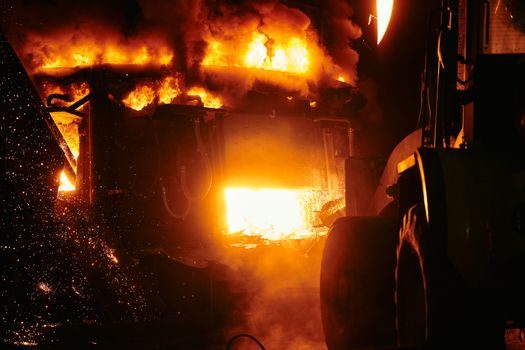
Safety standards: any furnace installed in an ATEX/IECEx-classified zone must match its gas or dust group, induction coils need Class H or N insulation rated for 180°C–200°C rise, and water-cooled leads must include flow switches wired to the furnace safety PLC — these are baseline acceptance items rather than optional accessories [S1][S6].
Control integration: 2026-era builds default to PLC + 7–10" HMI with Modbus TCP or PROFINET to the plant network, PID loops on tap temperature using Type K or Type S thermocouples, and data logging of kWh, melt cycles, and refractory hours per ISO 9001 quality schemes — most Chinese OEM packages now include these as standard rather than as costed options [S3][S5][S6].
Commissioning gate: hold a hot-cold cycle check at full charge, verify tap temperature within ±10°C of setpoint across three consecutive heats, confirm emergency-purge and power-dump trips, and capture a baseline kWh/kg figure — that number is what you compare against next year's energy audit, not the OEM brochure value [S3][S6][S7].
Who should NOT buy what
Do not specify a vacuum induction melting furnace for general aluminum or zinc work — the capex premium and batch cycle cannot be amortized outside aerospace or specialty alloy production, and a standard induction or crucible unit will meet 95% of foundry needs at 20–30% of the price [S2][S6].
Do not specify a gas-fired cupola furnace for steel scrap below 10 t/h continuous throughput — cupolas are efficient only at sustained high tonnage, and below that threshold an induction furnace will out-perform on melt rate, emissions, and labour cost per ton [S7].
Do not over-size a crucible furnace to chase flexibility: doubling crucible capacity roughly doubles recovery time between taps, which kills the small-batch agility advantage that justified the choice in the first place — right-size the crucible to your largest single-charge lot, and add a separate holding furnace for surge demand [S3][S4][S5].
2026 supply-side signals worth tracking
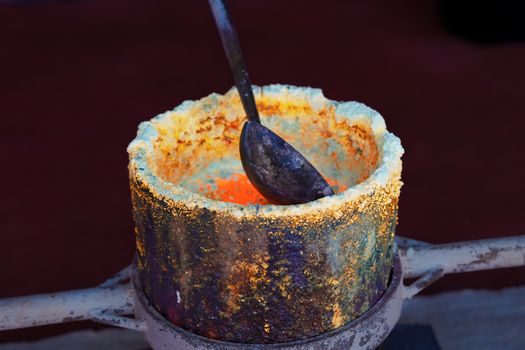
Chinese induction furnace builders reported active RFQs for SCR parallel intermediate-frequency sets through Q2 2026, with typical quotation response inside 5 working days and a 60–90 day factory lead time for the 1–5 t/h range [S7]. Homogenizing furnace pricing from Foshan suppliers held at US$253,000–$258,000 per set for 1–3+ set orders as of 2026-05-28, with a 5-set/month reported production capacity [S5]. Cross-reference the planetary reducer sizing playbook for drivetrain sizing on furnace charge cars and tilt hydraulics, where the same kW-to-ratio rule applies — see the planetary reducer sizing and selection guide for the methodology.