
Synchronous AC motors, including permanent-magnet designs, run at the same speed as the stator rotating field with zero slip, while induction (asynchronous) AC motors always run slightly slower than synchronous speed because rotor current must be induced by slip [S2][S3].
The efficiency gap shows up in published curves: a 10 hp 1800 rpm PMSM holds about 94% at full load and about 83% at 600 rpm on a 3:1 turndown, while a NEMA Premium ACIM drops from roughly 90% to 72% across the same speed range [S5].
Efficiency Bands and Where Each Type Wins
Induction AC motors typically land in the 90-93% efficiency band when speed and pole count are matched, while synchronous motors sit noticeably above that range under steady high load, with the largest gap appearing at part-load when paired with a VFD [S6]. VFDs do not raise ACIM efficiency on their own; ACIMs lose 0.5-1.5 efficiency points when run on VFD sine-wave power compared with direct-on-line operation, which is why system efficiency improves mostly through speed reduction rather than the motor itself [S5].
PMSMs require a drive to run, so they only exist in the variable-speed regime and the comparison is always motor-plus-drive versus ACIM-plus-drive (or ACIM direct-on-line) [S5]. The VFD link is the relevant concept here: a synchronous drive is essentially a PMSM with a matched inverter, and the inverter's switching scheme determines how clean the sinewave at the motor terminals is.
For continuous-run duty at fixed speed, synchronous designs minimise rotor copper losses and slip losses, and the efficiency advantage compounds with operating hours [S4][S7].
Slip, Speed Control, and Mechanical Behaviour
Slip in an induction motor is the percent difference between synchronous speed and rotor speed, and it is the mechanism that induces rotor current, so it cannot be eliminated without turning the machine into a synchronous design [S2][S3]. Typical slip values are a few percent at full load, and that slip also means the rotor speed drifts slightly with load, which is the practical reason induction motors are described as variable-torque / variable-speed machines rather than precision-speed machines [S4].
Synchronous motors hold speed locked to supply frequency (or, with a drive, to the commanded frequency) and produce no slip, so they are the default choice where speed accuracy matters: CNC spindles, robotics, paper machine sections, and large compressors on VFDs [S3][S4]. They can also supply reactive power to the grid through their DC field winding, which is why large synchronous motors are still specified in industrial plants for power factor correction, not only for the mechanical output [S1].
Starting behaviour diverges sharply: an induction motor self-starts from the stator field alone, while a synchronous motor generally needs a VFD, pony motor, or damper-winding arrangement to reach near-synchronous speed before the field can lock in [S1][S4].
Cost, Robustness, and Maintenance Trade-off
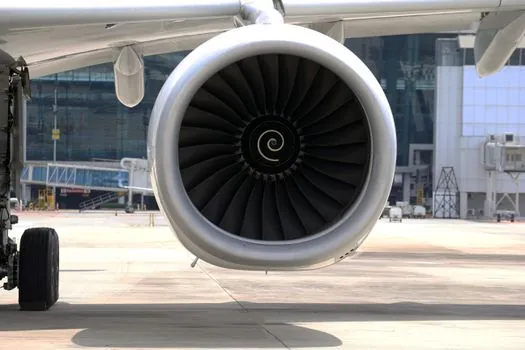
Induction motors cost less to buy, are mechanically simpler with no exciters or magnet assemblies, and tolerate harsh, dirty, high-vibration environments better than the alternatives, which is why they still dominate pumps, fans, blowers, and conveyors in general industry [S1][S3]. Synchronous motors, especially PMSMs, carry a price premium for the magnets and the matched drive electronics, and the rotor assembly is less tolerant of thermal abuse and demagnetisation faults [S1][S5].
For facility engineers weighing capex, the rough rule from the research is: induction motor is the lowest-first-cost option, synchronous motor is higher-first-cost but recovers the gap through lower losses in high-utilisation duty [S1][S7]. That payback math is sensitive to annual run hours and electricity price, both of which are site-specific and outside the research.
Selection Criteria Matrix
Lining the two designs against the criteria that actually drive a motor purchase order, based on the research material: [S1]
Full-load efficiency: induction 90-93%, synchronous roughly 93-96% (PMSM about 94% in the cited 10 hp test) [S5][S6].
Part-load efficiency at 3:1 turndown: NEMA Premium ACIM about 72% at 600 rpm, PMSM about 83% at 600 rpm [S5].
Speed accuracy under load variation: induction drifts with slip, synchronous holds commanded speed [S2][S3].
First cost and mechanical simplicity: induction wins on both, synchronous needs drive and excitation [S1][S5].
Power factor capability: synchronous can correct plant PF through field adjustment, induction draws lagging reactive current [S1].
Direct-on-line starting: induction self-starts, synchronous needs auxiliary starting means [S1][S4].
For a precision servo or constant-speed process line, the matrix points to synchronous. For a pump, fan, or conveyor that just needs to run, the matrix points to induction. The decision almost always turns on whether the application can monetise the 2-11 point efficiency spread, which depends on duty cycle and kWh cost, not on motor technology fashion.
Application Fit and Where Each Type Is Specified
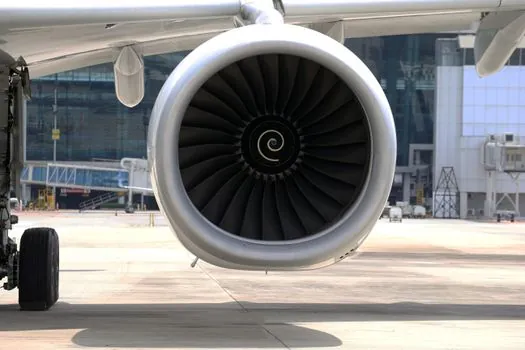
Synchronous variants dominate high-efficiency drives and renewable-energy interfaces where the inverter is already in the system, and they appear in power stations, large compressors, and grid voltage regulation roles because of the field-control flexibility [S1][S8]. PMSMs in particular are the workhorse of modern machine tool spindles, extruders, and EV traction drives where the inverter is part of the bill of materials anyway [S3][S5].
Induction motors cover the long tail of industry: industrial fans, blowers, water-treatment pumps, conveyor belts, and general machinery where the drive motor pair does not need sub-1% speed regulation and where direct-on-line starting is acceptable [S1][S3]. Three-phase induction units in fractional to multi-megawatt ratings remain the highest-volume industrial AC machine in the world because the supply chain, repair network, and standardisation around them is the deepest.
A useful hybrid is the line-start permanent magnet motor, which can start direct-on-line like an induction motor and then run up to synchronous speed with the magnets engaged, but the research material only discusses the two pure architectures, not the hybrid, so the hybrid should be evaluated against its own vendor data rather than against the synchronous vs induction split above.
Limitations and Failure Modes to Plan For
For induction motors the main failure modes are bearing failure, winding insulation breakdown from thermal cycling, and rotor bar cracking on heavy-start duty, all of which are well understood and supported by a deep aftermarket [S1][S3]. Efficiency also degrades under heavy VFD-induced harmonic heating unless the motor is inverter-duty rated, and the 0.5-1.5 point ACIM-on-VFD penalty cited above is the headline number to remember when sizing a retrofit [S5].
For synchronous motors, the failure modes shift: PMSMs are vulnerable to magnet demagnetisation from overtemperature, short-circuit current, or contamination, and the magnet material (commonly NdFeB) carries a supply-chain and pricing risk that induction rotors do not. Wound-field synchronous machines add slip rings, brush gear, and field excitation electronics as additional maintenance items. Both synchronous topologies also depend on the drive being available: no drive, no controlled run, and a drive fault on a single-machine line usually means a hard stop.
Power-quality side effects differ: a bank of large induction motors draws significant inrush and lagging reactive current during starting, while synchronous motors can be run at leading power factor to offset plant-level reactive demand, which is sometimes a hidden financial benefit on sites with PF penalties [S1].
Standards, Sourcing, and What to Verify on the Datasheet
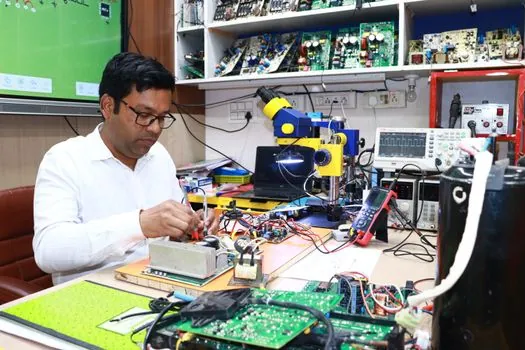
Efficiency classes for induction motors in most markets are governed by the IE-class scheme (IE1 through IE4, with IE5 in current standards work) under IEC 60034-30-1, and synchronous machines are increasingly covered by the same or parallel efficiency standards as PMSM ratings have proliferated. The research material does not name a specific IEC clause, so treat the standard reference as background context rather than a citable specific. [S5]
On the vendor side, datasheets from Sumitomo, Fuji, Power Motor, Leili, and Ganfon all align on the same qualitative story (synchronous wins on efficiency and speed accuracy, induction wins on cost and simplicity), and the quantitative anchor points in this article (the 90-93% induction band, the 94% PMSM at full load, the 90% to 72% vs 94% to 83% turndown curves) come from the Fuji test cited in [S5] and the Pelonis overview in [S6]. The earlier [S5] piece dates to 2017, so cite it with the (2017) date suffix if quoted; the qualitative direction has not changed in the more recent [S8] (August 2025) and [S3] (January 2025) material.
For engineers writing a specification, the next concrete steps are: pull the IE-class line from the motor nameplate, request the part-load efficiency curve from the vendor (not just the full-load point), and decide whether the hydraulic motor alternative or the linear motor alternative has been ruled out for the duty. Then size the VFD or soft-starter to the locked-rotor current, not the full-load current, because that is where the synchronous-versus-induction starting-method choice shows up in the panel design.
Background reading: IIC vs IIB Cable Gland Gas Group: Selection, Flame-Path and Spec Boundaries.