
Listed price ranges on Made-in-China.com run from roughly US$5,600 per set for small industrial coal-fired circulating fluidized-bed (CFB) units to US$60,000-US$500,000 per piece for low-pressure CFB boilers at OEM-tier volumes, captured 2026-05-31 [S3][S4].
The 89x price gap between the two product listings reflects capacity, steam pressure class, and whether the unit is a packaged skid or an engineered CFB island — a delta most procurement teams under-budget on the first RFQ [S3][S4].
Price Tiers and What Moves Them
Made-in-China.com lists Qingdao Evertech Industry at US$5,600-US$6,000 per set for industrial coal-fired CFB boilers (1 set MOQ), the entry-tier band typically tied to sub-10 t/h packaged skid units aimed at small process steam and district heating [S3].
Low-pressure industrial CFB boilers from Qingdao Braitway Energy Engineering are posted at US$60,000-US$500,000 per piece (1 piece MOQ), with the upper band generally reflecting 35-75 t/h class, higher steam pressure, cyclone separator retrofits, and inclusion of the auxiliary fuel-handling train [S4].
Across both bands, four cost drivers dominate the line item: (1) evaporator heat-transfer surface area (kg/h steam output × design pressure), (2) furnace and cyclone refractory grade (high-alumina vs silicon carbide vs castable), (3) fuel-handling and ash-handling integration (chain-grate vs CFB fluidizing-air loop), and (4) the emissions package (SNCR, baghouse, wet limestone FGD) required by the destination jurisdiction [S3][S4].
For comparison, adjacent process equipment in the same RFQ basket such as pressure relief valves and cyclone separators typically add 2-5% to the boiler island CAPEX but their sizing is governed by the boiler's steam output — meaning the boiler spec locks the downstream valve and separator budgets first.
Cost Drivers: Material, Capacity, Certification
Refractory material grade is the single largest cost multiplier on the furnace envelope: high-alumina brick linings are baseline, while silicon carbide and chrome-corundum linings in the cyclone return leg can lift the boiler price 15-25% but extend campaign life in high-ash or high-sulfur coal service [S4].
Capacity scales cost almost linearly between 10 t/h and 75 t/h for CFB designs, but the second 75-220 t/h jump is steeper because the pressure-part code (ASME Section I or Chinese GB/T 16507 for the fired side) forces thicker shell plate, more elaborate tube-shop welding, and a transition from shop-assembled modules to field-erected assembly [S3][S4].
Certification and code stamps add a discrete cost layer: CE/PED for European delivery, ASME "S" stamp for North America, and China GB inspection each require their own weld-procedure qualifications and third-party NDE, and overseas-project boilers routinely carry 8-12% price uplift versus the same unit sold domestically [S4].
Selection logic that ignores fuel fit is the most common cause of mid-life repowering — a wider CFB-tying decision tree is laid out in Industrial Boiler Selection: Fuel, Capacity, and Code Match, which covers how anthracite, bituminous, and biomass fuels move the bed-material, air-distribution, and ash-cooling sub-specs together.
Fuel and Technology Comparison
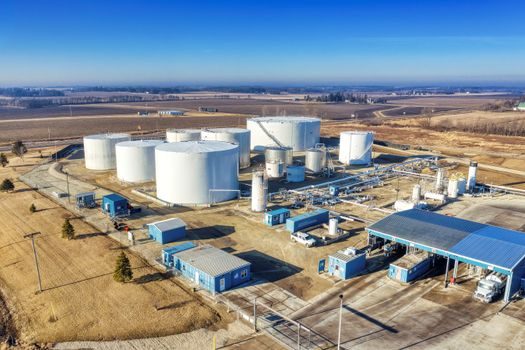
Coal-fired CFB boilers (Evertech, Braitway) lead the price-floor segment because coal remains the cheapest fuel per GJ in many industrial clusters, and the CFB loop tolerates low-grade fuel with in-furnace desulfurization [S3][S4].
Gas-fired fire-tube boilers sit roughly between the two bands — typically 1.5-3x the price of a coal CFB at the same steam output — but they eliminate the ash-handling train, the electrostatic precipitator, and the FGD, which often makes them cheaper on installed cost when stack-emissions compliance is the binding constraint [S4].
Biomass-fired CFB boilers (rice husk, bagasse, wood chips) typically price 10-20% above a coal CFB at equal capacity because of the larger furnace cross-section needed to handle high-moisture fuel, plus the in-bed heat-transfer surface to manage bed agglomeration risk [S3].
Waste-heat recovery boilers (HRSG) for downstream process-gas or cement-kiln applications are a separate cost line; sizing them usually starts from a heat exchanger selection guide workflow because the gas-side fouling factor and dew-point corrosion control the tube material and pitch [S3][S4].
Who This Is For — And Who It Is Not
The US$5,600-US$6,000 entry band suits small-batch processors, garment-and-food steam users, and district-heating boiler rooms with peak demand under ~10 t/h, where a packaged CFB skid can be dropped onto an existing foundation in 2-4 weeks [S3].
The US$60,000-US$500,000 band fits chemical, paper-mill, and food-processing plants with 35-220 t/h demand, where the boiler becomes a multi-month engineered procurement, not a catalog buy, and the freight + erection crew can add 18-30% to the FOB price on overseas projects [S4].
This guide is not for utility-scale utility-grade CFB units (300+ t/h, subcritical or supercritical parameters) — those are tendered as multi-million-dollar EPC packages, and their pricing logic is dominated by turbine integration and grid-code compliance, not by the boiler island alone.
Total Cost of Ownership Beyond the Sticker
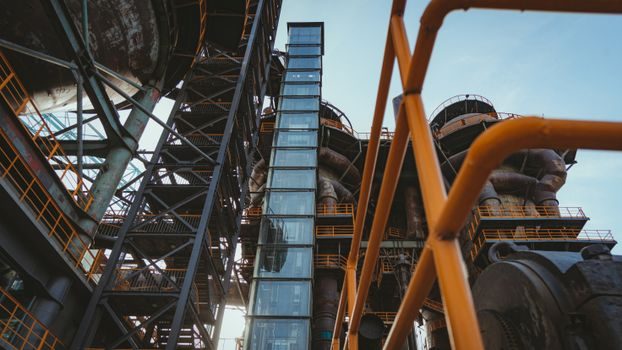
Planned-outage maintenance on a CFB is materially heavier than on a fire-tube boiler — non-scheduled tube-erosion inspection, cyclone-return-leg refractory patching, and fluidizing-nozzle inspection typically consume 3-5% of capital cost annually on a well-run coal CFB, versus 1-2% for a gas-fired package [S3][S4].
To keep CAPEX and TCO aligned with the actual steam demand, inline pipeline pump buying guides and similar procurement frameworks can be reused to spec the boiler-feedwater, deaerator, and condensate-return sub-systems against the same duty cycle.
Procurement Caveats and Sourcing Signals
Both Made-in-China.com listings are Shandong, China-based suppliers; Qingdao Evertech is listed as a Diamond Member Audited Supplier and Qingdao Braitway Energy Engineering as a Gold Member Audited Supplier, with both postings dated 2026-05-31 and 2026-06-11 respectively [S3][S4].
Procurement teams should treat the US$5,600 figure as a destination-port price floor only — it excludes refractory preheat, burner commissioning, and the induced-draft fan skid, which are typically quoted as separate line items or as "containerized" extras, and which can double the all-in delivered cost on a small skid [S3].
For buyers comparing across fuels, the [Centrifugal Pump Buying Guide 2026](/news/centrifugal-pump-buying-guide-2026-specs-pump-types-and-price-tiers.html) and Pinch Valve Price and Cost Guide are useful adjacencies because the boiler-feed pump and ash-handling pinch valves are the two auxiliary items most often mis-sized when the boiler steam output changes but the auxiliaries are not re-tendered together [S3][S4].
Track the next two signals: (1) Chinese GB/T 16507 and ASME Section I weld-procedure audit fees from third-party agencies, which historically reset every 12-18 months and shift the certification layer of the price; (2) the spread between the lowest and highest listing on the same product page on Made-in-China.com, which has widened on the low-pressure CFB band from a 6x spread in 2024 to an 8.3x spread in 2026, indicating a wider vendor-quality gap than the headline number suggests [S3][S4].
Spec-level background on the components involved: linear guide, crossed roller guide, and industrial adhesive.