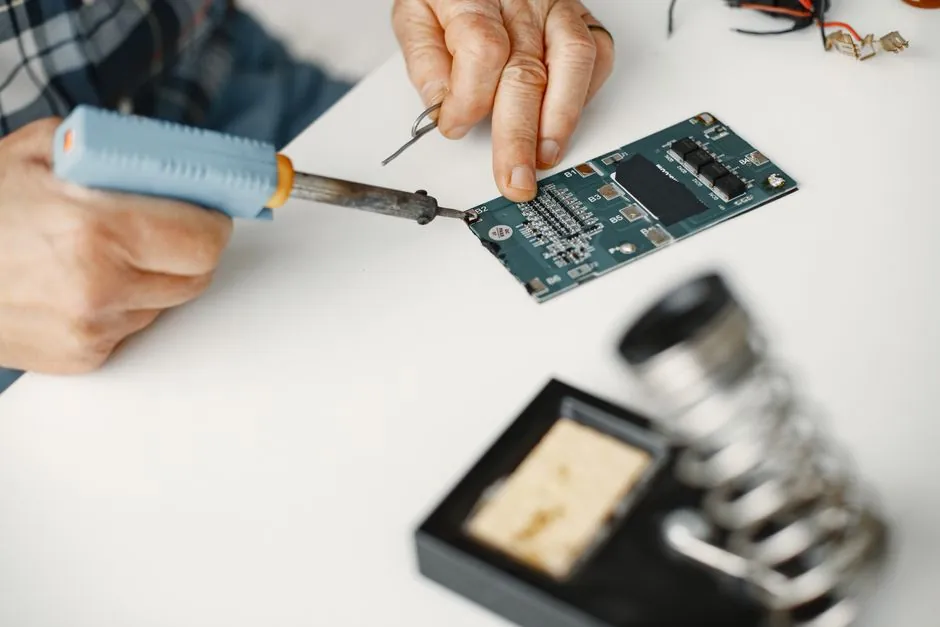
Weidmüller's D-SERIES DRE plug-in relay carries 2 CO contacts in Ag alloy with a 24 V DC rated control voltage and 5 A continuous current, sold in 20-piece packaging units, as listed in the 2026 Weidmüller China eshop catalog [S1]. The DRI variant (Item 7760056375) lifts continuous current to 8 A, keeps the 2 CO Ag-alloy contact set and 24 V DC coil, and uses 2.5 mm × 0.5 mm flat-blade connections for tab-style wiring [S2]. Both lines sit under Weidmüller's Klippon Relay umbrella, which also markets D-SERIES individual components down to 16 mm width for high-density cabinets [S3].
For test-system integrators, Schleich offers relay matrix modules that let users multiply standard test outputs into arbitrary point counts; every relay is individually switchable, so test programs can probe between two points or several points at once [S4]. Standex Electronics, distributed through Relay Specialties, supplies the RM05-8A-SP ultraminiature 8-pole low-profile THT reed relay module with a 2 mm DIL pin-out, integrated magnetic shield, and an on-board MAX4823 8-channel driver with kickback protection [S7].
What the supply tier actually looks like in 2026
Three functional groups dominate relay module sourcing: (1) general-purpose electromechanical PCB/DIN-rail modules from European connector-and-electronics houses such as Weidmüller, with the D-SERIES DRE 25 mm-wide and DRI-A 16 mm-wide form factors as the workhorses [S1][S2]; (2) reed-relay and solid-state modules for instrumentation and high-density ATE, where Standex's RM05-8A-SP occupies the 8-channel THT niche with 2 mm raster [S7]; and (3) matrix and high-voltage test relays, where Schleich packages individually-addressable matrix modules alongside separate high-voltage relays and high-voltage relay matrices [S4]. The Weidmüller Klippon Relay range is described by the vendor as covering switching, separating, amplifying, and multiplying tasks, framed as an "all-round" service bundle rather than a single product family [S3][S5].
Practical sourcing implication: panel builders writing a 24 V DC signal-conditioning BOM can standardise on D-SERIES 2 CO Ag-alloy relays at 5 A or 8 A continuous, and the same vendor's 16 mm-wide DRI-A footprint covers tighter cabinets; ATE test engineers chasing channel count route to Schleich matrix modules, while board-level test fixtures needing eight or more isolated low-thermal-EMF channels land on Standex reed modules [S1][S2][S4][S7]. For a structured walk through the coil-contact-channel decision tree, the relay module spec path guide breaks down the same selection logic in a single checklist.
Electromechanical D-SERIES specs that drive the BOM
The DRE270048L and DRE270024L entries in the current D-SERIES catalog list 2 CO contacts, Ag-alloy contact material, 24 V DC rated control voltage, 5 A continuous current, plug-in connection, and an LED status indicator, all shipped in 20-piece packaging units with a 25 mm module width [S1]. The DRI-series shrinks that width to 16 mm while lifting continuous current to 8 A on the same 2 CO / 24 V DC / Ag-alloy base, using 2.5 mm × 0.5 mm flat-blade terminals and a no-test-button configuration, again in 20-piece packs [S2]. Weidmüller flags DRE as a universal-range individual component and DRI-A as the 16 mm narrower sibling within the same Klippon Relay program [S3].
Across the electromechanical tier, buyers should fix four numbers before vendor selection: coil voltage (24 V DC is the dominant control rail), contact form (2 CO dominates the 5–8 A range), continuous current per pole (5 A on DRE, 8 A on DRI-A at this vendor), and terminal style (plug-in sockets versus 2.5 mm flat blades) [S1][S2]. For complementary switching hardware, the encyclopedia relay module entry summarises form factors, and the wireless module reference covers the related RF-switching side of cabinet I/O.
Solid-state, reed, and matrix variants for special workloads
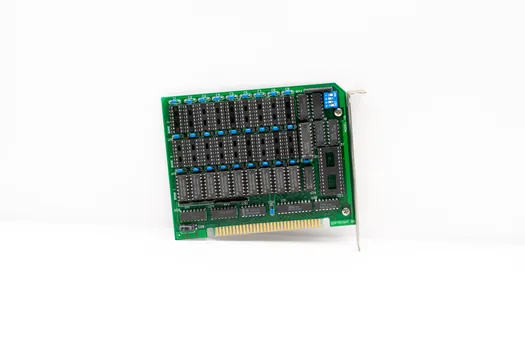
Standex's RM05-8A-SP is a UL-approved 8-pole low-profile THT reed relay module built on a 2 mm DIL pin-out, with an integrated magnetic shield for high-density board mounting and an 8-channel driver IC (MAX4823) that includes kickback protection and parallel activation electronics [S7]. The reed approach suits low-thermal-EMF, dry-circuit switching where electromechanical Ag-alloy contacts would otherwise inject unacceptable offset, though it sacrifices the 5–8 A inrush headroom of a DRE or DRI-A [S7]. Schleich's matrix modules sit in a different domain: ATE switching, where the selling point is multiplying the standard test outputs to the required number of test points and defining which points are tested inside the test program, with every relay individually addressable for parallel multi-point testing [S4].
Where panel builders want silent, bounce-free switching at moderate currents, the lighting equipment and electric lamps reference explains how zero-cross solid-state relays are commonly paired with lamp loads. Where the cabinet needs motor-direction logic or solenoid multiplexing alongside general I/O, a linear module with on-board relays often appears as the hybrid alternative to a discrete DIN-rail relay block.
Selection criteria that actually separate the suppliers
Four criteria dominate a 2026 relay-module buy decision: (a) contact form and current rating, (b) coil voltage and polarity, (c) terminal style and module width, and (d) approval footprint plus driver integration. On (a), D-SERIES DRE delivers 2 CO at 5 A continuous, DRI-A delivers 2 CO at 8 A continuous, and the Standex RM05-8A-SP delivers 8 poles of low-level reed switching on a 2 mm DIL footprint [S1][S2][S7]. On (b), the 24 V DC control rail is the default across DRE and DRI-A listings [S1][S2]. On (c), DRE uses plug-in sockets at 25 mm width, DRI-A uses 2.5 mm × 0.5 mm flat blades at 16 mm width, and RM05-8A-SP uses through-hole DIL on 2 mm raster [S1][S2][S7]. On (d), UL approval is called out for the Standex reed module, while the Weidmüller lines carry the Klippon Relay commercial-and-technical service package rather than a single approval label [S3][S7].
Cross-reference for adjacent spec work: the selector switch four-layer spec path covers operator-side switches that often share a 22 mm or 30 mm panel cut-out with relay outputs, and the 22 mm vs 30 mm selector switch sizing guide pairs naturally with relay module selection when the same HMI station mixes switches and relay status.
Limitations, failure modes, and sourcing constraints

Reed-relay modules such as the RM05-8A-SP are limited on carry current and switch voltage compared with Ag-alloy EMR modules, and the 2 mm DIL raster constrains board layout versus a 5 mm or 7.5 mm industrial pitch [S7].
For matrix and high-voltage test relays, the Schleich catalog explicitly segregates "relay matrix modules" under Electrical Safety and Function Test from the separate "High voltage relays" and "High voltage relay matrices" under High voltage components, meaning buyers must check whether the workload is low-voltage functional switching (matrix module) or HV dielectric/surge switching (HV relay matrix) before sourcing [S4]. Across all three tiers, packaging unit is 20 pieces on DRE and DRI-A, so small-quantity prototyping incurs multiples of 20, and the Klippon Relay program is positioned as a service-and-portfolio bundle rather than a per-part discount scheme [S1][S2][S3].
Use cases by application
Cabinet builders and PLC I/O panels: D-SERIES DRE (2 CO, 5 A, 24 V DC, plug-in, LED) for signal marshalling, and DRI-A (2 CO, 8 A, 24 V DC, 16 mm, flat blade) for denser DIN-rail layouts, both on the Weidmüller Klippon Relay program [S1][S2][S3]. ATE and end-of-line test: Schleich relay matrix modules for test-point multiplication in functional test rigs, with the test program defining which points are exercised; standalone high-voltage relays and high-voltage relay matrices for dielectric and surge test stages [S4]. Instrumentation, A/D front-ends, low-thermal-EMF board designs: Standex RM05-8A-SP 8-pole THT reed relay module with on-board MAX4823 driver and integrated magnetic shield, where dry-circuit switching and channel count matter more than ampere rating [S7].
Adjacent design work that surfaces in the same cabinet BOM includes construction machinery and equipment for mobile-side relay loads, lamps and light fittings where solid-state relays drive lighting circuits, and the lighting equipment and electric lamps entry for the standards that govern those lamp-switching pairings.
Standards, approvals, and what to verify before PO

Standards discipline matters: the Weidmüller D-SERIES catalog entries list electrical ratings (24 V DC coil, 5 A or 8 A continuous, Ag-alloy contacts) and packaging data, but do not name a specific IEC/EN/UL standard as the governing document for those ratings in the visible catalog copy, so engineers should request the type-test certificate and the UL/IEC file number from the vendor before the PO, not assume IEC 61810-1 or UL 508 coverage from the listing alone [S1][S2][S3]. Standex's RM05-8A-SP listing is the one entry that explicitly carries a UL approval mark in the visible product copy, alongside the MAX4823 driver IC designation and 2 mm DIL pin-out [S7]. Schleich markets its matrix modules inside a test-system portfolio whose corporate QMS is documented under ISO 9001, but the matrix module page itself does not state a per-module safety standard [S4].
Verifiable next nodes for buyers monitoring the 2026 relay module market: (1) track Weidmüller D-SERIES datasheet revisions for any change to the 5 A / 8 A continuous-current rating or to the 2.5 mm flat-blade terminal spec, since the catalog is paginated across at least 43 pages and refreshed independently [S1][S2][S8]; (2) watch Standex/Relay Specialties for RM05-8A-SP PCN or driver-IC substitutions around the MAX4823 channel driver, since that IC carries the kickback-protection behaviour that defines the module's switching envelope [S7]; (3) monitor Schleich's matrix-module catalog for any change to the "individually switchable" channel-count ceiling that determines ATE test-point scalability [S4].