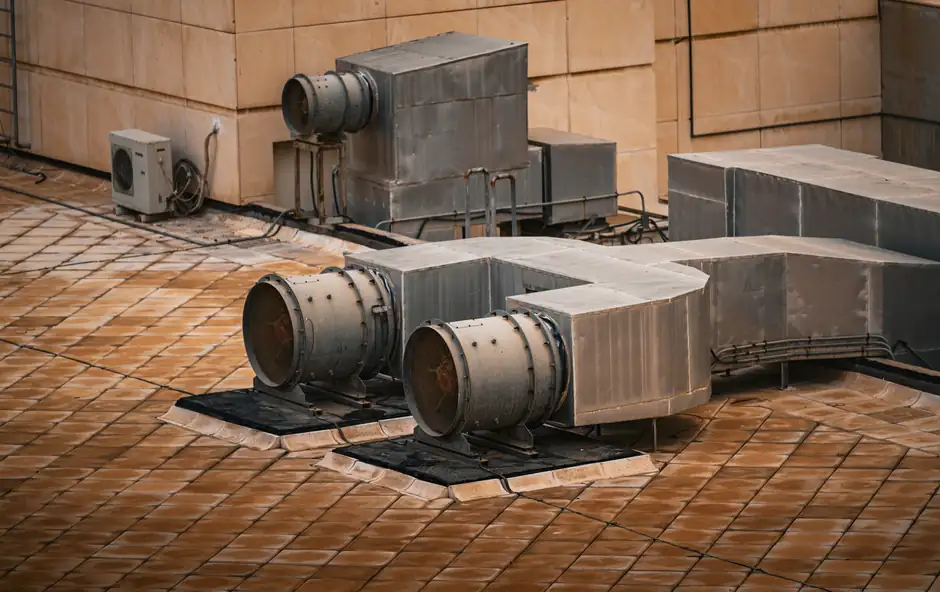
An industrial chiller rejects process heat through either ambient air or a cooling-tower water loop, and the choice of condenser side is the single biggest decision a specifier makes before sizing the compressor.
Across the two main condenser families, vapor-compression units dominate new installations, while vapor-absorption units remain a niche play where a waste-heat or steam source is already on site [S1][S2].
Condenser Family: Air-Cooled vs Water-Cooled vs Evaporative
Air-cooled chillers use propeller or centrifugal fans to push ambient air across fin-and-tube condenser coils, with no cooling tower, no condenser-water pumps, and no chemical water treatment, which keeps the install footprint small but ties capacity to outdoor dry-bulb temperature [S4][S5]. Modular air-cooled packages typically scale from about 10 refrigeration tons up to 550 RT, with scroll-compressor units topping out near 200 RT and screw-compressor units reaching 550 RT [S4]. Air-cooled units generally show an energy efficiency ratio near 1.00 kW/ton, lower than water-cooled counterparts under the same load [S4].
Water-cooled chillers route condenser water through a shell-and-tube or plate heat exchanger to a cooling tower, where partial evaporation carries the heat away; water's higher heat-transfer coefficient lets the compressor draw less electricity for the same cooling effect, but the buyer absorbs the cost of the tower, pumps, makeup water, and water treatment [S3][S5]. Evaporative-condensed chillers combine both principles, spraying water over a condenser coil with an air stream, and are treated as a third condenser type in industrial guides [S2].
Compressor Technology Inside the Vapor-Compression Frame
Reciprocating, scroll, screw, centrifugal, and Turbocor oil-free centrifugal compressors are the five practical options named in current industrial chiller guides, with screw and scroll covering most mid-size process loads and centrifugal taking the megawatt range [S1]. The same vapor-compression cycle applies: compressor, condenser, expansion device, evaporator, with only the heat-rejection medium changing between air-cooled and water-cooled variants [S1][S3].
For smaller process skids below roughly 20 RT, scroll compressors dominate because of their unloaded part-load behaviour and lower oil-management overhead; from about 20 RT up to 200-300 RT, semi-hermetic and hermetic screw compressors with capacity modulation become the default; above that, centrifugal machines take over, and oil-free magnetic-bearing Turbocor units have carved out a low-maintenance niche in HVAC and data-center service [S1][S4]. A practical process example: a 100 TR unit rated at 7 °C leaving-water will only deliver roughly 70-80 TR when the process drops to 0 °C, because chilled-water temperature is part of the rated condition, not a free variable [S5].
Vapor Absorption: When Waste Heat Replaces the Compressor
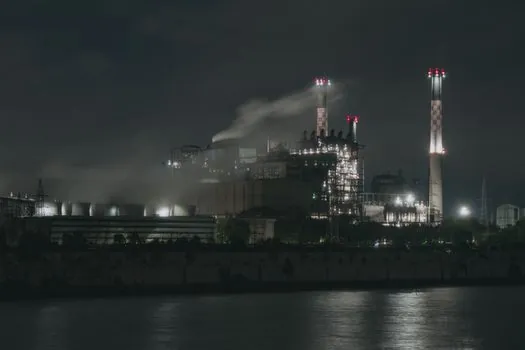
Vapor-absorption chillers replace the electric mechanical compressor with a thermal generator that uses lithium-bromide/water or ammonia/water as the absorbent pair, and they are typically fired by natural gas, steam, or recovered process heat [S1][S2]. Because the moving-part count is low and the thermal input can be a free by-product, absorption units are common in combined heat and power (CHP) plants, district cooling tied to waste-heat sources, and large campus HVAC where electricity cost or carbon cap is the binding constraint [S2].
Absorption machines are heavier per ton of cooling, have slower load-following response than centrifugal vapor-compression units, and tolerate leaving-water temperatures in a narrower window, so they are not the answer for injection-mold or pharmaceutical-reactor duty where the setpoint swings fast [S1][S5].
Application Map: Process, HVAC, and Special Fluids
Industrial chillers segment by end use, not just by hardware: food and beverage, medical, HVAC, metal finishing, plastic processing, waterjet cutting, laser chilling, chemical processing, and ice-rink climate control are all named application buckets in current supplier and engineering references [S2][S3]. The dividing line between a comfort chiller and a process chiller is the leaving-water temperature: HVAC typically leaves the evaporator near 7 °C, while process cooling may require 2 °C or sub-zero glycol loops, which changes the refrigerant, the evaporator approach temperature, and the compressor displacement [S5].
Oil and gas, refining, and pharmaceutical facilities tend to specify higher availability targets and often pair chiller skids with N+1 redundancy, which is why air-cooled modular units with multiple independent refrigerant circuits are common there: a single compressor failure drops that circuit but keeps the plant on line [S4][S5]. A broader view of how the chiller fits into plant utility systems sits in the industrial chiller types and applications guide, and the upstream mechanical-drive package is covered in the construction machinery and equipment reference.
Selection Criteria: A Side-by-Side Comparison

Four decision criteria line the main chiller families up against each other: heat-rejection medium, leaving-water temperature range, infrastructure burden, and typical capacity band. Air-cooled units score low on infrastructure (no tower, no water treatment) but high on ambient sensitivity, so they fit small-to-mid HVAC and outdoor retrofits from roughly 10 RT to 550 RT [S4][S5]. Water-cooled units score higher on efficiency and stable capacity in hot climates, but the buyer absorbs the cooling-tower, pump, makeup-water, and water-treatment line items [S3][S5].
Vapor-absorption units swap electric input for thermal input (gas, steam, or waste heat), have a high first cost per ton, but a very low operating cost where a heat source is already on the balance sheet, and they are commonly found in the 100 RT to 1500 RT capacity band tied to district or CHP systems [S1][S2]. Explosion-proof and glycol variants are specialist builds for hazardous-area or sub-zero service, and they appear as separate catalog lines in current supplier literature rather than field-converted standard units [S3].
Refrigerant and Regulatory Pressure Heading Into 2026-2027
Refrigerant choice is now a spec-line item, not an afterthought, and Brazilian Ministry of the Environment targets call for a 10% reduction in HFC gas consumption by 2029 and an 80% reduction by 2045, a glide path that is broadly representative of how F-gas policy is moving in several major markets [S5]. Specifiers should expect new orders in 2026 to increasingly request low-GWP refrigerants (R-454B, R-32, R-1234yf, or natural refrigerants such as R-744 and R-717) and to record refrigerant type explicitly on the datasheet, because a future retrofit under F-gas phase-down rules is far cheaper to plan at the order stage than in the field [S5].
Where the chiller feeds an oil and gas facility, the cooling package is typically specified alongside a access control system selection for oil and gas facilities spec map 2026 and instrument-air treatment, and compressor selection interacts with the pneumatic actuator 2026 spec driven map of suppliers types and buy decisions downstream on the same skid.
Failure Modes and Lifecycle Limits to Spec Against
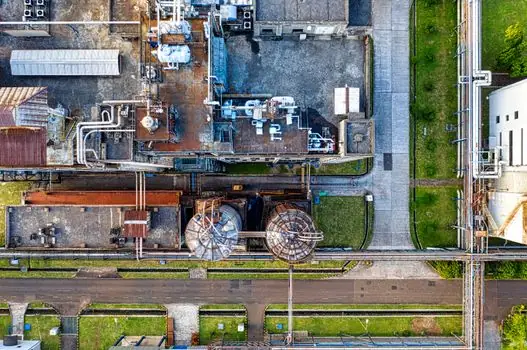
Air-cooled units lose capacity as outdoor dry-bulb rises; on a 38 °C afternoon, an air-cooled chiller can drop to roughly 80-90% of its nameplate at the same leaving-water setpoint, so designers in hot climates either oversize the unit or shift to water-cooled [S5]. Water-cooled units fail in the field mostly through condenser-tube fouling, cooling-tower water-treatment slip, and pump seal leakage, which is why a water-treatment scope and a tube-cleaning interval belong on the chiller datasheet, not in a separate maintenance contract [S2][S3].
Modular air-cooled units with at least two compressors keep running at 50% capacity if one circuit drops out, a useful redundancy point for continuous-process plants, and a spec line that is worth pulling from the catalogue into the procurement document [S4]. Operating-cost analysis around the chiller's supporting systems, such as pumps, valves, and accumulators in the chilled-water loop, is detailed in the hydraulic accumulator tco where the real cost hides past the invoice reference.
Track two signals through the rest of 2026 and into 2027: the share of new industrial orders specifying low-GWP refrigerants, and the average kW/ton at AHRI 550/590 conditions published in OEM selection software, because both numbers move with each refrigerant-policy step and will tell specifiers whether a quoted unit is still compliant on the day it ships.
The underlying component specifications are covered under lamps and light fittings.