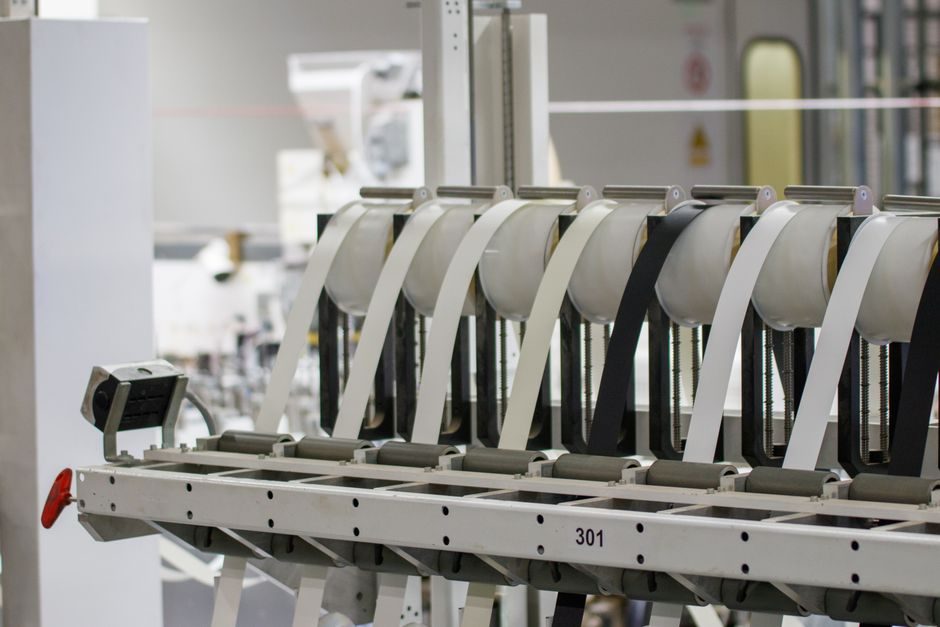
Industrial coatings production is a multi-stage batch and continuous operation that converts polymers, pigments, solvents, and additives into a homogeneous, application-ready liquid or powder [S1].
The workflow runs from resin and additive weighing through high-speed dispersion, let-down blending, viscosity adjustment, filtration, and drum or pail filling, with each step governed by a written process specification covering parameters, equipment, and in-process checks [S3].
Raw Material Intake and Pre-Mix Stage
Resins, pigments, fillers, and additives are charged in defined weight ratios into a stainless or carbon-steel mixing vessel, typically 500 L to 10,000 L depending on batch size [S1]. Pigments and extenders are first wetted with a portion of the resin/solvent blend to form a mill base, while liquids such as plasticizers, flow agents, and coalescing aids are staged for later addition [S1]. Material safety data sheets and regulatory data — including HAP and VOC content per EPA methods — are logged against each lot before charging, and ultra-low HAP/VOC formulations are kept on segregated lines when EPA-compliant grades are produced [S1].
For wood-coating lines operated by converters such as European Industrial Coatings Ltd., the same intake discipline applies to pre-catalyzed, acid-catalyzed, polyurethane, acrylic, water-based, and dye systems, each requiring isolated pre-mix to prevent cross-contamination of catalyst-bearing products [S2].
High-Speed Dispersion and Let-Down Blending
Mill base dispersion uses a high-speed cowles or saw-tooth impeller at tip speeds typically between 15 and 25 m/s, monitored through amp draw and temperature rise, until a Hegman grind of 6 to 8 is reached for most industrial liquid coatings [S1]. Once the mill base passes grind gauge checks, it is transferred to a let-down tank where the remaining resin, solvent, and additives are added under slow-speed agitation to bring the batch to final solids, viscosity, and color [S1].
For a typical water-based interior wood coating, let-down ratios sit in the 4:1 to 6:1 (let-down to mill base) range, with final viscosity targets of 60 to 100 KU on a Krebs viscometer and pH held between 8.0 and 9.0 for acrylic systems [S2]. Process specification documents fix these values per process specification guidance, including mixing speed, time, and the order of addition [S3].
Resin and Adhesive Sub-Families on a Coatings Line
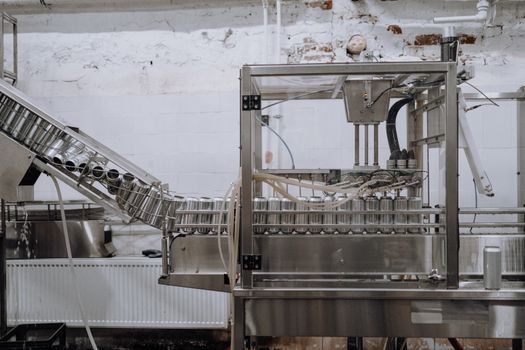
An industrial coatings manufacturer typically runs parallel sub-families including phenolic and epoxy linings for chemical-resistant drum interiors, water-based and solvent-based wood finishes, polyurethane clear and pigmented coatings, and strippable protective films [S1][S2]. Each sub-family shares let-down and filtration equipment but uses dedicated transfer lines, pumps, and packaging to prevent cross-contamination, especially where amine catalysts in acid-cured wood coatings would gel an epoxy liner if mixed [S1].
For drum and pail production, RESCO phenolic and epoxy linings are compounded to deliver chemical resistance against aggressive fill goods, and are paired with AQUA-LON 902 chemical-resistant exterior drum coatings, allowing a single plant to ship a fully coated container [S1].
In-Process Quality Control and ASTM Test Methods
Each batch is sampled at the let-down stage and tested for viscosity (KU or ICI), solids by weight, pH where applicable, Hegman grind, color (Delta E against a standard), and weight per gallon, with methods drawn from ASTM D562 (KU viscosity), D2369 (volatiles), D1210 (grind), and D1475 (density) [S1]. Adhesive and coating lots are also assessed through lap-shear, peel, and chemical-resistance panels consistent with established ASTM methodology before release [S1].
For finished products used in regulated service, the QA record set is filed against the customer process specification document, capturing batch number, equipment, operator, and every in-process reading — exactly the content a process specification is intended to record under accepted engineering practice [S3].
Filtration, Deaeration, and Filling
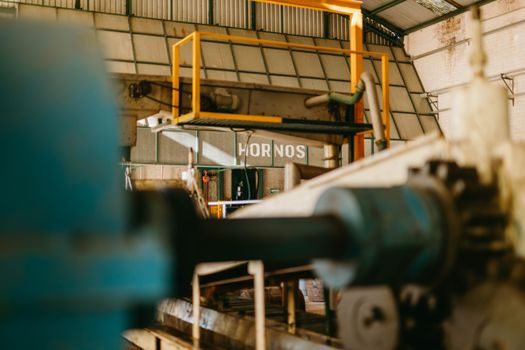
Finished coating passes through bag or cartridge filtration in the 25 to 100 µm range to capture gel and undispersed pigment, followed by vacuum deaeration at -0.7 to -0.9 bar for 20 to 60 minutes to minimize entrained air that would otherwise defect spray-applied films [S1]. The batch is then transferred to a filling line where drums, pails, or totes are filled by weight to a target net mass within ±0.5% on calibrated scales, and each container is lot-stamped with a batch code that ties back to the QA packet [S1].
For water-based and dye products, filling lines are often flushed and conductivity-checked between runs to keep residual ionic contamination below thresholds that could destabilize subsequent acrylic batches [S2].
Process Specification as the Spine of the Line
A coatings process specification is the controlling technical document for every step above, fixing the process route, the equipment, the work-instruction content per work station, the inspection items and methods, the operating parameters, and the labor and time standards [S3]. When a resin source, pigment grade, or solvent blend changes, the process specification is revised and re-approved before the new bill of materials is run in production [S3].
Plants that align their industrial adhesive and coatings lines to a single specification system, with shared raw-material codes, shared QC templates, and shared filling records, reduce non-conformance rates and shorten customer audits, a pattern that mirrors practices described in adjacent chemical-process guides such as Specialty Chemicals Smart Manufacturing: Sensor, Valve, and Automation Specs for 2026.
Track for the next cycle: scheduled ASTM method updates and any plant announcements on expanded low-VOC or PFAS-free resin platforms for industrial coatings lines through Q4 2026.