
Industrial Ethernet switches on the 2026 buying shortlist are split first by management plane (unmanaged, smart/web-managed, fully managed Layer 2, Layer 3) and second by mechanical form factor (DIN-rail, 19-inch rackmount, M12/IP67), with port counts running 5, 8, 10, 16, 24, 28 and 36 and PoE/PoE+ offered as an option on most managed lines [S1][S2][S3].
The active vendor set in mid-2026 catalogues spans Hirschmann, HARTING, Advantech, Helmholz, Indu-Sol, HMS Industrial Networks, Huawei, IDEC, AMG, ELPRO, ESA elettronica, 3onedata, ZHOU AOBO, USR, Comark and Konten Networks, with Balluff positioning the parts as system-scaling building blocks for Ethernet segments [S2][S4]. Hardened operating envelopes (-40 to 75 °C), fanless metal housings, and dual 24/48 VDC or 110/220 VAC power inputs are now table stakes rather than differentiators across this group [S3][S4][S5].
Form Factor, Port Count and the 28-Port Niche
Buyers typically land on a form factor before anything else: DIN-rail units dominate cabinet builds at 5-16 ports, 19-inch rackmount units take 24-36 port aggregation roles, and M12/IP67 switches go on rolling stock, machines, and outdoor cabinets where vibration and moisture rule out RJ-45 [S1][S2][S5]. 28-port managed switches are listed as a discrete product slice on manufacturer indexes in 2026, typically delivered as 24x 1-GbE copper plus 4x SFP uplinks, and used as aggregation tiers between machine rings and the control-room core [S1].
30-port and 36-port rackmount SKUs target plant-floor aggregation in larger cells, with 19-port units filling smaller control cabinets that still need fibre uplink redundancy [S2]. Across the five product categories that Comark splits in 2026 — Managed Rackmount, Managed DIN-Rail, Unmanaged Rackmount, Unmanaged DIN-Rail, and Industrial PoE — the port range is broadly 5-36 with SFP fibre slots on the managed lines and PoE/PoE+ on dedicated PoE SKUs [S5]. For engineers wiring Ethernet alongside control hardware, a paired reference to the linear guide and crossed-roller guide encyclopaedia entries only matters when a switch is panel-mounted on a motion stage — the more typical reference is just the cabinet's own footprint.
Managed vs Unmanaged vs Layer 3: Decision Boundaries
Unmanaged switches are zero-config, no VLAN, no redundancy protocol, and the lowest unit cost in the catalogue; they are correct only when the network segment is a single drop to one machine, no ring topology is required, and security zoning is enforced upstream [S3][S5]. Smart/web-managed switches add port-level VLAN, QoS, and basic IGMP snooping; they are the common mid-tier pick for cells with 8-16 devices where budget blocks a full managed Layer 2 deployment [S3][S5].
Fully managed Layer 2 switches add ring redundancy (MRP, ERPS, RSTP/STP), port security, ACLs, SNMPv3, and per-port diagnostics — required for any segment carrying PROFINET, EtherNet/IP, or Modbus TCP traffic where a single switch reboot would take a machine down [S3][S4][S5]. Layer 3 managed switches add inter-VLAN routing and are used at the cell-to-plant boundary; in 2026 the distinct Layer 3 category shows up clearly on vendor linecards from Konten (Layer 3 Ethernet Switch and Layer 3 PoE Ethernet Switch) and 3onedata, with 10-GbE uplink variants on rackmount SKUs [S6]. For a process engineer deciding between them, the rule of thumb is: a single machine, no ring, no VLAN = unmanaged; a cell of devices on a ring = managed Layer 2; a cell of cells with multiple VLANs = Layer 3 [S3][S4][S5][S6].
PoE, PoE+ and Power Budget Sizing

PoE (802.3af, 15.4 W per port) and PoE+ (802.3at, 30 W per port) on industrial switches let the same copper run carry data and power to IP cameras, wireless APs, PoE lighting, and Vision/IO blocks, removing a parallel 24 V supply for those end devices [S3][S5][S6].
Konten lists Gigabit Managed PoE Switch, 10-Gb Managed PoE Switch, and a Layer 3 PoE Ethernet Switch as separate SKUs in 2026, signalling that high-power PoE and routing have to be bought together rather than upgraded later [S6]. USR's ISG/ISF line covers 5/8/16 ports with SFP slots and PoE combinations, supporting 10/100/1000 Mbps auto-negotiation, and the same 5/8/16 grid is the most common DIN-rail footprint across the market [S3]. When a switch powers an industrial buzzer stack, a PoE+ budget must include the inrush of the loudest piezo driver at full alarm level, not just its steady-state draw.
Hardening, EN 50155 and Cabinet Location
Hardening ratings split into three environments: factory floor (typically -10 to 60 °C, IP30), harsh industrial/cabinet-less (typically -40 to 75 °C, IP30, fanless), and rail/rolling-stock/mobile (EN 50155, often M12 connectors, -40 to 70 °C with 85 °C class Tx compliance per EN 50155 clause 4.1.4 referenced in the standard itself) [S2][S5][S6]. EM immunity, surge, vibration, and shock are the test points a panel-shop acceptance team should require a vendor datasheet row for, not a marketing claim that says only "industrial" [S4][S5].
EN 50155 is the rail-specific umbrella used by Konten's Rackmount EN50155 M12 Switch line and other rolling-stock SKUs; buyers on rail projects should request the certificate, not just a "designed to" line, because EN 50155 also governs fire/smoke behaviour of the housing material [S6]. Balluff's framing — switches as the "scaling" element that reliably connects Ethernet system components — is the same boundary Indu-Sol and Indu-Sol-style diagnostic specialists work on, where intermittent faults are chased back through managed switch counters and port mirrors rather than rewiring the segment [S4]. For cabinet-located switches near an industrial adhesive dispense cell, specifying the operating temperature ceiling should match the cabinet's worst-case with adhesive pump and curing heater running, not the ambient alone.
Comparison: Five Switch Categories on Four Decision Criteria
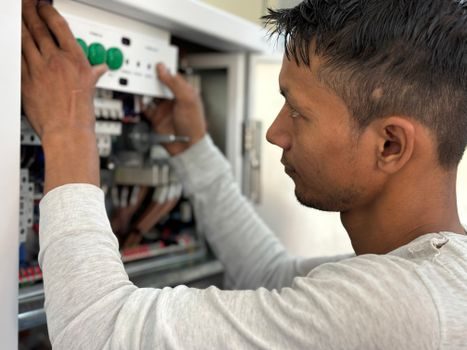
The five product categories Comark and the wider 2026 vendor set converge on (Unmanaged DIN-Rail, Managed DIN-Rail, Unmanaged Rackmount, Managed Rackmount, Industrial PoE) line up against four decision criteria as follows. Management plane: unmanaged = none, managed = full L2/L3, PoE = typically managed. Port count sweet spot: 5-16 (DIN-rail), 16-36 (rackmount), 8-24 (PoE). Typical use: unmanaged = single-machine drop, managed DIN-rail = cell ring, managed rackmount = aggregation, PoE = powered-end-device cell. Price band: unmanaged lowest, managed DIN-rail mid, managed rackmount and Layer 3 highest [S3][S5][S6].
Form factor is largely orthogonal to management plane — unmanaged and managed both ship in DIN-rail and rackmount — so a specifier who already has a cabinet, a backplane, and a 24 VDC bus should lock form factor and power input first, then pick the management plane against the ring/VLAN/security need [S5]. USR's 5/8/16-port grid and the broader 28/30/36-port grid are the two port-density islands the 2026 market camps in; counts in between (10, 18, 20, 24) exist but are not the dominant stocking SKUs on the manufacturer indexes [S1][S2][S3].
Use Cases, Limitations and Failure Modes
Use cases line up cleanly to category: an unmanaged 5-port switch drops a single inspection camera on a packaging line; a managed 8- or 16-port DIN-rail switch with MRP closes a PROFINET ring on a machine; a 24- or 28-port managed rackmount switch aggregates cells to the control room; a 10-GbE managed Layer 3 switch with SFP+ uplinks terminates at the plant backbone; an EN 50155 M12 switch goes on the train [S1][S3][S4][S5][S6]. Limitation: unmanaged switches cannot be the redundancy node on a ring, and any segment carrying safety-rated PROFINET or CIP Safety has to be on a managed switch whose firmware revision matches the controller's GSD/EDS [S3][S4].
Common failure modes in 2026 panel builds are still: under-rated PoE budget (a 4-port PoE+ switch on a 60 W supply cannot power four 25 W cameras simultaneously), mis-applied M12 vs RJ-45 (vibration eventually cracks an RJ-45 jack on mobile equipment), and a managed switch running on its default community string on the plant network. Specifiers should treat SNMPv3, port security, and per-port loop protection as the minimum managed-feature set, not the premium one [S3][S4][S5][S6]. For diagnostic work on segments that already have an industrial borescope routed through, switch-port mirroring is the easier first cut before pulling fibres.
Standards, Sourcing and a 2026 Watch Item
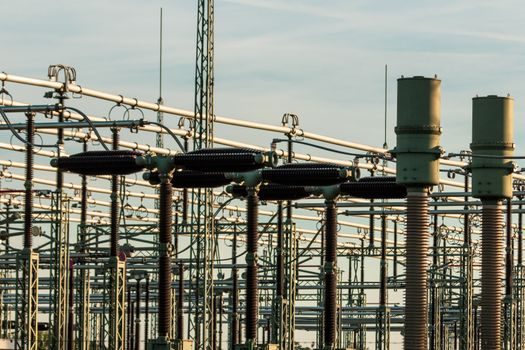
The standards that govern hardened industrial Ethernet switches in 2026 are EN 50155 (rail), IEC 61850-3 (substation), IEEE 1613 (substation), and the IEEE 802.3 family for PoE/PoE+/data rates, with NEMA TS-2 or IEC 60068 shock/vibration profiles commonly requested by traffic and military buyers [S5][S6]. For procurement, direct manufacturer catalogues (Hirschmann, HARTING, Advantech, Helmholz, Balluff, Indu-Sol, Konten, USR, Comark) and 73+ listed brands on the 3onedata factory index are the most reliable channels for managed SKUs, with industrial-aggregator portals (DirectIndustry) useful for cross-vendor port-count searches but not for price [S2].
Two trackable signals into the second half of 2026 are the migration of Layer 3 managed PoE into the same SKU as 10-GbE uplinks — visible on Konten's 2026 linecard as "10Gb Managed PoE Switch" and "Layer 3 PoE Ethernet Switch" sitting as separate products — and the persistence of 28/30/36-port rackmount as a stocking category, signalling that 24-port aggregation alone is not enough for current cell-density projects [S1][S6]. Engineers building out a SCADA segment alongside this switch layer should cross-check the SCADA Software vs HMI Touch Panel 2026 spec cut before locking the managed switch list, since SCADA tag count and switch port density are usually planned in the same review cycle. The industrial switch reference page covers the unmanaged-to-managed transition in the wider automation context.