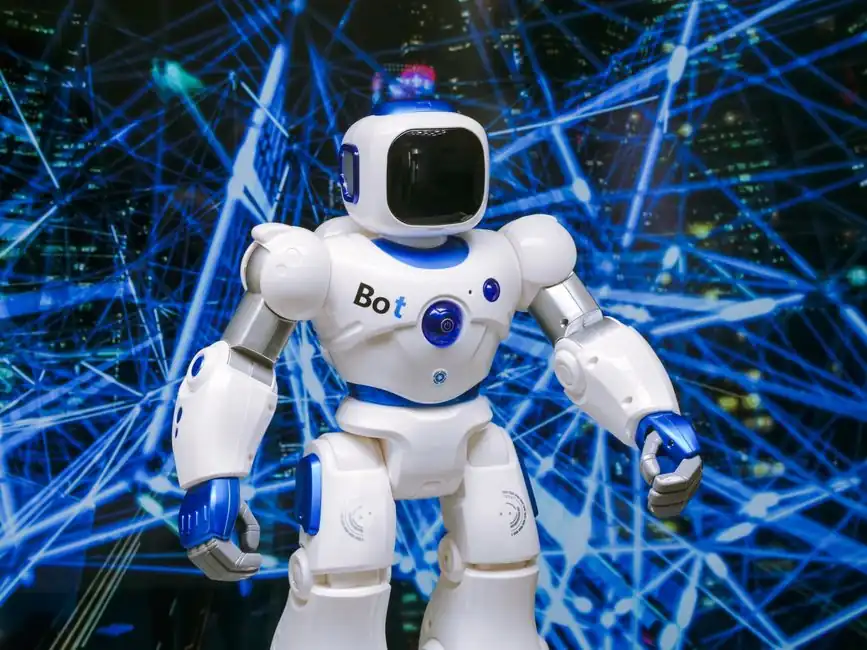
Humanoid robot shipments grew 272% in H1 2026 to 19,100 units, with full-year 2026 tracking toward roughly 60,000 units, but the components feeding those builds, actuators, reducers, batteries, and force-torque sensors, are running hot [S3].
Bank of America projects approximately 90,000 humanoid shipments in 2026 and 1.2 million by 2030, a 13x ramp that no single tier-2 supplier is currently tooled to absorb [S2]. The hardware is "near functional maturity" per Roland Berger, but the supply ecosystem trails by three to five years [S1].
Where the Bottleneck Actually Lives in 2026
Automate 2026 made it explicit: robotics adoption in 2026 is constrained more by supply chain than by AI software [S6]. Three sub-categories concentrate the risk for any integrator planning a multi-thousand-unit industrial deployment:
1. Precision cycloidal and planetary gear reducers. Harmonic-drive and RV-reducer capacity is dominated by a handful of Japanese suppliers; lead times for sub-arc-minute backlash units stretched into 9-12 months during H1 2026, double the 2024 norm [S6]. 2. High-torque frameless torque motors and quasi-direct-drive actuators. NdFeB magnet supply remains the upstream choke point; China's magnet export licensing tightened further in 2026, and any non-Chinese OEM is paying 20-40% premiums for traceable, non-controlled-origin material [S1][S3]. 3. Battery packs rated for the 1-2 kW continuous / 5-8 kW peak draw of bipedal balance + manipulation. Solid-state cells with commercial availability in 2027-2029 are not in volume yet, so every shipped unit in 2026 rides on NMC or LFP cells whose 5-8%/year energy-density improvement is not closing the shift-length gap [S4].
Field Reliability Is the Hidden Shortage Multiplier
Customer expectations sit at 95-99% uptime, while most current humanoid platforms post 30-90 minutes of continuous operation per charge, and even the leaders max out at 4-5 hours (Tesla Optimus Gen 2) versus an 8-hour shift [S4]. This forces buyers to oversize fleet count by 1.5-2x to hit effective shift coverage, which in turn doubles the demand pull on the constrained components above. Figure 02 logged roughly 1,250 operational hours over 11 months at BMW Spartanburg, real production data, but the spread between "best in class" and the median vendor is still wide enough that procurement cannot treat all humanoid SKUs as fungible [S2].
Cyber and Regulatory Risk Layered on Top of the Hardware Shortage

Every connected humanoid is a multi-vector attack surface: sensor spoofing of IMUs and force/torque strings, firmware hijack via over-the-air update channels, and exfiltration of operator telemetry and floor maps. Recorded Future's Insikt Group flagged humanoid robotics as a near-term cyber target class in November 2025, and the controls published in IEC 62443 for industrial control plus ISO/IEC 27001 for supplier data handling are the only baselines with a published threat-model vocabulary that maps cleanly to this gear today [S5]. Safety standards specifically written for bipedal humanoids in mixed pedestrian zones are still "ill-suited" per Roland Berger's April 2026 assessment, so any industrial buyer operating outside a fenced cell is effectively piloting a custom risk register [S1].
Component-by-Component Comparison for Sourcing Teams
Four sub-systems decide whether a 2026 humanoid bill of materials is buildable at all, and how exposed the program is to single-source risk: [S1]
Reducers: Harmonic-drive (leader, 9-12 month lead time, premium) vs RV reducer (heavy-duty, longer lead, lower backlash drift) vs cycloidal (lower cost, lower torque density). Torque motors / actuators: quasi-direct-drive (best torque density, NdFeB-dependent) vs series-elastic (safer for human contact, lower stiffness) vs planetary servo (cheap, lowest energy efficiency, wrong for bipedals). Battery: NMC pouch (current default, 4-5 hr runtime) vs LFP (longer cycle life, heavier, lower energy density) vs solid-state (pre-commercial, not buyable in 2026 volumes). Sensing: 6-axis force/torque at wrist and ankle (mandatory, single-source for many OEMs) vs tactile skins (immature, mostly R&D) vs vision-only (insufficient for safety-rated human proximity). Sourcing any of these from a single geography, especially anything magnet-dependent sourced exclusively from one supplier base, multiplies the shortage risk roughly proportionally to the concentration index [S3][S6].
Who Should Buy in 2026, and Who Should Wait

The profile that should buy now: large manufacturers with fenced work cells, an in-house controls team, and a use case mapped to a single repetitive task such as the BMW X3 sheet-metal loading (90,000+ components handled, 1,250 hours logged) or Japan Airlines' Haneda baggage and cabin cleaning pilot running two Unitree-based units at roughly USD 15,400 each [S2]. These buyers can absorb the 1.5-2x fleet oversize needed to hit 95% uptime, and they can write their own safety case inside a controlled cell. The profile that should hold: integrators and SMEs needing bipedal mobility in unstructured public space, where 30-90 minute runtimes, immature safety standards, and single-source actuator supply make 2026 a loss-leader year [S1][S4].
Procurement Signals and What to Track Next
Three verifiable signals will tell you if the supply picture is loosening or tightening into 2027. First, reducer lead times: any sustained move below the 9-month mark signals new Japanese and Chinese capacity coming online. Second, published field MTBF from any of the top five OEMs climbing past 500 hours between unscheduled service events, which would be the first credible indicator that the 1.5-2x fleet oversize ratio can shrink. Third, IEC and ISO committee drafts for bipedal-mobile safety standards, currently "ill-suited" per Roland Berger; a published working group roadmap is the earliest credible signal that buyers can stop writing custom risk registers [S1].
For buyers sizing 2026 fleet commitments, the adjacent lithium-cell supply picture, covered in detail in Lithium Battery Procurement: A Spec-First Buyer's Workflow for 2026, is now the gating variable for any humanoid program. Sourcing leads should also revisit vision-controller selection in parallel, because perception compute is the second-most-constrained line on the BOM once actuators are allocated; see Vision Controller Selection: Spec Map for 2026 Industrial Builds for the spec map. And for any buyer running mixed-vendor fleets, the cybersecurity overlay now maps onto the same industrial-modem and DTU supply chains tracked in Industrial Modem and DTU Suppliers Map 2026: Spec, Range and Protocol, since OTA channels on humanoids share the same gateway hardware as factory PLCs and remote I/O.
For component-level specifications, see construction machinery and equipment, lamps and light fittings, and lighting equipment and electric lamps.