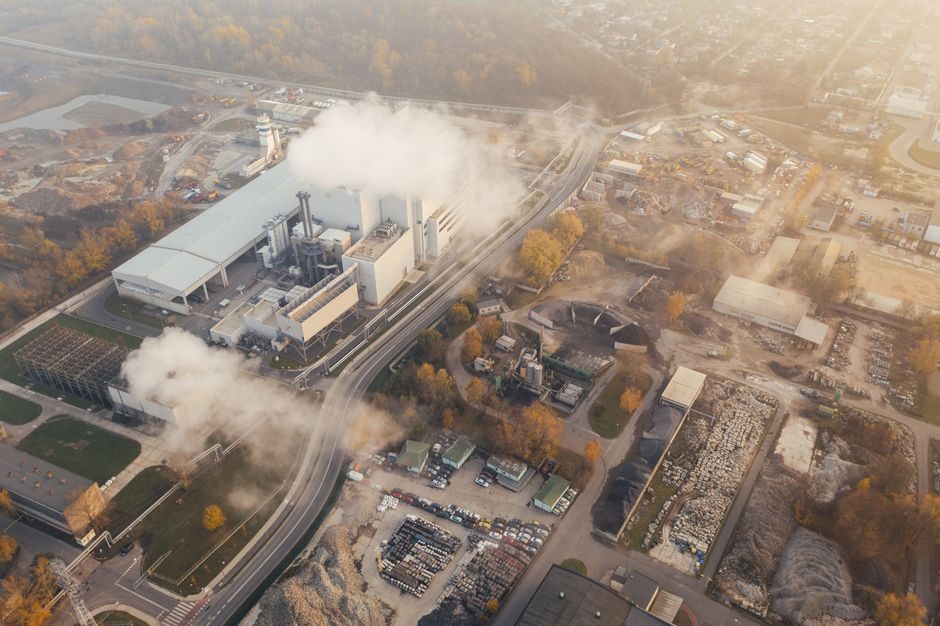
Global industrial filter demand is being driven by three measurable forces: stricter industrial wastewater and air-emission rules, growth in food-and-beverage processing capacity, and a shift of new manufacturing capacity into Southeast Asia, all flagged in the MarketsandMarkets industrial-filters forecast covering 2018 to 2023 [S1]. That forecast sized the market at USD 2.7 billion in 2018 and projected USD 3.7 billion by 2023, a compound path that has continued to underpin the 2026 procurement landscape [S1].
What a process engineer actually sees in 2026 is a wider price band than the headlines suggest. On Made-in-China.com listings dated 2026, fan-filter units (FFU) with PTFE/glass-fibre media and brushless DC motors sit at USD 150 to USD 600 per piece with a 1-piece MOQ [S3], stainless steel sand-media water filters for chemical plants list at USD 200 to USD 2,000 per set [S4], and sludge-dewatering automatic filter presses for the chemical industry run USD 80,000 to USD 250,000 per piece with a 1-piece MOQ from Zhejiang Fujie Intelligent Equipment [S2]. The four-decimal spread on those numbers is the real spec story.
Liquid Filter Media: Woven, Nonwoven, and Mesh Trade-Offs
Liquid-side media selection in 2026 is dominated by three families, with the engineering trade-off running between open flow area, particle retention, and cleanability [S1]. Monofilament woven fabrics are specified where high flow rate and low product contamination are required, while multifilament woven fabrics are picked when low flammability and low shrinkage matter to the process [S1]. Nonwoven melt-blown media covers the widest product-characteristic range and shows up in many end-use lines, whereas needle felt is chosen for higher strength and lower air permeability in liquid/gas crossover duties [S1]. Mesh media remains the baseline for durability and corrosion resistance where cleaning cycles must be aggressive.
A 2026 buyer specifying an industrial filter for a chemical line should resolve media before vendor: monofilament for sanitary low-shed duties, melt-blown for broad chemical compatibility, needle felt for high-strength sludge, and 304/316 stainless mesh for repeated backwash cycles. Pricing observable on 2026 Made-in-China listings puts a 40-inch PP wire-wound filter cartridge in the entry tier, while a stainless sand-media water filter sits one tier above at USD 200 to USD 2,000 per set [S4]. For higher-flow chemical duties, horizontal vacuum belt filters list from USD 8,000 to USD 56,000 per piece, again with a 1-piece MOQ in the 2026 catalogue window [S2].
Air Filter Media: Fibreglass, Activated Carbon, and Metal
Air-side selection in 2026 still maps to fibreglass, activated carbon, filter paper, and metal media, each pinned to a different operating constraint [S1]. Fibreglass keeps its place where high strength and design flexibility are needed; activated carbon is specified for high-porosity, high-surface-area gas-phase duties such as solvent or odour control; filter paper remains the workhorse where particle retention, volumetric flow rate, and wet strength are the gating parameters [S1]. Metal filter media earns its slot in chemical processing, refining, and pharmaceutical applications because it can be cleaned and reused rather than discarded [S1].
The cleanroom fan-filter unit is the most quantified 2026 datapoint. A 1174 × 1174 × 300 mm aluminium-zinc FFU with glass-fibre/PTFE media and a brushless DC permanent-magnet motor lists at USD 150 to USD 600 per piece at a 1-piece MOQ on Jinan Shinsu's 2026 catalogue [S3]. A competing SnaF free-standing AC EC FFU with mushroom HEPA media from Suzhou National Purification sits at USD 145 to USD 168 per piece but raises the MOQ to 10 sets, which is the kind of MOQ-versus-unit-price lever every 2026 procurement plan has to balance [S3]. HEPA-grade air-side performance and cleanroom class targets are documented in the industrial filter reference, where ULPA/HEPA retention classes and ISO 14644 cleanroom tiers are the benchmarks a buyer should be quoting back to the supplier.
Chemical and Sludge-Dewatering End Use: Price Anchors in 2026
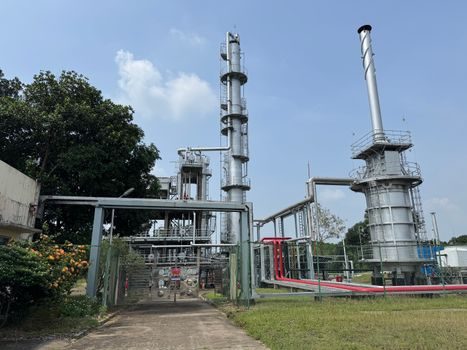
Chemical-industry filter spend is the highest-ticket line in the 2026 Made-in-China catalogue, and the price band is wide enough to mislead a buyer who reads only the headline number. Sludge-dewatering automatic solid-liquid separation filter presses with an automatic drip tray are listed at USD 80,000 to USD 250,000 per piece at 1-piece MOQ by Zhejiang Fujie Intelligent Equipment, a Diamond-tier audited supplier based in Zhejiang, China [S2]. Horizontal vacuum belt filters for chemical-industry sludge dewatering list at USD 8,000 to USD 56,000 per piece, again at 1-piece MOQ, capturing the mid-tier dewatering duty [S2].
For lower-flow chemical water treatment, stainless industrial sand-media water filters from Hunan Dawning Environmental Protection Equipment sit at USD 200 to USD 2,000 per set, with 1 set MOQ, in Zhejiang on the 2026 listing [S4]. The pattern is consistent: as the duty moves from polishing-class water to bulk sludge dewatering, both the unit price and the mechanical complexity step up by one to two orders of magnitude. Material selection between PP wire-wound cartridges, 304/316 stainless housings, and carbon-steel pressure vessels should be locked to the chemistry of the influent, not to the catalogue image.
End-Use Demand Mix: Food & Beverage Leads, Chemicals Close Behind
End-use mix matters more than headline tonnage in 2026 because regulatory pressure and contamination cost differ sharply by sector. MarketsandMarkets flagged food and beverage as the fastest-growing end-use segment in its 2018-2023 build, with metal and mining, chemical, and pharmaceutical following [S1]. Food and beverage is also the largest single end-use for industrial filters in that forecast window, driven by stringent production-norm enforcement and the cost of a recall [S1]. Stringent environmental rules on water consumption in metal and mining were separately identified as the second-tier demand pull [S1].
For a 2026 specifier, the practical translation is straightforward. Food and beverage duty leans on sanitary monofilament woven media and 316L stainless housings, with multi-stage cartridge arrays for final polishing; chemical duty leans on melt-blown and needle-felt nonwovens, often with metal-media prefilters for reuse; metal and mining duty leans on high-solids backwashable mesh and on heavy-duty sludge presses in the USD 80,000-plus class [S2][S4]. The fastest regional growth continues to sit in Asia Pacific, with Southeast Asia named as a manufacturing-capacity build-out hotspot in the same MarketsandMarkets study [S1].
Selection Criteria: Match Media, Housing, and Certification to the Duty
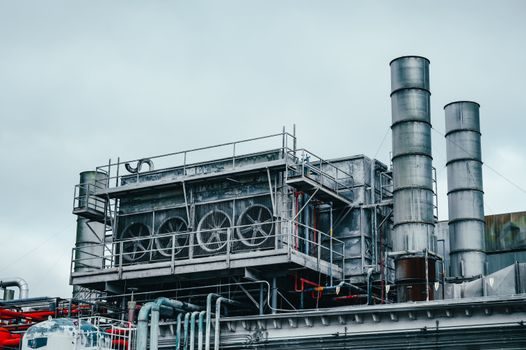
A defensible 2026 filter selection runs four filters in sequence. First, define the fluid class (process liquid, slurry, gas, or compressed air) and the target retention — for liquids, this is typically 1 µm to 100 µm; for cleanroom air, it is H13/H14 HEPA or U15/U16 ULPA per the relevant ISO 14644 cleanroom class. Second, fix the housing material to chemistry: PP for dilute acids, 304 stainless for general water, 316L stainless for chlorides and food contact, carbon steel for non-corrosive slurry. Third, set the operating envelope: maximum differential pressure, peak temperature, and CIP/SIP compatibility. Fourth, lock certification: ATEX 2014/34/EU for explosive atmospheres, FDA/EC 1935 compliance for food contact, and ISO 9001 on the QA side. [S1]
The four-way trade-off is best read as a small comparison matrix. Monofilament woven gives the highest flow rate and lowest shed, but limited chemical range; melt-blown nonwoven gives the broadest chemical compatibility but lower mechanical strength; needle felt gives high strength and low air permeability but higher pressure drop; 316 stainless mesh gives durability and backwash recovery but at the highest unit cost in this family [S1]. Stainless sand-media housings in the USD 200 to USD 2,000 set range cover most chemical-water polishing duties and integrate with the industrial adhesive and sealing choices covered in the related reference, where gasket and seal compatibility often decides whether a filter housing actually holds rated pressure. For a 2026 spec map on adjacent process equipment, see the PVC resin chain map and the hydraulic cylinder ISO 13726 refresh, which frame parallel sourcing and certification moves in the same procurement cycle.
Limitations, Failure Modes, and What the 2026 Data Cannot Tell You
The 2026 catalogue data has hard limits. Made-in-China listings are MOQ-driven, USD-priced, and audited-supplier-flagged rather than independently type-tested; the prices shown are ex-works ranges from audited Diamond and standard members and do not include freight, duties, or commissioning [S2][S3][S4]. The MarketsandMarkets forecast is the 2018-2023 vintage, and any 2026 extrapolation should be treated as a directional anchor rather than a current ground-truth number, which is why the figures are cited with the original report window [S1].
Common failure modes a 2026 specifier should pressure-test before signing a PO: pressure-drop creep past the rated change-out delta-P, which on FFUs and bag filters means media saturation; bypass caused by housing O-ring set mismatch with the process chemistry, often the industrial adhesive and gasket family rather than the filter itself; and chemical attack on PP wire-wound cartridges in hot caustic duty above their rated temperature. For a 2026 buyer, two trackable signals are worth monitoring: ATEX/IECEx certification status on the supplied housing data plate, and the actual MOQ-versus-unit-price slope in the supplier's 2026 quotation, because MOQ is doing as much work as headline price in this market.