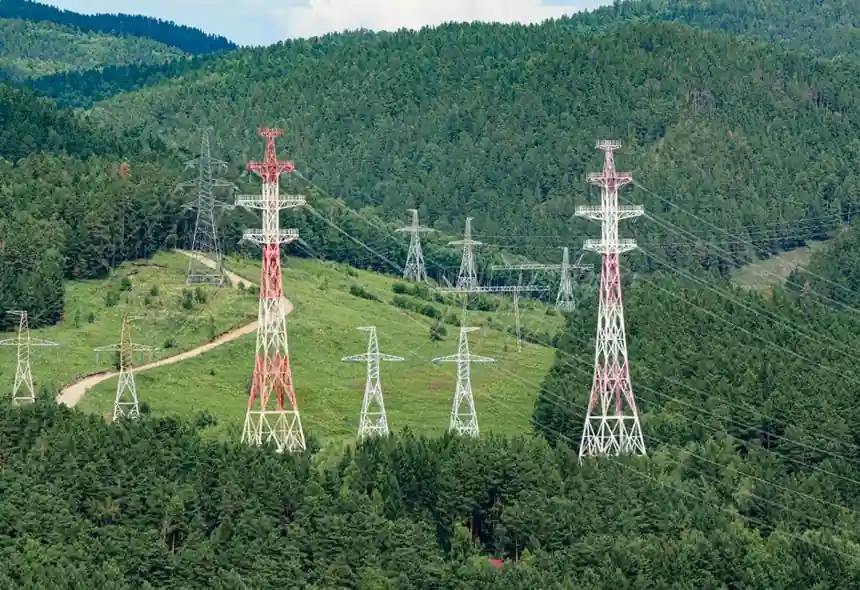
A basic hardware, software, and labor upgrade cost about $16,000, with server hardware accounting for $7,000 of that total [S5].
For manufacturing, a production-line budget must also cover harsh-environment connectivity, resilience, cybersecurity, integration, commissioning, and operating costs [S2][S4].
What the per-line upgrade budget must include
An industrial network upgrade is an increase in the overall capability and financial performance of the production network [S6]. The practical unit is therefore one production line or operating cell, not an entire plant.
The line should be divided into five cost packages: network hardware, software and licensing, cabling and installation, downtime and commissioning, and five-year operations and maintenance [S2][S4]. A five-year case comparison reported total costs exceeding RMB 3 million for imported equipment versus RMB 1.8 million for an equivalent domestic solution [S4].
Industrial equipment selection affects both capital cost and lifecycle cost. Imported industrial routers were described as generally costing 30–50% more to purchase than domestic devices [S4]. This is a case-specific result, not a manufacturing benchmark, but it shows why quotation comparison should be based on installed five-year cost.
The network scope has five clear drivers: the number of connected assets, the proportion being replaced, the condition and age of the existing environment, required additional capacity, and the target architecture [S5]. A line with unmanaged switches, wireless bridges, and disconnected OT systems therefore carries a larger design and integration burden than a straightforward equipment refresh [S2].
Hardware, software, labor, and downtime drive price
A small server replacement project combining a server, firewall, and switch required about $16,000 in hardware, software, and labor, including $7,000 for server hardware [S5]. That project is an office-network reference point, so it should be used as a lower-complexity comparison rather than a production-line estimate.
Manufacturing equipment adds environmental and availability requirements. Industrial switches and access points for harsh environments must account for temperature, vibration, dust, and moisture exposure, while resilient topologies and suitable industrial protocols are needed to keep production systems operating [S2].
Installation is not simply the labor to mount equipment. The line estimate must include copper or fiber pathways, cabinet and patch-panel work, device mounting, grounding and power, configuration, testing with production equipment, and contingency for removal of legacy infrastructure [S2][S4].
Downtime has to be priced as production loss, not treated as a scheduling inconvenience. The shutdown window must cover staging, cutover, troubleshooting, and acceptance testing. If the line cannot be stopped, a temporary or parallel network may be required, increasing hardware, labor, and commissioning expense.
Compare the main upgrade approaches

Network modernization can be delivered as a full-line replacement, a rolling replacement, or a targeted connectivity upgrade. The three options differ in first cost, disruption, future scalability, and operational complexity. [S2]
A full-line replacement provides the cleanest path to a unified architecture, but it creates the largest capital requirement and widest shutdown exposure [S2][S5]. A rolling replacement spreads expenditure across annual work windows and reduces simultaneous disruption, although temporary management and coexistence work can complicate execution [S5].
A targeted upgrade suits stable lines with adequate capacity and well-maintained infrastructure. It limits immediate capital and disruption, but unmanaged devices, fragmented security, and compatibility problems can leave operating risks unresolved [S2][S5].
For harsh cells, an industrial switch may be justified when service conditions, resilience, and centralized management outweigh the higher unit cost. An industrial router is more relevant where a line needs WAN or cellular connectivity for remote assets. Neither should be selected from generic office-equipment pricing because industrial qualification, interfaces, environmental protection, and support requirements differ.
Who needs a line-level upgrade and who does not
A production line has a defensible upgrade case when it depends on real-time machine data, connected sensors, camera inspection, wireless access points, sub-second control decisions, or centralized security management [S2][S3]. These applications increase the value of reliable connectivity, fault visibility, and faster recovery.
A line does not need the same investment when its existing infrastructure supports the required traffic, has manageable spare capacity, uses manageable switch and server platforms, and does not require new remote access, storage, processing, or applications [S5]. In that case, a rolling replacement may deliver better capital efficiency than a full rebuild.
The strongest justification is operational, not a claim that every connected factory needs new equipment. Real-time data can support process optimization and predictive maintenance, while network modernization can improve uptime, product quality, flexibility, operating cost, and safety [S2][S3].
One published case illustrates why support availability belongs in the model. International service-center time-zone differences extended fault-resolution cycles beyond 72 hours in the cited router analysis, while the domestic alternative offered support within 24 hours [S4]. For a production line, a longer resolution time can convert a network fault into hours of lost output.
Five-year ownership changes the purchasing decision
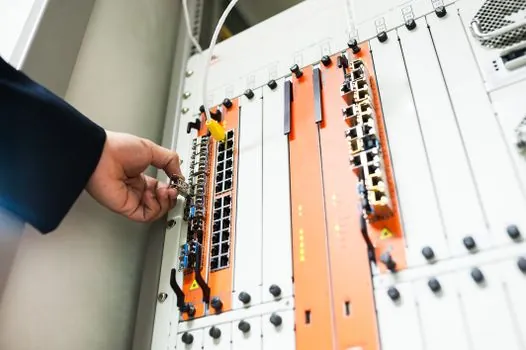
Purchasing the lowest-priced switch or router can be the wrong decision when downtime, spare parts, protocol conversion, and forced replacement dominate the remaining cost. The cited router analysis assigned $50 of five-year cost to operations and maintenance, $20 to upgrades, and $12 to wiring, compared with $110 for procurement [S4].
That example also documents three lifecycle failure modes. A damaged module required an air-freight spare costing more than RMB 20,000, proprietary protocol conversion added RMB 150,000 for one pharmaceutical company, and unsupported 5G capability led to complete replacement where software upgrading could avoid RMB 800,000 in replacement expense [S4].
Energy use, support contracts, spares, firmware work, and technician travel should therefore be added to the five-year model. Common management software can reduce training and parallel-tool costs, while centralized operations can shorten fault identification and recovery [S2]. The cost of maintaining separate enterprise and industrial management systems is itself a line-level operating expense.
For industrial PCs, HMIs, and connected sensors, compatibility and replacement plans matter as much as the initial device price. A line designed around proprietary interfaces may need conversion hardware, software, and specialist labor when sensors or platforms change [S4].
Resilience and security are part of the estimate
Production networks must support sub-second machine-control decisions, but a modern network also has to remain available through equipment faults and environmental stress [S2]. The estimate should therefore cover redundant critical paths where the loss of one device would stop the line, along with tested recovery procedures.
Power over Ethernet can connect cameras, sensors, access points, displays, and control systems through one network infrastructure, reducing the number of separate services that must be designed and maintained [S2]. Whether that consolidation lowers installation cost depends on distance, power availability, device count, and the number of legacy services removed.
Cybersecurity is not a separate add-on. Networks deployed outside IT governance create blind spots and expose production assets to threats capable of stopping operations or affecting quality and safety [S2]. The line estimate needs security functions, identity and access controls, segmentation, logging, monitoring, and a defined operating responsibility.
For plants expanding networked monitoring, the architecture must separate business IT from production control without creating a maintenance burden that consumes the expected savings. Centralized management and a common operating platform can simplify support, but only if the selected equipment supports the actual protocols and lifecycle requirements of the line [S2].
Build a defensible per-line cost model
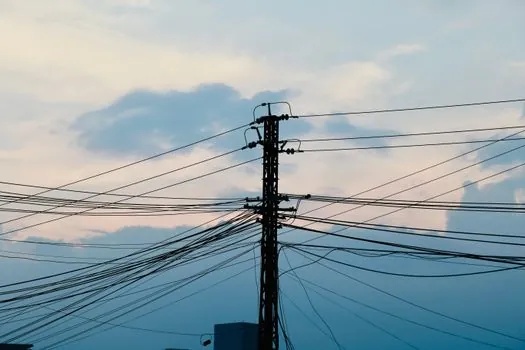
A defensible estimate uses at least 6 line-item categories: industrial network equipment, software and licensing, cabling and electrical work, engineering and commissioning, downtime, and five-year operations and maintenance [S2][S4][S5]. Each category should contain quantities, unit rates, labor hours, production-loss assumptions, and one contingency line for discovered legacy constraints.
The published $16,000 project provides a useful sanity check for a small configuration involving one server, firewall, and switch, including hardware, software, and labor [S5]. It does not include a full factory production-line network and should not be presented as one.
Financial approval should be tied to measurable benefits such as line recovery time, network availability, annual outage reduction, application deployment time, and avoided separate management systems. Modernization supports uptime, quality, operating optimization, cost reduction, flexibility, and safety, but the business case needs line-level baselines [S2][S3].
A separate Industry 4.0 upgrade cost model for a 50-machine shop can extend the same method when one plant contains several interconnected lines. The next procurement checkpoint should be an installed five-year quote by line, with production-loss assumptions and support response times stated explicitly.