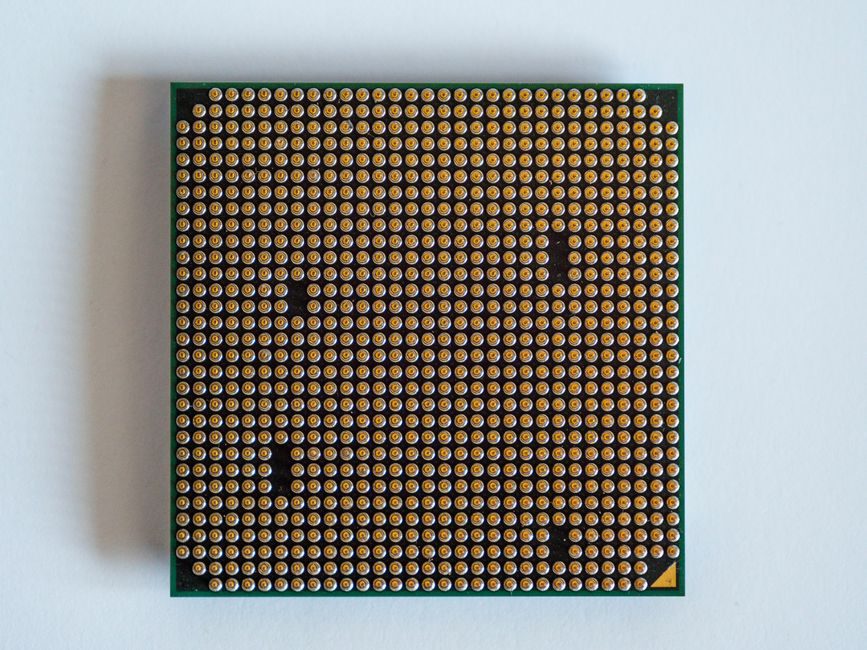
Industrial PC (IPC) procurement in mid-2026 is no longer a motherboard decision — it is an environment-matching exercise where the wrong −20 °C lower limit or missing IEC 60079 certification disqualifies a unit before benchmarking starts [S7].
Most spec sheets converge on the same headline metrics (CPU, RAM, OS support) but diverge sharply on the seven engineering gates that actually drive a 10-year plant deployment: thermal envelope, ingress protection, processor class, industrial I/O, hazardous-area certification, mechanical form factor, and long-term component lifecycle. Engineers who treat those as a checklist, not a wishlist, get platforms that survive the cabinet, the wash-down, and the audit.
Thermal Envelope and Fanless Cooling
Industrial PCs are specified across commercial, extended, and industrial temperature bands, commonly 0–45 °C, −20–60 °C, and −40–70/75 °C, with the wider bands demanding solid-state storage, conformal coating, and fanless chassis to avoid moving-parts failure [S7][S2].
Fanless designs dominate the 2026 IPC catalogue because they remove the single most common field-failure mode — the axial fan — and they allow sealed IP65-class enclosures. A representative 3.5″ biscuit SBC built on NXP i.MX 8M Plus Quad Cortex-A53/M7 silicon illustrates the trend: low-TDP ARM SoC, Mini-PCIe expansion, and a fully passive heatsink spreader in place of any rotating element [S2]. For a cabinet above 50 °C ambient, expect to derate CPU performance by 10–25 % to stay inside the junction envelope, or to step up to a higher-TDP chassis with a heat-pipe sink.
Ingress Protection, Shock and Vibration
IP65 front panels are now the floor, not the ceiling, for any IPC mounted outside an enclosure, and IP66/IP69K are increasingly specified for food, beverage, and chemical wash-down zones [S7].
For mobile equipment, railway, and plant-floor vibration, look for MIL-STD-810G compliance and IEC 60068-2-6 vibration curves rather than marketing terms like "rugged". An IPC that survives 5–500 Hz at 2 g without a cable-management backplate is not the same unit as one that survives a desk drop. This is where the industrial PC reference page becomes a useful cross-check — it consolidates the temperature/IP/MIL-STD envelope language so a procurement spec can quote one consistent range instead of vendor-specific superlatives.
Processor Class: x86 vs ARM vs RISC-V
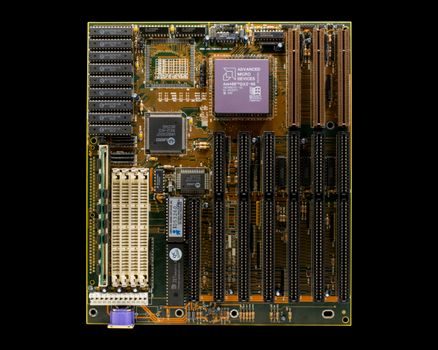
The 2026 IPC market splits cleanly into three processor camps: x86 (Intel Atom, Core i3/i5/i7, Xeon) for SCADA and vision workloads; ARM (NXP i.MX 8M Plus, Rockchip RK3588) for low-power gateway and HMI roles; and RISC-V as an emerging option in cost-sensitive edge nodes [S2][S7].
For a vision-line IPC running 4–8 PoE cameras at 30 fps, expect an 11th–13th gen Intel Core or a Jetson-class edge accelerator — anything below that bottlenecks the frame pipeline. For a Modbus/OPC-UA gateway aggregating 200 tags, the i.MX 8M Plus quad-core is comfortable and cuts idle power below 10 W. Mixing the two is normal: the same line can carry one x86 IPC per cell and one ARM SBC per machine, with protocol translation handled in software.
Industrial I/O and Protocol Stack
Spec the I/O before the CPU: an IPC is a hub, not a general-purpose computer, and the 2026 baseline is at least 2× GbE, 2× USB 3.0, 1× RS-232/422/485, 8–16 isolated DIO, Mini-PCIe or M.2 for cellular/fieldbus, and an optional CAN port for vehicle and battery applications [S2].
Fieldbus choice locks the OS and stack: PROFINET and EtherNet/IP favour a real-time-capable x86 with a TSE-capable NIC; EtherCAT and POWERLINK need the same hardware plus a dedicated EtherCAT slave controller; Modbus TCP and OPC UA over MQTT-S run on virtually anything. HART remains a 4–20 mA FSK overlay on analog loops and does not replace a digital fieldbus — a frequent procurement misunderstanding.
Hazardous-Area and Functional-Safety Certification

For Zone 1/Zone 2 (IEC 60079) and Div 1/Div 2 deployments, the IPC must carry ATEX 2014/34/EU, IECEx, or UL Class I Div 2 marking; a generic CE or FCC mark is not sufficient and will be rejected at FAT [S7].
Functional-safety applications (SIL 1–2) typically push buyers toward a safety PLC + non-safety IPC split rather than a SIL-rated IPC, because the IPC market offers limited SIL-2/3 platforms and the licensing cost is high. For a non-safety visualization layer above a safety controller, a standard IPC with a defined firewall/zone separation is the common architecture.
Form Factor: Panel, Box, DIN-Rail, 19″ Rack
Form factor is a hard physical constraint, not a preference: panel PCs (10″–24″) for HMI on machines, box PCs for cabinet back-planes, DIN-rail SBCs for tight enclosures, and 1U/2U rackmount for control-room aggregation. The 3.5″ biscuit SBC category specifically targets 24 V DC DIN-rail mounting with a footprint around 146 × 102 mm [S2].
Engineers should confirm the depth of the cabinet before choosing a panel PC — a 24″ unit often needs 80–100 mm of rear clearance for I/O, fans, and cabling, which is more than the cabinet door allows. Spec mismatch on depth is the single most common on-site rework reason flagged in 2026 retrofits.
Lifecycle, MTBF and OS Support
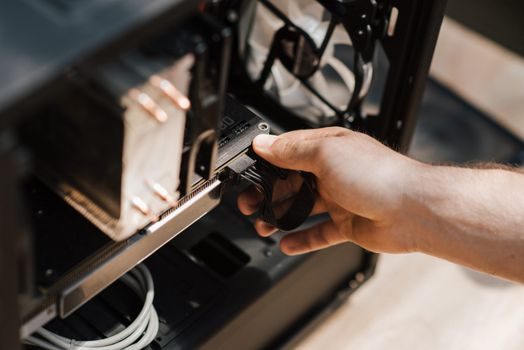
Industrial buyers should require a 7–10 year component-availability commitment, a published MTBF figure (often 200,000–500,000 h for fanless IPCs), and a stated Windows 10 IoT 2021 / Windows 11 IoT / Linux LTS roadmap [S7].
A unit with a 3-year EOL becomes obsolete inside the warranty of the machine it controls. For comparison with control-tier gear, the programmable logic controller buying guide 2026 maps the same form-factor, protocol, and safety logic one tier down the stack.
Selection Decision Matrix
For a quick gate-by-gate comparison, score each candidate on a 0–3 scale across the seven gates: the unit with the highest weighted total and no zero on a hard gate (e.g. temperature, certification) wins. A panel PC for a chemical line that scores "0" on ATEX is automatically disqualified regardless of CPU. [S1]
When the shortlist ties on the seven gates, tie-break on documented MTBF, fanless design, and the 7–10 year lifecycle clause — those three track a vendor's real confidence in the platform. The reference industrial PC glossary remains the most efficient way to keep the gate vocabulary consistent across a multi-vendor bid.
Two trackable signals for the next 90 days: (1) ARM-based panel PCs entering the Zone 2 space with ATEX/IECEx dual marks, driven by the i.MX 8M Plus reference designs shown in 2026 OEM catalogues [S2]; (2) the first wave of RISC-V IPC reference boards moving from "evaluation" to "shipping" on the long-tail of edge gateway SKUs, per the Industry 4.0 trend write-up [S7]. Either signal will reshape the gate scorecard before end-2026.
For component-level specifications, see industrial adhesive, and industrial borescope.