
An industrial UPS purchase in 2026 is decided on five cost drivers: battery chemistry (VRLA vs LFP vs NMC), VA/kVA rating, topology (standby, line-interactive, online double-conversion), runtime at full load, and certification tier (UL 1778, IEC 62040-3, IEEE 1188 for batteries). A concrete 2026 list-price data point sets the floor: the SolaHD SDU500B 500 VA DIN-rail AC UPS carries a list price of $1,519.74 and a unit price of $747.71 for control-panel backup on 230 VAC systems [S2].
Industrial UPS cost cannot be read as a single kW-dollar figure because installation, batteries, runtime, and thermal management move the bill more than the inverter itself. Lithium-ion battery systems for industrial UPS are now pitched against VRLA on a 15-year design life, roughly triple the typical 5-year VRLA replacement cycle, which changes the TCO math even when lithium carries a higher initial invoice [S1]. Operators planning 2026 capex should split the cost question into unit price, installed cost, and total cost of ownership before comparing quotes.
Cost Driver 1: Battery Chemistry and Cycle Life
Battery chemistry is the single largest variable in industrial UPS pricing because it determines both replacement frequency and the size of the energy storage block. The 2026 industrial power-quality guide from ECS International states that lithium-ion modules can deliver up to a 15-year service life, versus roughly 5 years for traditional VRLA, a ratio that converts a 2-3x higher battery line item into a lower TCO when amortised over a 10-year site plan [S1].
Within lithium, two chemistries dominate factory-floor deployments: LFP (Lithium Iron Phosphate) for thermal stability and safety, and NMC (Nickel Manganese Cobalt) for higher energy density per kilogram [S1]. LFP cells tolerate higher ambient temperatures and have lower thermal-runaway risk, which reduces both the battery-room HVAC load and the fire-suppression budget, while NMC packs more kWh per cubic metre, a real benefit on space-constrained UPS cabinets and skid retrofits. Buyers should ask vendors for cycle life at the actual depth-of-discharge the UPS will see, since a 15-year claim at 80% DoD is not the same as 15 years at 50% DoD.
Cost Driver 2: VA/kVA Rating and Topology
Topologies are priced in tiers because each adds power-conditioning capability, and each tier carries a different unit cost per VA. Eaton's 2026 desktop buying guide ranks the options explicitly: standby/offline UPS is the most cost-effective topology, suited to LCD monitors, docking stations, modems, and routers; line-interactive UPS actively boosts or trims utility voltage, and is the right tier for high-end PCs, gaming PCs, and home network equipment; online double-conversion sits above both, isolating the load from all utility-side anomalies, and is the standard for IT racks and process control [S4].
The same rating logic scales up for industrial panels. The SolaHD SDU500B at 500 VA is the entry point for a single PLC or HMI line, while the SDU850B at 850 VA covers heavier SCADA nodes, and larger three-phase units in the 10-200 kVA class enter a different price band entirely, often quoted per kVA in the low four figures USD for online double-conversion hardware. Specifying standby when line-interactive is required is a common under-spec mistake, and over-specifying online double-conversion for a modem strip is the more common over-spend mistake, so the topology question is decided by the load's tolerance to sags and surges, not by the budget ceiling.
Cost Driver 3: Runtime, Cabinet Footprint, and Integration
Runtime is priced in battery amp-hours, and each extra minute at full load multiplies the battery cost roughly linearly. Industrial buyers should size runtime to the actual ride-through requirement (typically 5-15 minutes for a generator-cutover scenario, 30 minutes or more for orderly PLC shutdown, and hours-long autonomy for BESS-integrated data halls) because the cost of oversizing the battery block is a one-time bill, but the cost of undersizing it is repeated brownout-driven nuisance trips [S3].
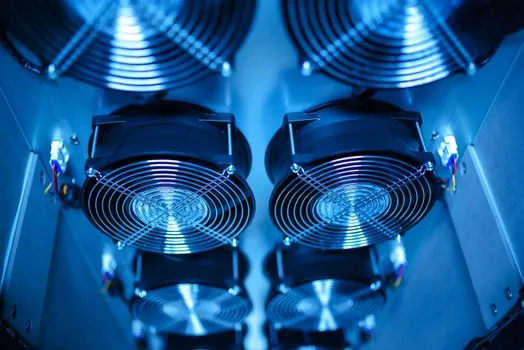
Cabinet footprint and thermal load also matter. For data-hall integrations, a UPS system is now routinely paired with a battery energy storage system (BESS), and the BESS layer adds PCS, BMS, EMS, and thermal management scope that a standalone UPS quote does not include, a point PVB's 2026 data-center guide flags as a frequent source of budget overrun [S3].
Cost Comparison: VRLA, LFP Lithium, and NMC Lithium on a 10-Year Horizon
Three battery options, lined up against the four selection criteria that drive 2026 specifier decisions:
<strong>Upfront battery cost (per kWh, relative):</strong> VRLA is the lowest, typically the reference baseline; LFP lithium runs roughly 2-3x VRLA per kWh; NMC lithium is the highest of the three at pack level, reflecting higher cell cost per kWh. <strong>Cycle life at 80% DoD:</strong> VRLA is the shortest (a few hundred cycles before capacity loss bites), LFP is the longest (several thousand cycles), NMC sits in between. <strong>Thermal-runaway risk:</strong> VRLA is low but not zero (thermal runaway exists on overcharge), LFP is the lowest of the three, NMC is the highest and demands stricter cell-level monitoring. <strong>10-year TCO at a 50 kVA industrial UPS:</strong> VRLA scores worst because two battery replacements and the labour to swap them stack up; LFP scores best on TCO for most factory-floor sites; NMC wins where floor area is rationed.
This is the comparison a 2026 capex reviewer should run, not a single sticker number, and the answer shifts toward LFP as soon as the site is hot, the runtime is long, or the labour cost of battery swaps is high. The ECS guide also flags a hidden cost that is not in the battery line item: low-level transients and harmonics that bypass standard surge strips and degrade the battery management system over years, shortening the life the spec sheet promised [S1].
Who Industrial UPS Is For, and Where It Is Not
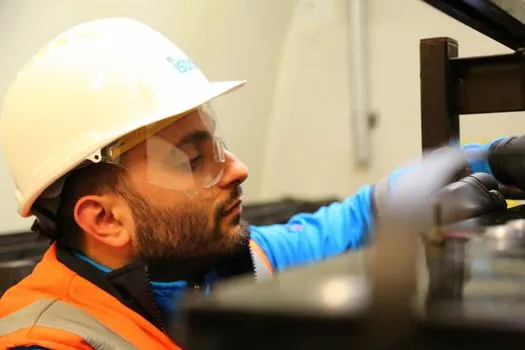
Industrial UPS hardware is the right call for PLC lines, SCADA nodes, HMIs, lighting equipment control circuits in process plants, machine automation cells, and remote monitoring cabinets, the use-case list SolaHD publishes for its SDU series, and it explicitly targets industrial control panels, communication systems, and process control applications where downtime has a measurable production cost [S2]. A 2023 Uptime Institute report cited in the ECS power-quality guide states that power-related problems cause 43% of significant outages, often occurring even when a UPS is present, which is the failure mode an industrial UPS specification is meant to address [S1].
An industrial UPS is the wrong tool for laser printers, a point Eaton flags explicitly because the low-voltage current draw of a laser printer's fuser can force the UPS to transfer to battery repeatedly, prematurely exhausting the battery, unless the UPS has surge-only receptacles [S4]. It is also the wrong tool when the load actually needs hours of autonomy rather than minutes, in which case a BESS layer behind the UPS becomes the correct architecture, and a standalone UPS quote will understate the bill [S3]. Buyers should match the topology and the battery block to the load profile, not the other way around.
Standards, Sourcing, and TCO Discipline
Three standard families govern industrial UPS specification in 2026: UL 1778 for UPS safety in North America, IEC 62040-3 for UPS performance and test methods globally, and IEEE 1188 for stationary battery maintenance practice, and a complete spec should name all three in the procurement document rather than relying on a single certification mark. For data-hall integrations, NFPA 855 (energy storage system installation) and UL 9540 (energy storage equipment) become live standards the moment a BESS enters the room, and these are scope items a basic UPS line item does not include [S3].
For buyers sourcing from China, battery-cell traceability and UN 38.3 transport certification are mandatory line items, and the related cathode material sourcing question, LFP precursor, NMC precursor, cell format, is upstream of the UPS quote and changes the cell-level warranty a vendor will put in writing.
Spec-level background on the components involved: linear guide.