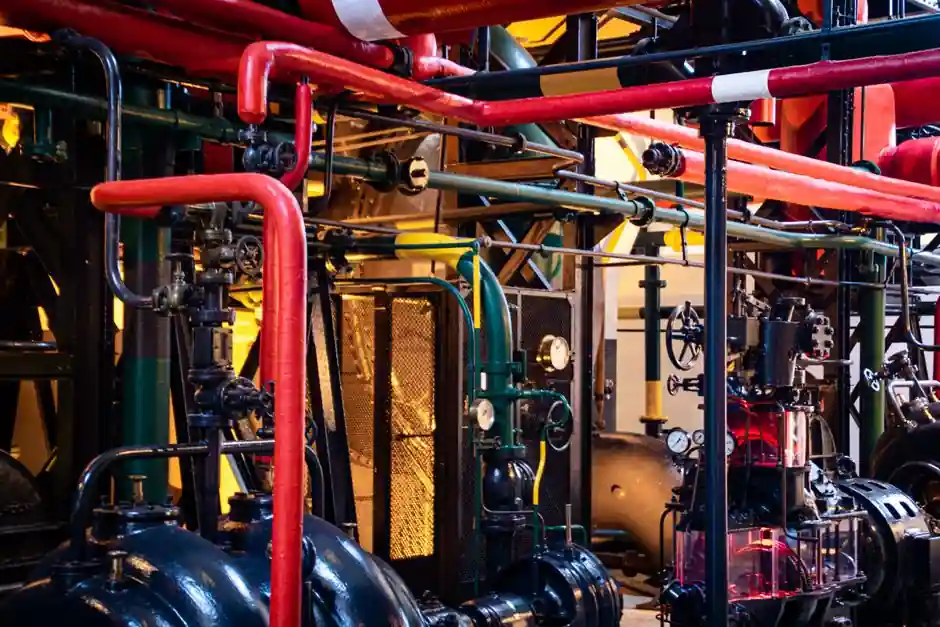
Industrial catalyst plants running Industry 4.0 stacks now embed IIoT sensors across reactors, mixers, and dryers, and feed those signals into AI analytics and digital twin models that close the loop on batch consistency, energy intensity, and predictive maintenance [S7].
Adoption depth remains uneven: as of the 2020 baseline, less than 30% of manufacturers reported extensive Industry 4.0 roll-out, with North America ahead of Europe and Asia, and automotive ahead of chemicals and other process industries [S2]. The catalyst subsector is a chemistry-heavy process, so it trails discrete lines on cobots and AGVs, but is gaining on instrumentation density per reactor.
What "Industry 4.0" Actually Means Inside a Catalyst Plant
A working Industry 4.0 stack in a catalyst line resolves into ten recurring layers: additive manufacturing for structured supports, AI for formulation tuning, augmented reality for operator guidance, autonomous robots for repetitive handling, big data analytics for batch release, cybersecurity for OT/IT segmentation, horizontal and vertical system integration, the IIoT sensor fabric itself, cloud and edge compute, and process simulation tied to a digital twin [S4]. For catalyst makers the dominant layers are IIoT, simulation/digital twin, AI/analytics, and cybersecurity, while cobots and AGVs are secondary to reactor-centric flows.
Because catalyst synthesis is dominated by multi-step precipitation, impregnation, calcination, and reduction, the digital twin is not a marketing slide: it is the only practical way to correlate impregnation pH, drying residence time, and calcination ramp against final surface area and metal dispersion. Vastuta's July 2026 analysis of India's catalyst industry positions the connected sensor network plus twin as the route to monitor every production stage end-to-end [S7].
Selection Criteria: Which Layers to Specify First
For a brownfield catalyst plant, the practical specification order is: instrument the reactor first (temperature, pH, conductivity, dissolved O2, FTIR or Raman where justified), push those tags to an edge gateway, then layer a digital twin calibrated on 20 to 50 historical batches, and only then add closed-loop AI control on the most valuable step, typically precipitation or impregnation [S7].
Skipping directly to AI without an instrumented base is the most common failure mode: the Sayem et al. barrier study using fuzzy-DEMATEL ranked the economic dimension as the most influential blocker, with lack of qualified workforce as a recurrent cross-cutting barrier that invalidates the AI layer even when the hardware is in place [S3].
Option Comparison: IIoT Platform vs Edge vs Cloud-First
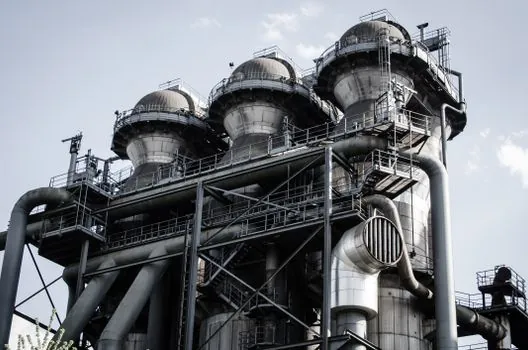
Decision-relevant contrast for a catalyst IT lead weighing deployment models: a cloud-first IIoT platform is fastest to deploy and lowest capex, but pushes proprietary batch data off-site and creates latency on millisecond-scale control loops; an on-premise edge architecture preserves data sovereignty and supports tight control, but raises capex and demands in-house OT staff; a hybrid model keeps historian and twin on-prem while streaming aggregates to cloud analytics, which is the dominant choice for regulated chemical operators [S1][S7]. On cost, cloud-first is lowest; on data sovereignty, on-prem edge is strongest; on analytics depth, hybrid is the practical optimum; on deployment speed, cloud-first wins.
For multi-plant catalyst groups, the McKinsey operations perspective on Industry 4.0 argues that the right focus is sustained, scaled adoption rather than pilot proliferation, which pushes the choice toward hybrid so a single twin instance can be calibrated once and reused across sister plants [S5].
Who This Is For, and Who Should Wait
Industry 4.0 catalyst retrofits pay back fastest where batch variability is the dominant cost driver, where energy per kg of catalyst is high, and where the plant already runs a modern DCS such as Emerson DeltaV, Honeywell Experion, or ABB 800xA. Tolling manufacturers, custom catalyst shops with frequent grade changes, and producers of high-value precious-metal catalysts sit at the top of the priority list [S7].
Small tollers with fewer than 20 batches per month, single-product lines with decades of locked-in process IP, and operators without on-site instrumentation engineers should defer a full Industry 4.0 program and start with IIoT instrumentation and a cloud historian only [S3]. The Ayutaya et al. study on Thailand's electrical and electronics industry confirms that competitive advantage from Industry 4.0 is mediated by circular-economy and sustainable-manufacturing capability, which is precisely what a small toller lacks the scale to internalise [S1].
Standards, Sourcing, and Integration Anchors
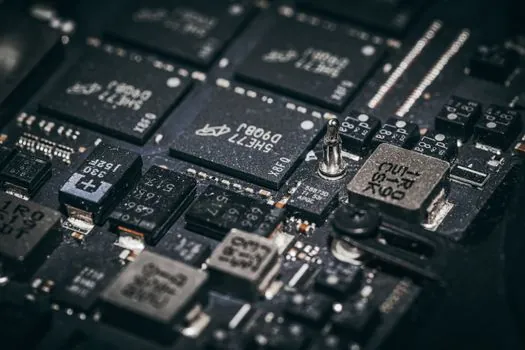
Process-side instrumentation should reference IEC 61511 for safety-instrumented functions and ISA-88 batch control models, while the IIoT fabric aligns with ISA-95 levels 2 and 3, and OPC UA Pub/Sub over TSN is the de-facto northbound protocol from the DCS to the analytics layer. Cybersecurity on the OT side should follow IEC 62443 zone-and-conduit design, since catalyst recipes are trade secrets and a compromised reactor is a kinetic incident, not just a data loss [S1][S3].
On the people side, IoT Analytics' 286-page 2020 report flagged workforce skills as the gating constraint, a finding reinforced by the Sayem et al. DEMATEL map that placed the lack of qualified workforce as a recurrent barrier across technological, regulatory, and organisational dimensions [S2][S3]. The Catalyst Connection Industry 4.0 Teacher Academy, run with the Consortium for Public Education, is one publicly documented attempt to build that pipeline at the K-12 feeder level [S4].
Use Cases Already Deployed in Catalyst Lines
Three working use cases recur across the literature and the Vastuta case work: predictive maintenance on calcination furnaces using vibration and thermocouple drift analytics, AI-guided impregnation that adjusts metal-salt feed rate against real-time pH and ORP, and digital-twin-enabled scale-up from lab to commercial reactor with a documented 20-40% reduction in scale-up trial batches [S7]. Each case shares the same instrument-first sequencing, which is consistent with the IoT Analytics finding that IIoT platforms and cloud are the highest-adoption sub-technologies and therefore the lowest-risk starting point [S2].
For diversified industrial groups, the same data fabric that runs a catalyst line can be extended to warehouse robotics line design where batch genealogy must be tracked through to finished-product pallets, or to RV reducers used in catalyst-handling cobot cells, since both depend on the same OPC UA backbone.
Limitations, Failure Modes, and Honest Constraints
The hard constraints are not technological, they are economic and organisational. The Sayem et al. barrier analysis explicitly placed the economic dimension as the decisive cluster affecting technology, regulatory, and organisational factors, with capital cost and unclear ROI as the most-cited specific barriers [S3]. A 2020 baseline held less than 30% of manufacturers at extensive adoption, and the chemicals subsector, where catalysts sit, is structurally behind automotive and electronics on Industry 4.0 maturity [S2].
Two recurring failure modes show up in field reports: instrumenting first without a process engineer who can interpret the data, and standing up an AI control loop before the historian has enough clean batches to train against. Both collapse to the same root cause, the workforce barrier, and the only proven mitigations are long-cycle training programs, partnerships with platform vendors who supply domain templates, and starting with read-only analytics before any closed-loop control is enabled [S1][S3].
The verifiable next node to watch is vendor consolidation around OPC UA over TSN as the reactor-to-twin backbone, signalled by major DCS vendors shipping native TSN ports on 2026 hardware revisions, and the second is whether India's catalyst Industry 4.0 push under the Vastuta-style intelligent manufacturing model produces published batch-yield data that can be benchmarked against European and North American plants [S7].
Component reference pages worth checking: industrial adhesive, industrial borescope, and industrial buzzer.