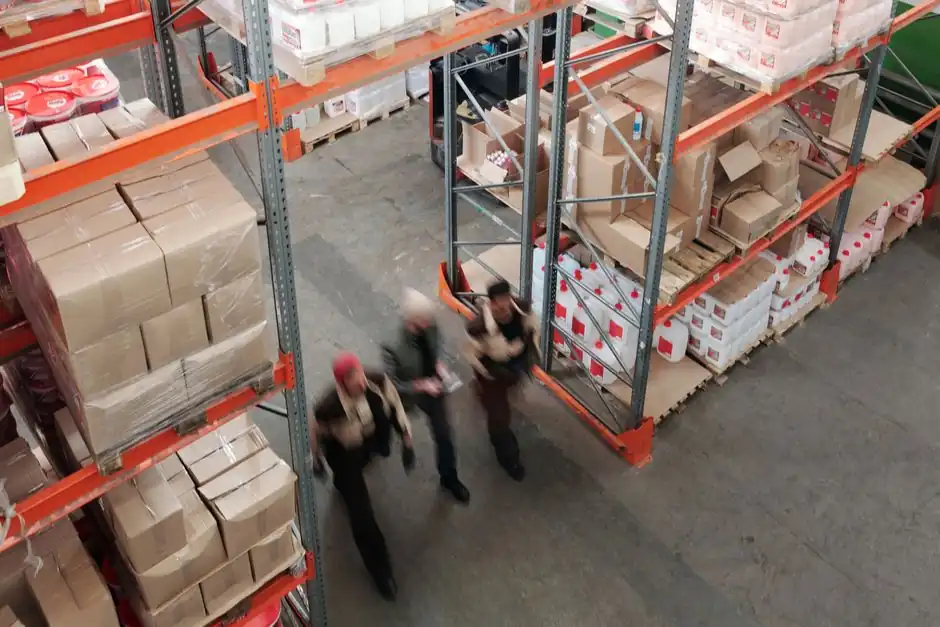
Specifying a warehouse robotics production line in 2026 means balancing cycle time, payload, and the gap between two distinct design disciplines: fixed production equipment on the plant floor and mobile AGV/AMR fleets in distribution. Recent integrator guidance separates the two explicitly: the manufacturing dashboard discipline covers plant-floor interfaces and fixed equipment, while the warehouse robotics dashboard layer has to track dynamically navigating units across a building footprint [S3].
The fastest path to value remains brownfield integration. End-of-arm tool selection, cycle target, and the supervisor-facing software layer decide whether the line earns its keep, and most failures in 2025-2026 retrofits trace back to one of those three [S4][S1]. Toyota Automated Logistics confirmed on 2026-04-01 that warehouse robotics, AGV/AMR, AS/RS, conveyor, and sortation are bundled under one integration umbrella, validating the "one vendor, one WES" procurement pattern that buyers were already converging on [S5].
Decision Criteria That Actually Drive the BoM
Three numbers gate the rest of the design: target cycle time per pick, payload at the wrist, and the maximum acceptable changeover for end-effector swap. Real 2025 integrator work shows pick-and-place robotic cells targeting 10 cups in a 5 second window, or roughly 0.5 s per pick, with reorientation absorbed inside that window rather than added as a separate station [S2]. Palletising cells for 36 by 48 inch flooring slabs cycle at one slab per 4 seconds per robot, which sets a practical upper bound for single-arm heavy-payload cells before a second arm is justified [S2]. Brownfield integration adds a fourth criterion: the legacy PLC must expose enough I/O to absorb the new conveyor segments, because once a PLC has to be retrofitted just to feed the robot, the integration cost roughly doubles [S2][S4].
Cycle target and payload jointly select the robot class. Sub-3 kg pick-and-place cells, the worm-container and small-parts tier, are dominated by SCARA and small articulated arms with 0.5 s pick rates and modest EOAT. The 20-50 kg palletising tier, flooring, case handling, and drum lines, lives in the articulated 6-axis range, and above 50 kg the calculus shifts toward dedicated palletisers or paired-arm cells [S2][S1]. End-effector changeover time is the hidden tax: tooling that swaps in under 60 seconds unlocks mixed-SKU days, while hard-tooled EOAT locks the cell into one product family and kills the ROI on lower-volume SKUs [S1].
Integration Approaches Ranked by Risk
Four patterns cover almost every brownfield robotics project in 2025-2026, ranked by complexity and capital exposure. Island automation, a standalone robotic cell at one process step with manual handoff on either side, is the lowest-risk entry point and the right starting point for CNC tending, labellers, or single-station palletising [S4]. Conveyor-connected robotics ties the cell to existing conveyors via transfer stations or buffer zones, which is the pattern the worm-container retrofit used to keep pace with a 4 second cooler cycle [S2][S4].
Goods-to-person and AMR-fed cells form the third tier, where autonomous mobile robots deliver totes or cases to a fixed pick station rather than the station pulling from a queue. The fourth tier, full-line robotics, replaces entire manual zones and only makes sense where SKU mix is narrow, volumes are high, and the WMS/WES layer already exists. Each tier demands progressively more from the software layer, and each tier multiplies the cost of a bad dashboard choice, because the supervisor surface has to coordinate more moving parts without becoming wallpaper [S3][S4].
Standards, Protocols, and the Software Stack
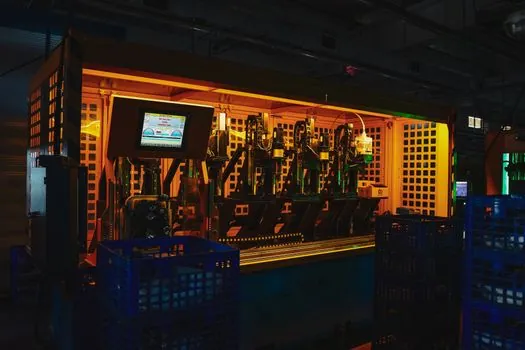
Two protocols now anchor any new warehouse robotics build. VDA 5050 standardises AGV-to-master-control communication so that a fleet manager can coordinate mixed-vendor AMR fleets, and ISO 3691-4 covers safety requirements for driverless industrial trucks [S3]. Neither standard prescribes a dashboard layout, which is exactly why supervisor-grade UX has become a procurement line item in its own right rather than a freebie from the robot vendor [S3]. The 2026 fleet-manager field includes KUKA.AMR Fleet, OMRON FLOW Core, and BlueBotics ANT server on the multi-vendor side, with vendor-native consoles (Seegrid Supervisor, Locus Robotics, Geek+, Symbotic) and the AGV/AMR lines under Rockwell Automation and Zebra Technologies still shipping with their own dashboards [S3].
On the controls side, integration projects in 2025 ran Omron PLCs alongside Weidmüller power supplies, terminals, Ethernet switches, and breakers, with the PLC added mid-project once the original controls architecture could not keep pace with the conveyor upgrade [S2]. That pattern is now common enough to plan for: budget a PLC retrofit into the integration cost whenever the cycle target is tightened after the initial robot selection. Process simulation is the upstream tool that catches these gaps before steel is cut, with Tecnomatix Process Simulate as the de facto 3D environment for laying out lines, validating reach envelopes, and stress-testing cycle claims against conveyor speeds [S6].
Comparison: Integration Patterns Against Four Decision Criteria
Side-by-side, the four integration patterns score very differently. Island automation wins on lowest capital and fastest payback, but loses on cycle consistency at the handoff points. Conveyor-connected robotics hits the best cycle-time profile for 4-5 s per pick or pallet, at moderate capital, and is the pattern most often paired with a conveyor sorting line for downstream routing. AMR-fed goods-to-person cells trade higher capex for labour displacement and SKU-mix flexibility, and pay back fastest where pick rates exceed 100 picks per hour per station. Full-line robotics only beats the other three when volumes justify the controls rebuild and when the WMS layer already exists to absorb the orchestration load [S4][S3][S1].
Cycle time, capital, SKU-mix flexibility, and payback period form the four axes that the comparison collapses to. Robotic palletising cells aimed at an automatic molding line upstream, for example, almost always pick the conveyor-connected pattern because the upstream cycle is fixed and the handoff has to be deterministic. Brownfield lines aimed at a molding line with frequent product changeovers lean toward AMR-fed or island patterns where changeover cost is localised to one cell rather than the whole line [S4].
Operator-Centric Dashboards and the Supervisor Bottleneck
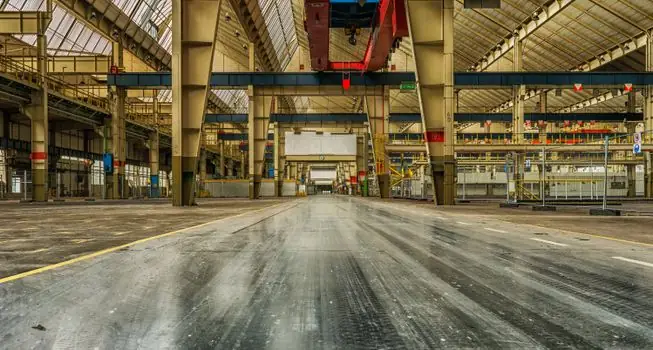
Vendor-native consoles are built to expose what the vendor's API returns, which is the entire fleet's coordinates, status, and task list, rather than what the supervisor needs to decide. Fleets above roughly 40 units make those screens unreadable inside the first week, and supervisors fall back to radios during peak hours while the vendor console goes dark on the wall [S3]. The fix is a supervisor-facing layer that surfaces the three or four robots that need intervention right now, plus the exception and recovery workflow attached to each, rather than a real-time map of every unit [S3].
Recent dashboard design work treats AI features as recovery aids, not as primary navigation: suggesting a reroute, flagging a stalled unit, or proposing a reassignment, with the supervisor retaining override authority. Multi-vendor fleet managers, WMS-absorbed dashboards, and the third category, agency-built supervisor consoles, are all shipping in 2026, and the procurement question is no longer "do we need a dashboard" but "which of the three layers owns the supervisor experience" [S3].
Real-World Cycle Targets and Failure Modes
The 2025-2026 integrator record gives concrete targets. Worm-container pick-and-place: 10 cups into a cooler every 5 seconds, with reorientation absorbed inside the pick window, on a Yaskawa DX 200 arm [S2]. Flooring slab palletising: one 36 by 48 inch slab per 4 seconds per robot, two robots in, two out, on a Yaskawa system [S2]. Both cells used Robotunits conveyors downstream and a PLC retrofit (Omron plus Weidmüller I/O) once the original controls proved under-spec for the upgraded throughput [S2].
The recurring failure modes are predictable: cycle targets tightened after the robot was selected, forcing a PLC and conveyor retrofit; EOAT changeover that turns out slower than the ROI assumed, locking the cell into one SKU family; and brownfield mechanical mismatch where reach envelopes or floor-loading rules out the preferred arm class without a civils change [S2][S4]. Each failure mode has a known mitigation: simulate the cycle with the actual EOAT mass and inertia before purchase, budget the PLC retrofit, and validate reach envelopes against worst-case pallet or tote dimensions rather than nominal ones [S6][S2].
Selection Guidance: Who Should Buy, and Who Should Wait
Warehouse robotics line design in 2026 is for operations with a stable SKU mix, sustained volume above the break-even threshold for the chosen tier, and an existing WMS or WES to absorb orchestration. It is not for single-SKU seasonal peaks below roughly 60% utilisation, where rental automation or contract labour still wins on total cost. The four-question gate is straightforward: is the cycle target documented to within 0.5 s, is the WMS layer funded, is the PLC retrofit budgeted, and is the supervisor dashboard procurement line itemised separately from the robot purchase. If any one of those four is missing, the project is not ready, regardless of how attractive the robot vendor's pitch deck is [S4][S1][S3].
For brownfield projects that clear the gate, the procurement sequence in 2026 is process simulation first, then integration pattern selection, then robot class, then PLC and controls, then EOAT, then supervisor dashboard, then fleet-manager software. That sequence is the inverse of how most vendors want to be paid, which is why owners who run it in order consistently report fewer retrofits and faster commissioning [S6][S4].
Trackable signals through 2027: VDA 5050 adoption rates among European 3PL operators, ISO 3691-4 enforcement actions in mixed-fleet sites, and the share of new warehouse robotics builds that ship with a third-party supervisor dashboard rather than the vendor console. Welding robot demand projections, which sit in an adjacent automation category, are tracked separately in the welding robot demand 2026-2030 spec anchors coverage.