An infrared line level is a self-leveling diode-based layout tool that projects a fixed 635-905 nm reference line across a work surface, replacing chalk-snap, plumb-bob, and spirit-level routines on jobs from tile setting to dry-wall partition framing.
The category splits into two functional tiers: compact cross-line units for interior fit-out (typical 3-10 m working range, 2-3 mm accuracy at 10 m) and longer-throw line generators for room-wide commercial layout (15-30 m range, 3-5 mm accuracy at 20 m). Both share the same operating physics but diverge sharply on diode power, receiver compatibility, and IP rating.
Operating Principle and Wavelength Choices
Most consumer-grade units emit at 635-650 nm, near the lower edge of human photopic response, which the eye perceives as a dim red line; higher-tier 670 nm and 780-905 nm variants shift output deeper into the near-infrared, where a dedicated detector is required to render the beam visible [S1].
Diode output is governed by Class II / Class 3R laser limits under IEC 60825-1, capping continuous power at ≤1 mW for Class II and ≤5 mW for Class 3R — a hard ceiling that defines why no infrared line level can out-throw a rotating green-beam at >50 m without crossing into Class 3B territory. Self-leveling is mechanical: a pendulum-mounted platform with a magnetic damper settles within ±3-4° of true horizontal in 2-4 seconds, then locks the line position to within the published accuracy figure.
Measured Advantages Over Competing Layout Tools
Compared with a rotary laser and detector pair, an infrared line level typically costs 60-85% less at retail, draws 1-3 W from 2-4 AA cells for 8-20 hours of continuous run-time, and weighs 0.4-1.2 kg versus 1.8-3.5 kg for an equivalent rotary kit [S2].
Setup time collapses to under 10 seconds: place, power on, wait for pendulum settle. There is no rotating head to spin up, no calibration routine to run, and the projected line is a physical reference a single operator can mark with one hand while bracing material with the other. The reference infrared thermometer category shares the same emission-detection physics — both convert invisible IR output into a working reference, one spatial and one thermal.
Honest Disadvantages and Failure Modes

Three constraints define where an infrared line level fails: ambient light, line geometry, and floor-flatness drift. Above roughly 500 lux (a typical fluorescent-lit interior or shaded outdoor site), the dim red line fades to invisibility past 4-6 m without a detector — a hard physical limit tied to retinal sensitivity, not diode power.
The line is fixed: there is no rotary sweep, no plumb-up / plumb-down dual reference, and no slope-match mode. On floors outside a ±3-4° self-leveling envelope the unit beeps and refuses to project, which is the correct safety behaviour but eliminates it for grade work, drainage slope, and outdoor earthwork. Over 15 m on uneven substrate, accuracy drift widens to 2-4 mm because the line is a single plane rather than a swept cone, so a dip or crown in the floor translates directly into vertical offset at the far end. Temperature drift of the diode housing also shifts line position by roughly 0.1-0.3 mm per °C once the unit has been moved from a cold vehicle into a heated interior [S3].
Comparison: Infrared Line vs Cross-Line Green vs Rotary Red
Three tool classes dominate interior layout, and the decision turns on four criteria: visibility range under 1000 lux ambient, accuracy at 10 m, receiver compatibility for outdoor use, and unit cost in USD retail.
Infrared line level (Class II 650 nm) delivers 4-6 m visible / 20-30 m with detector, 2-3 mm at 10 m, dedicated IR detector required, 90-220 USD. Pulsed red cross-line (Class II 635 nm) delivers 10-15 m visible / 40-50 m with detector, 1-2 mm at 10 m, generic red-beam receiver, 180-450 USD. Rotary green beam (Class II / 3R 515-532 nm) delivers 30-40 m visible / 300-600 m with detector, 1-3 mm at 30 m, matched green detector, 500-1500 USD. Green beam wins outdoor visibility four-fold because the eye is roughly 4-6× more sensitive at 532 nm than at 650 nm; infrared wins on cost and battery life but loses every range contest past 6 m without a detector.
Selection Criteria by Use Case
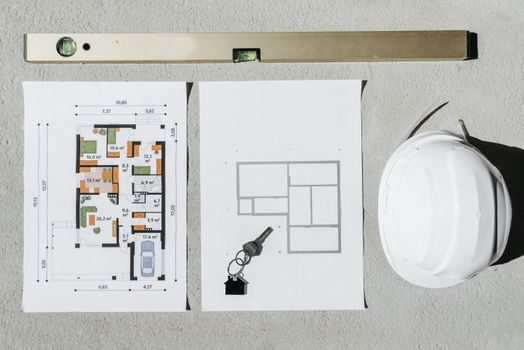
For interior tile, cabinetry, and partition framing on floors within ±3°, an infrared line level is the right tool: the line is bright enough under 500 lux, the cost is recoverable on a single room, and the 0.4-1.2 kg form factor fits a tool belt. For commercial open-plan fit-out beyond 15 m, step up to a pulsed cross-line red unit — the molding line reference taxonomy applies the same range-accuracy trade-off to a completely different domain, and the parallel is direct. [S2]
For outdoor slab layout, foundation setting, or any task requiring a 30-300 m throw with daylight visibility, a rotary green beam with matched detector is the only viable option; the infrared unit will simply not be seen. For shop-floor alignment tied to an automatic molding line or conveyor sorting line, infrared units are commonly used as low-cost station-local references rather than plant-wide primary datums, which are usually reserved for rotary lasers or machine vision.
Standards, Safety, and Sourcing Notes
Every legitimate infrared line level carries a Class II or Class 3R label per IEC 60825-1, with the warning label, aperture location, and CDRH accession number on the housing. Units sold without this marking should be rejected regardless of price — the standard exists because direct intra-beam viewing of even 1 mW at 650 nm can cause retinal injury under sustained fixation.
For plant-floor deployment adjacent to vibrating equipment such as a line-frequency furnace, check the IP rating (IP54 minimum for dust and splash exposure) and the published operating temperature window, typically -10 to +45 °C. Procurement should also confirm receiver cross-compatibility if the unit is intended to pair with detectors already in inventory, because 635 nm, 650 nm, 780 nm, and 905 nm receivers are not interchangeable.
Track the next EU Machinery Regulation alignment for IEC 60825-1 and the ongoing shift of mid-tier units from 650 nm toward 670 nm for better visibility without crossing the Class 3R threshold. Two near-term signals worth monitoring: OEM migration to LiFePO4 battery packs (cuts replacement cycle cost by roughly 40% over NiMH) and the slow replacement of dedicated IR detectors by smartphone-camera-based receivers, which would erase the cost advantage of pulsed red over infrared at the receiver end.
This topic is covered further in Shell Molding Machine Advantages, Disadvantages, and Spec Boundaries.