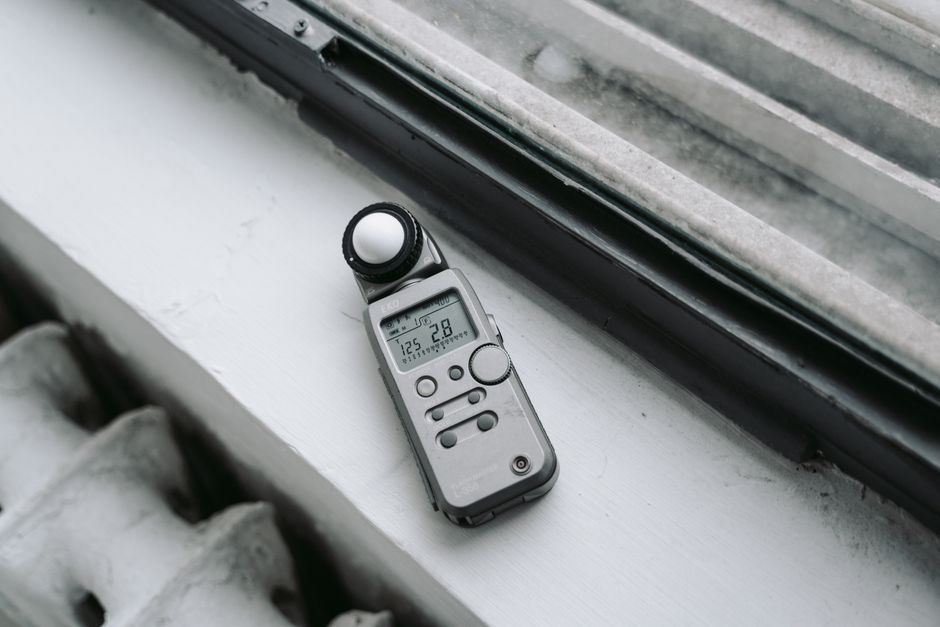
A laser distance meter's 5-year cost is rarely the sticker price: battery consumption, calibration drift, repair frequency, and software/app lock-in move the total by a factor of 2-4x across the 30 m, 50 m, and 120 m spec classes visible on the 2026 OEM catalog [S1][S2][S3][S4].
The decision is no longer "which brand" but which cost-driver stack matches the use profile - a one-person interior trim crew burns different TCO than a survey crew running 200 shots per day in direct sunlight, and the wrong tier compounds across battery, rework, and downtime lines.
What "TCO" actually means for a handheld laser distance meter
Total Cost of Ownership spans the full life-cycle envelope - acquisition, use, maintenance, support, and disposal - which the USPS deployment guide frames as the hidden-cost exposure that purchase price alone never reveals [S7]. For a portable laser distance meter the practical TCO stack breaks into seven lines: unit purchase, batteries and charger infrastructure, calibration and verification (annual or post-impact), accidental damage / repair, training time per operator, software/subscription lock-in, and end-of-life battery or electronics disposal.
Two non-obvious lines dominate the second-tier conversation. First, "rework" - the cost of re-measuring because a unit drifted out of its claimed ±2 mm spec - shows up as labor, not as instrument cost, and the ISO 16331-1 certified Leica DISTO D1 specifically markets this point by claiming the 40 m performance "is achieved during every day tasks and not only in controlled environments" [S3]. Second, "feature creep" - buying a 120 m, 4×-zoom, video-memo instrument like the Metrica 61190 when 80% of shots are under 25 m indoor, which inflates acquisition 3-5x and battery drain 1.5-2x for zero field benefit [S1].
The 2026 cost-driver stack, ranked
Across the four catalog units available on DirectIndustry as of 2026-07-22, acquisition price remains the largest single line item but the gap between entry and specialist units is wider than the spec delta suggests. The Leica DISTO D1 lists at €120 indicative ex-tax [S3]; the Leica DISTO X6 P2P portable measurement kit lists at €1,490 ex-tax [S3]; the Metrica 61190 120 m instrument bundles a 4× zoom camera, 16 GB internal memory, video/voice memo, and wireless data transmission in the feature ceiling [S1].
Battery and power-supply cost is the second driver and behaves non-linearly. The 61190 runs on rechargeable cells with a PC-connection recharge cable [S1]; the AEG LMG 50 specification page does not declare battery chemistry explicitly, but the IP54-rated rubber-overmold body and 50 m class optics point to a primary-cell design (typical AAA or CR2) [S2]. The Laserliner LaserRange-Master T3 keeps the 0.2-30 m envelope with a ±2 mm typical precision spec, which historically maps to a low-drain alkaline design [S4]. Rechargeable lithium platforms cost 2-3x more per kWh than alkaline but last 500-1,000 cycles, so a 200-shots-per-day crew crosses the break-even inside 12-18 months; a 10-shots-per-week interior crew never does.
Calibration and verification is the third driver and the one most often mis-budgeted. ISO 16331-1 is the field-performance standard that separates "lab-spec" claims from real-world tolerance; the DISTO D1 is explicitly certified to it at 40 m, ±2 mm / ±3 mm [S3]. The Laserliner T3 carries a ±2 mm "typical" precision claim without an explicit ISO 16331-1 reference [S4], and the AEG LMG 50 lists a 50 m range with no published tolerance on the catalog page [S2] - a procurement red flag for survey-grade work.
Spec-tier comparison: entry, mid, specialist on 4 TCO criteria

Lining the three visible 2026 catalog tiers against four TCO decision criteria exposes the trade cleanly. Entry (Leica DISTO D1, €120, 40 m, ±2/3 mm, ISO 16331-1) wins on acquisition cost, portability, and standard-backed precision, but offers no camera, no onboard memory beyond Bluetooth export, and a 40 m range ceiling [S3]. Mid (AEG LMG 50, 50 m, IP54, 3-line LCD with auto white backlight, Pythagoras 3 types, belt clip) wins on jobsite durability and ergonomics - the IP54 rating is the meaningful TCO line because it suppresses dust/water failure - but the catalog page omits ISO 16331-1 and a numeric precision spec, forcing buyers to verify on a per-unit basis [S2].
The 30 m Laserliner LaserRange-Master T3 occupies a sub-entry niche (area, volume, Pythagoras 1+2, angle function 1+2) for trades that never exceed 25 m and want the lowest possible purchase [S4].
On the four TCO criteria scored, the patterns are: (1) Acquisition - D1 lowest, T3 close behind, LMG 50 mid, 61190 highest. (2) Battery cost over 5 years - D1 and T3 lowest (alkaline-tolerant), LMG 50 mid, 61190 highest (rechargeable + daily top-up). (3) Rework/labor risk - D1 lowest (ISO 16331-1), T3 and LMG 50 mid (no explicit ISO claim), 61190 lowest in absolute terms because the camera-aim eliminates miss-shots. (4) Failure/downtime exposure - LMG 50 lowest (IP54), D1 and T3 mid (typical IP40-IP54 handheld rating), 61190 mid (no explicit IP rating on the catalog page).
Where a laser distance sensor or total station beats the handheld on TCO
The handheld form factor wins TCO only up to a workload threshold; beyond it, a fixed laser distance sensor or a total station takes over. As a rule of thumb grounded in the catalog spread: when a single operator exceeds 200 measurements per shift, when tolerance must hold below ±1.5 mm at >30 m, or when measurements feed a BIM/CAD pipeline that needs point clouds rather than point-and-shoot, the handheld TCO math flips. The DISTO X6 P2P kit at €1,490 [S3] is the bridge SKU - it is functionally a point-to-point measurement kit that competes with a sub-entry total station on price while keeping the one-person workflow.
For pure alignment and level work (interior partition, ceiling grid, facade plumb), a laser level is the lower-TCO tool because the measurement is continuous, not point-sampled, and operator skill drops out of the loop. For permanent machine-position or tank-level monitoring, an industrial laser distance sensor with 4-20 mA or IO-Link output replaces a human with a handheld, and the TCO crossover happens inside the first year on any application requiring more than ~20 measurements per hour. Permanent marking, traceability, and part-coding shift the conversation to a laser marker, which is a different cost class entirely. For line-scan profiling on conveyors or road-surface texture, a laser profiler replaces several handhelds and a survey crew.
Use-case fit, failure modes, and procurement watch-outs
Specifying the right handheld is a workload-matching exercise, not a brand exercise. For interior trim, real-estate floor plans, and furniture fit-out under 25 m, the Laserliner T3 (0.2-30 m, ±2 mm typical) and Leica DISTO D1 (0-40 m, ±2/3 mm ISO 16331-1) are the TCO-optimal pair; the D1 wins when Bluetooth export to a tablet kills transcription labor, the T3 wins when the buyer optimizes on acquisition only [S3][S4].
For MEP, electrical, and HVAC layout in the 20-50 m band where dust and incidental water exposure are routine, the AEG LMG 50's IP54 rating, rubber overmold, 3-point measuring reference (back, front, back-end pin), and 3-line backlit display are the TCO features - but the missing ISO 16331-1 reference should trigger a per-unit verification against a known baseline before sign-off [S2]. For facade documentation, scaffolding verification, and outdoor surveying to 120 m with photo evidence, the Metrica 61190 is the only catalog unit in this comparison set with that envelope and onboard photo-memo, and the dual digital inclinometer + 7 Pythagoras functions cover the indirect-measurement cases a single-inclinometer handheld cannot [S1].
Failure modes that drive unplanned TCO: (1) alkaline cell leakage destroying the battery compartment, mitigated by rechargeable lithium on high-use units; (2) optics contamination on jobsites, mitigated by IP54 (LMG 50) and by carrying case discipline; (3) drift after drop impact, mitigated by ISO 16331-1 verification on a known baseline; (4) software/app lock-in, where Bluetooth-only units (D1) push you to the vendor's app and data-export format, raising switching cost on multi-vendor fleets. Cross-vendor fleet standardization on one model is the single largest TCO lever buyers under-use, because training, spare batteries, calibration, and spare-parts inventory all collapse onto one SKU.
2026 TCO rules of thumb and what to track next
Three procurement rules hold across the 2026 catalog spread. First, multiply the unit price by 1.5-2.5x for a realistic 5-year TCO on a rechargeable, mid-class handheld; by 1.2-1.5x for an alkaline, entry-class unit; by 2.5-4x for a specialist unit with onboard electronics, because repair exposure scales with feature count. Second, require ISO 16331-1 in the spec text for any unit whose measurements feed a contract, a regulatory filing, or a fabrication tolerance - the D1 is one of the few catalog units that publishes the standard explicitly [S3], and the absence of that string on a datasheet is a useful negative signal. Third, plan battery infrastructure before purchase: rechargeable + multi-bay charger for >100 shots/day crews, alkaline for everything else.
Trackable signals for the next procurement cycle: (1) Bluetooth 5.x LE versus Bluetooth 4.2 on new SKUs, which moves phone-pairing time and field-app battery drain; (2) USB-C charge and data replacing micro-USB and proprietary ports, which collapses charger SKU count on multi-vendor fleets; (3) the appearance of LiFePO4 cell options on the 50-120 m class, which would shift the 12-18 month rechargeable break-even earlier because of longer cycle life. For buyers building a spec now, the cost-optimized move is a two-tier fleet - DISTO D1 or Laserliner T3 for the long tail of interior/short-range work, and either an LMG 50 (IP54) or a 61190-class specialist for the jobsite-tough and long-range tail - with all training, batteries, and calibration procedures standardized to one model per tier.
Related analysis: Laser Distance Meter Types: Range, Principle, and Selection Map.