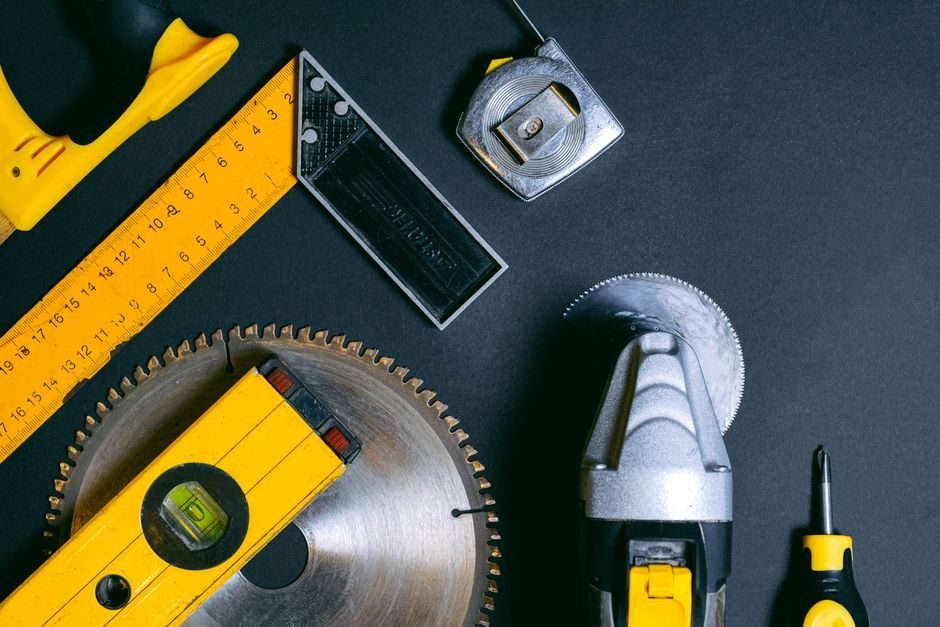
Infrared line levels and automatic (self-leveling) optical levels are routinely confused by first-time buyers because both put a horizontal reference into a working scene, but the underlying physics, working envelope, and accuracy budgets are not comparable [S1][S2].
An infrared line level is essentially a line-generating laser module: a diode source (commonly 635-650 nm visible red, sometimes 808-850 nm near-infrared) is passed through a cylindrical lens or a rotating prism to project a straight planar beam across a work plane. An automatic level is a surveyor's telescope suspended on a gravity-referenced compensator that keeps the line of sight horizontal once the instrument is roughly leveled by foot screws. Same end result on the wall, completely different instrument [S1].
Working Range and Beam Geometry
Infrared line modules are short-range devices; consumer and prosumer units are typically rated 10-30 m of useful line length, with high-end interior models reaching 50 m when used with a detector [S1]. The beam is a fan, usually 120-180 degrees on the long axis and a fraction of a degree thick, so the working volume is a stripe across a wall or floor, not a single line of sight.
An automatic level by contrast is a line-of-sight instrument: a telescope with magnification commonly 20x-32x defines a single optical axis to a graduated rod, and self-leveling compensators hold that axis to within roughly 0.5-1.0 arc-second (≈ 2.5-5 mm per km) of true horizontal on standard production models. Effective single-rod range is typically 100-200 m, extending to 300-500 m with an inverted-staff or bar-code staff [S2].
Accuracy Budgets Compared
Line-level accuracy is expressed as a deviation at a stated distance, for example ±2 mm at 10 m, which scales linearly and is dominated by the optics rather than the leveling mechanism. Automatic optical levels are specified in mm per km of double-run leveling (DIN 18723 / ISO 17123-2) — a 1 km closed-loop error of ±1.0 mm is typical for an engineer's grade instrument, ±2.0-2.5 mm for a builder's grade automatic level [S2].
The two accuracy systems are not interchangeable. A line-level that quotes ±2 mm at 10 m is performing at ±200 mm per km if you extrapolate, four orders of magnitude worse than a survey automatic level; conversely, asking a survey automatic level to "shoot a level line on the wall" is operationally possible but absurd because the telescope resolves a single point at a rod, not a planar line on a surface [S1][S2].
Sensing Principle and Environmental Behavior

The infrared line source in a line level is a semiconductor emitter; the beam is monochromatic, coherent, and can be modulated so that a detector differentiates signal from background light. Near-IR wavelengths (around 808-850 nm) are useful in dusty or sun-lit interiors where visible red is washed out, but photodiode detectors must be specified for the same band, and eye safety classification moves from Class 2 (visible) to Class 3R/3B (near-IR) at similar output power [S1].
An automatic optical level's "sensor" is a combination of a gravity pendulum, a prismatic or magnetic damper, and a mirror or prism compensator with a working range of roughly ±10-15 arc-minutes. Once the bubble is centered, the compensator takes over and the line of sight stays flat regardless of small tripod settlement. Vibration from a passing truck or wind on a tall staff will set the compensator oscillating, and standard practice is to wait 2-3 seconds after disturbance before reading [S2].
Selection Criteria: Infrared Line Level vs Automatic Level
The right tool is decided by distance, surface area, ambient light, and the type of accuracy the job actually needs [S1][S2].
Pick an infrared line level when the working distance is under ~30 m, the task is interior fit-out (ceiling grids, cabinet rails, tiling, partition walls), and the reference must be a continuous line, not a point. Pick an automatic level when the task is outdoor elevation control, foundation set-out, or any job requiring closure to ±2 mm/km across a site. For buyers who also need guidance on line-type, accuracy class, IP rating, and power options across automatic levels themselves, the Automatic Level Buying Guide 2026 lays out the four spec gates.
Limitations and Failure Modes
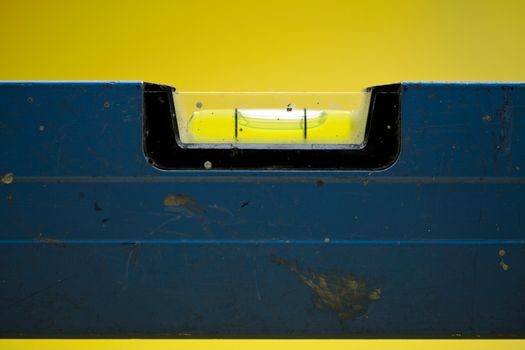
Infrared line levels fail in three predictable ways: (1) receiver saturation in direct sunlight, where the line is no longer visible without an active detector; (2) line drift when the internal pendulum or electronic self-leveling is bumped out of range, with most consumer units locking the beam when tilt exceeds roughly ±4 degrees; and (3) over-specification, where buyers push a 10 m interior unit onto a 40 m exterior slab and the beam is too faint to read [S1].
Automatic levels fail differently: (1) compensator hang-up after transport, where the pendulum sticks and gives a false horizontal — solved by tapping the standard gently and re-sighting; (2) collimation error, where the line of sight is not parallel to the bubble axis, which is why two-peg tests are required before any leveling run; and (3) thermal refraction on long sights, where a sun-heated road surface bends the optical path by several mm at 100 m, and the cure is to shorten sights and balance timings [S2].
Standards, Calibration, and Sourcing Signals
Survey automatic levels are commonly specified to ISO 17123-2 (field procedures for leveling instruments) with accuracies declared under DIN 18723, both of which let buyers compare instruments from different vendors on the same basis. Infrared line levels have no comparable horizontal-accuracy standard; most manufacturers quote a single deviation-at-distance number with no test procedure, so a direct spec sheet comparison should be read as indicative rather than absolute [S2].
For sourcing, watch for two signals through 2026: vendors that publish ISO 17123-2 / DIN 18723 test certificates with their automatic level shipments, and line-level vendors that publish a wavelength band, an output power in mW, and a detector-matching spec — those three together indicate the spec sheet has engineering behind it rather than marketing copy. If the slab-finishing workflow is the actual job, the Concrete Vibrator vs Laser Screed comparison covers where an automatic level, a laser screed, and a concrete vibrator each fit on the same pour day.
Bottom line: the two instruments answer different questions — a line level answers "is this surface in the same plane as the line", an automatic level answers "what is the height difference between these two points" — and they are complementary, not competing, on most job sites.
For component-level specifications, see automatic molding line.