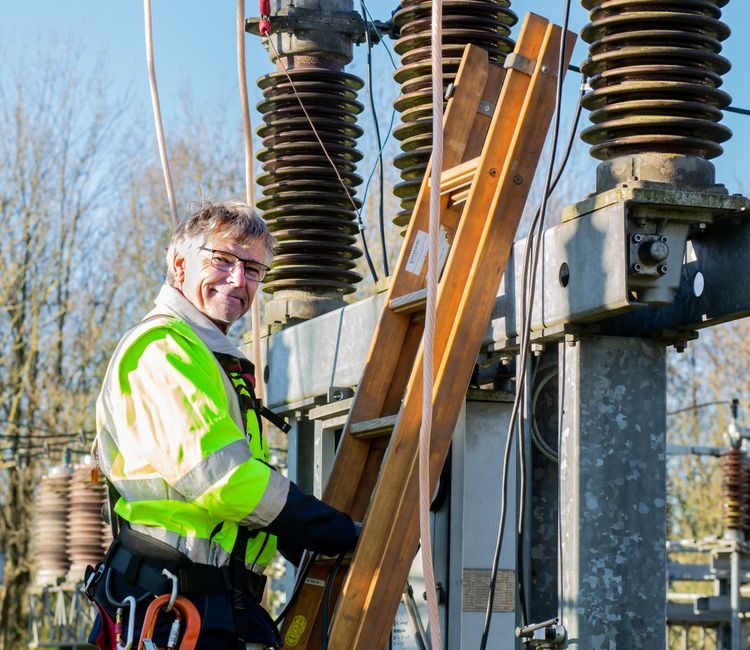
An insulation resistance tester — also called a megohmmeter or Megger tester — applies a stabilized high DC voltage across an insulation barrier and reads the resulting resistance, typically in the kΩ–TΩ range, to detect moisture ingress, winding degradation, or surface contamination before a phase-to-ground fault develops [S2].
A power quality analyzer clamps onto an energized AC bus and continuously samples voltage, current, frequency, harmonics (THD, individual harmonics to the 50th order on Class A instruments), flicker, and transient events to characterize how the supply interacts with non-linear loads. The two instruments overlap only at the multimeter level and are almost never used on the same test point at the same time [S1][S3].
Voltage Class, Test Current, and What Each Instrument Actually Measures
Insulation testers cover a wide output band: entry-level handheld units such as the SEW 0010-KK run at 1 kV DC with automatic AC/DC voltmeter start and auto-ranging, while diagnostic bench units like the Huazheng HZJY-5K-I, HZJY-10K-Z, HZJY-15K, HZJY-20K, and HZJY-30K step up through 5 kV, 10 kV, 15 kV, 20 kV, and 30 kV DC test voltages respectively for HV cable, motor, generator, and transformer winding acceptance tests [S3][S5]. A typical mid-band Megger BM5200 ships as a battery-powered 5 kV high-voltage insulation resistance tester suited to field substation work, with PI (polarization index) and DAR (dielectric absorption ratio) routines standard on instruments in this class [S4].
Power quality analyzers are AC-only instruments by construction. Three-phase digital phase voltammeters such as the Fuzrr ES2020B series operate on the secondary side of CTs and PTs and present phase angle, voltage and current simultaneously [S1]. Modern Class A PQA instruments comply with IEC 61000-4-30 measurement-method requirements and typically deliver ±0.1% voltage accuracy, 0.2%–0.5% current accuracy, and sampling rates of 5–50 kHz per channel to capture sub-cycle transients. Insulation testers do none of this; their output is unipolar DC and they are short-circuit-current-limited to a few milliamps for safety.
Decision Matrix: When to Specify Which Instrument
Four criteria separate the two: stimulus type, target system state, measured quantity, and reportable metric. The matrix below, drawn from catalog specs and OEM literature from 2026-07, is the cleanest way to pick between them.
Stimulus — Insulation testers inject DC (500 V / 1000 V / 2500 V / 5000 V / 10 kV / 15 kV / 20 kV / 30 kV depending on model); power quality analyzers inject nothing and only sense the existing AC waveform [S3]. Target system state — insulation testers require the asset to be DE-ENERGIZED and isolated; power quality analyzers require the asset to be LIVE under normal operating load. Measured quantity — insulation testers return resistance in MΩ/GΩ/TΩ plus PI and DAR ratios; power quality analyzers return V, A, Hz, THD, individual harmonics, unbalance, flicker, and transient captures. Reportable metric — insulation tests pass/fail against a dielectric floor (e.g. 1 MΩ per IEEE 43 for LV windings, higher for HV); power quality tests pass/fail against a power-quality contract or grid code limit.
For a single rule of thumb: if the work order says "commissioning" or "annual insulation test," specify an insulation tester. If the work order says "trip investigation," "harmonic survey," or "energy audit," specify a power quality analyzer. Trying to use one for the other role wastes a day of labor and produces invalid data.
Application Bands by Voltage Class and Asset
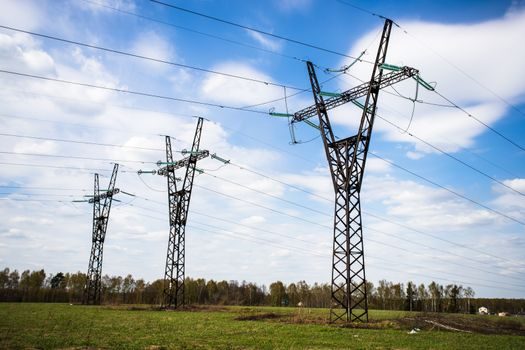
500 V–1 kV insulation testers cover telecom DC plant, control wiring, 400 V/690 V motor windings, and PV string insulation testing. The 1 kV SEW unit and the Fuzrr FR3015/FR3025/ES3035+ digital insulation testers fall into this portable band and run for hundreds of tests on a single battery charge [S1][S5].
5 kV testers — including the Megger BM5200 and the Huazheng HZJY-5K-I / HZ3051 / HZ3151 — are the workhorse for 6 kV / 10 kV / 11 kV class motor and generator windings, switchgear bus support insulators, and 11 kV XLPE cable after laying. 10 kV testers (HZJY-10K-Z, HZJY-10K-I) and 15 kV testers (HZJY-15K) extend coverage to 33 kV class assets and large hydro generator stator windings before hipot. 20 kV and 30 kV units (HZJY-20K, HZJY-20K-Z, HZJY-30K) are reserved for 66 kV–220 kV transformer and cable acceptance testing, where 5 kV simply cannot stress the dielectric sufficiently to surface latent defects [S3][S4].
Power quality analyzer use is asset-class agnostic — the same instrument will survey a 400 V motor control center and a 33 kV incomer — but the current clamp and voltage probe selection must match. Typical Class A kits ship with 4 flexible current clamps (1 A–3000 A range, 50 Hz/60 Hz) and 4 voltage leads rated to 1000 V CAT III / 600 V CAT IV for direct LV connection, with external PTs for MV surveys.
What Each Instrument Cannot Do (Failure Modes and Misuse)
Insulation testers are not power meters — they will not report kW, kVAr, kVA, or power factor on a live system, and applying their DC output to energized equipment can damage both the tester and the load [S2]. They also cannot diagnose intermittent faults that only manifest under thermal or mechanical stress; for those, an online partial-discharge monitor or a thermal imaging survey is the correct tool.
Power quality analyzers are not insulation testers — they will not measure dielectric resistance, will not perform a hipot or surge test, and will not tell you whether a cable's insulation is sound. A common site error is to "save time" by using a PQA to check insulation on a de-energized feeder; the result is meaningless because the PQA is calibrated for the 50/60 Hz AC environment and lacks the DC stimulus stage. Both instrument classes also fail on ungrounded or floating systems unless proper reference grounds are established, which is why best-practice substation work uses both instruments on complementary schedules: insulation tester at quarterly outage, PQA on a 7-day continuous log.
Standards, Calibration, and Sourcing Reality (2026-07)
Insulation tester calibration rests on a known high-voltage resistor reference and the IEC 61557 family of safety requirements for measuring relays and protection equipment in low-voltage distribution. Power quality analyzers are built against IEC 61000-4-30 (measurement methods), IEC 61000-4-7 (harmonic analysis), and IEC 61000-4-15 (flickermeter) for Class A compliance; field use without these standards is reportable only as a Class B survey at best [S2][S3].
On the sourcing side, mid-2026 catalogs split cleanly into three groups: Chinese OEM/ODM lines (Huazheng, Fuzrr, made-in-china factory listings under "High Voltage Insulation Equipment" and "Partial Discharge Test" categories) covering 1 kV–30 kV with aggressive lead times; established Western brands (Megger BM5200 at 5 kV being the canonical mid-band example) with global service networks; and Malaysia/Southeast Asia regional distributors such as KK Instruments carrying 1 kV stock units for utility and contractor use [S3][S4][S5][S7]. The Electric Actuator Spec Map for Power Generation Plants reference uses a similar tiered selection logic and is a useful parallel for buyers standardizing on a single vendor panel. For HV laboratory buyers, the made-in-china factory page lists partial-discharge, AC/DC hipot, impulse voltage generator, and transformer testing instruments under one roof, which simplifies the multi-instrument procurement cycle for a new test bay [S7].
For buyers cross-referencing raw-material and process standards during the same procurement cycle — particularly where copper conductor and alloy-steel mechanical components are involved — the copper manufacturing quality standards map gives the ISO/ASTM grade bands that an insulation tester's leads, clamps, and bus-bar adapters must satisfy to keep the instrument's stated accuracy traceable.
Trackable signals for the next procurement cycle: (1) any IEC 61557 edition amendment affecting 1 kV–30 kV tester leakage limits; (2) the IEC 61000-4-30 Class A edition revision affecting harmonic and flicker reporting thresholds for PQA logs used in grid-code submissions; (3) lead-time movement on Huazheng 10 kV–15 kV stock, which historically tightens when Chinese utility outage-season demand peaks in Q3.
Spec-level background on the components involved: air quality monitor.