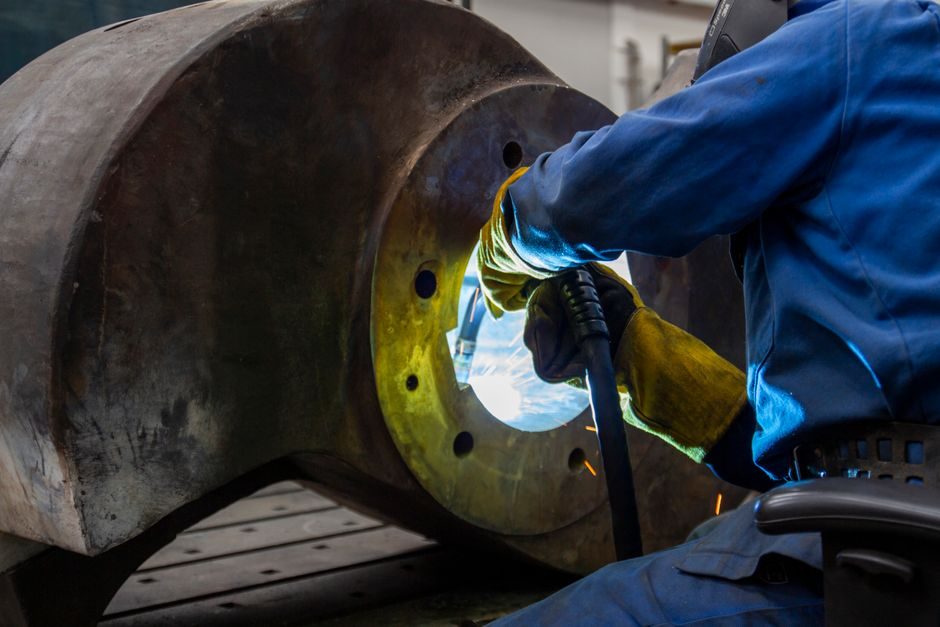
Jaw couplings transmit torque through a multi-lobed elastomer "spider" captured between two metal hubs, and the published torque envelope across current vendor lines spans 1.2 Nm on the ALBERT XSRB up to 161,003 Nm on the Lovejoy HercuFlex FXL, with rotational speeds reaching 9,000 rpm on the FXL and 4,500 rpm on the XSRB [S1][S3].
Within the four jaw-coupling product cards audited in the past six months, the dominant failure-mode discussions — vibration damping on Weasler's 507-9512, contamination resistance on the HercuFlex FXL, and pump-shaft extraction on the ALBERT XSRB — all return to the same three installation variables: shaft-hub fit, spider engagement, and allowable misalignment band [S1][S2][S3].
Hub Bore Selection: Clearance vs Interference Fit
Clearance fits on a keyed shaft (typically H7/g6 with a single parallel key to ISO 773) are the standard for general-purpose jaw couplings such as the L Type and L-LOC clamp hub from Lovejoy, while taper-lock bores (e.g., ALBERT's TC/TCI and XTC/XTCI series) are used where frequent removal is expected, because the radial clamping force is generated by axial draw-up rather than by a setscrew [S5][S3].
For a given bore diameter, the published torque rating of a jaw coupling is computed with the smaller of the two shaft diameters (driver or driven) as the basis — a 50 mm bore hub on a 40 mm shaft transmits at the 40 mm rating, not the 50 mm rating, and this single rule is the most common source of premature spider failure in the field. Setscrew torque on a clearance-fit hub should be tightened to the manufacturer's published value (typically 80–110 % of the screw yield) and then locked with a locknut or thread-locking compound, because a backing-off setscrew allows the hub to rotate on the shaft and shreds the spider body within minutes of loaded operation.
Spider (Elastomer) Engagement: Spider Hardness and Acceptance Test
The elastomer spider — Shore A 80 nitrile for general purpose, Shore A 95 or 80D polyurethane for higher torque density, and Shore A 70 NBR for low-temperature flexibility — must seat fully into the jaw pockets of both hubs before the coupling guard is closed, and a 1–2 mm axial "float" between the two hub faces is normal because the spider is designed to compress and recover under shock [S2][S6].
Acceptance test after spider install: rotate the driver hub 360° by hand, listening for periodic rub or click; a rubbing sound at one angular position indicates the spider is not fully seated, and the only correct action is to re-index both hubs so the spider lands symmetrically. If the audible rub persists, replace the spider — never re-shim a jaw coupling, because the axial float is a designed feature and adding washers defeats the damping path. The Weasler 507-9512 description explicitly cites "dampen system vibrations" as a primary function, which depends on an unloaded elastomer path; a pre-compressed spider has roughly half the published damping coefficient and transmits torsional shock directly into the driven bearing [S2].
Misalignment Limits: Angular, Parallel, and Axial
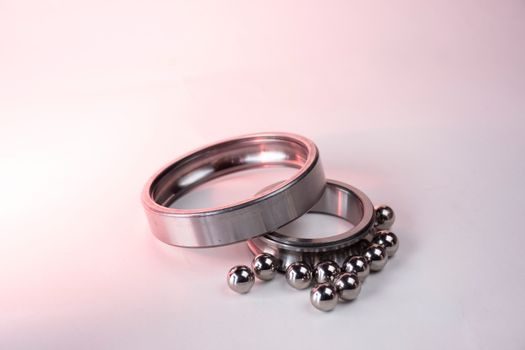
Standard jaw couplings of the L Type and S Type pattern tolerate roughly 1° angular misalignment and 0.2–0.5 mm parallel offset per jaw, but published "misalignment correction" values from Lovejoy's HercuFlex FXL reach 1.5° per gear mesh in the gear-coupling variants of that same product family [S1][S5]. In contrast, the torsionally flexible HRC series from BEA Ingranaggi (GEB HRC, torque 31–7,200 Nm) is positioned specifically for higher misalignment absorption at lower stiffness than a metal disc stack [S4].
Field practice is to align first with a dial indicator or laser system to less than 0.1 mm parallel offset, then bring the motor toward the driven machine on a base-plate slide until the gap between the two shaft ends equals the manufacturer's "DBSE" (distance between shaft ends) value for the selected spider length — short of that, the spider is overcompressed; long of it, the spider cannot engage both hubs simultaneously. After alignment, re-torque the spider and tighten the setscrews as the final step; never align with the setscrews still loose, because the hub will tilt on the shaft and the resulting angular error will read as "coupling vibration" at commissioning.
Comparison: Standard L/S Spider vs Taper-Lock vs HRC Torsionally Flexible
Three jaw-coupling installation archetypes cover almost every industrial drive: standard L/S hubs with a clearance fit and setscrew, taper-lock hubs (TC/TCI/XTC/XTCI pattern) for frequent removal, and HRC-class torsionally flexible units for higher misalignment absorption [S3][S4]. On the four audited product cards, the L/S pattern (Lovejoy L Type) sits at the low end of the published torque range, the HRC pattern (BEA Ingranaggi) reaches 7,200 Nm with emphasis on torsional flexibility, and the taper-lock pattern (ALBERT TC/XTC) gives up a small percentage of bore capacity for the axial-clamp convenience [S4][S5][S3].
Decision rule of thumb: specify L/S setscrew for fixed installations on standard NEMA/IEC frame motors where the spider will be replaced once every 2–4 years; specify taper-lock (TC/XTC) where the driven machine is a pump that must be uncoupled for seal service, because the ALBERT XSRB design specifically uses an external distancing tool to allow dismantling of the pump unit without axial displacement of the motor [S3]; specify HRC-class torsionally flexible (GEB HRC family) on drives with cyclic shock loads or where the driven load has high rotational inertia relative to the motor [S4].
Spider Replacement Procedure and Spare Stocking
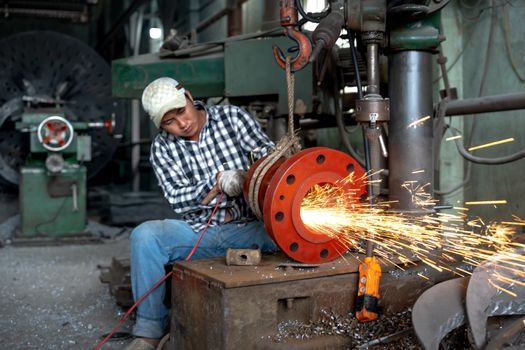
Spider replacement is the only routine maintenance event in a jaw coupling's service life, and the documented sequence is: lock out the driver, remove the coupling guard, mark the relative angular position of both hubs with a paint pen, slide one hub axially to clear the spider, lever the old spider out with a flat-blade screwdriver (never pry against the hub face), inspect the jaw pockets for burrs, and press the new spider in by hand with a light film of the manufacturer's compatible lubricant [S6].
Spare stocking rule: for a plant with 30+ jaw couplings, hold 1 spare spider per 10 installed units on the shelf, because elastomer shelf life is typically 5–7 years from manufacture regardless of installed hours, and a failed spider on a critical pump usually stops the line within one shift. For the Weasler 507-9512 product line, both complete couplers and "jaw coupling halves" plus separate "spider inserts" are available separately, which is the recommended stocking model because it halves the spare-parts inventory cost versus holding complete assemblies [S2].
Failure Modes: When to Repair vs Replace the Hubs
Symptom: spider shears radially and one hub turns freely on the shaft. Root cause: torque overload or wrong spider hardness for the application. Corrective action: replace the spider, and verify service factor against the published catalog (typical industrial service factor 1.5–2.0 for pumps, 2.0–3.0 for mixers) before restart [S6].
Symptom: visible wear lines on the inside of the jaw pockets, or the hub face has a polished crescent. Root cause: angular misalignment exceeding the published limit, or sustained axial float deficiency. Symptom: audible rub every revolution. Root cause: spider not fully seated or foreign debris in a pocket. Corrective action: re-index the spider and clean the pockets; do not add lubricant to a Shore A 95 polyurethane spider, because the lubricant can attack the urethane and swell it out of spec. For high-torque builds such as the HercuFlex FXL at 161,003 Nm and 9,000 rpm, always follow the gear-coupling mounting tutorial in the Lovejoy "Gear Coupling Tutorial – Part III" because the assembly is dual-classified as jaw/gear and uses an AGMA flange interface rather than the L/S setscrew pattern [S1].
Trackable next nodes: Lovejoy's published "Jaw Type Couplings Catalog" (PDF) and "Jaw Coupling Selection Worksheet" (PDF) for selection verification, plus the "Stainless Steel Jaw Sell Sheet" (PDF) for washdown or corrosive-environment builds, all linked from the L Type product page [S5]. The disc-coupling alignment procedure, which uses a different bolt-torque and API 610 spacer rule set, is the natural cross-reference when a maintenance crew is upgrading from a jaw coupling to a disc coupling on a high-speed pump Disc Coupling Installation: Alignment, Bolt Torque, and API 610 Spacer Rules. For engineering context on torsionally flexible elastomer selection in jaw couplings versus metal disc stacks, the encyclopedia entry covers the damping trade-off in more depth; the same trade-off drives disc coupling selection at higher torques.
Spec-level background on the components involved: linear guide.