
Knife gate valves isolate flow on slurries with up to ~5–10% solids by weight through a sharp-edged gate that cuts media on closure, distinguishing them from parallel-slide gate valves which are built for clean service [S1][S3].
The selection map below maps body material, seat style, pressure class, and actuation against four duty envelopes — pulp & paper, mining tailings, wastewater, and chemical — using CF8/CF8M stainless and A216 WCB carbon steel as the two reference body alloys commonly stocked by global exporters [S2][S5][S6].
Body Material: CF8M vs A216 WCB vs Lined Carbon Steel
A216 WCB carbon steel bodies remain the default for low-corrosion, ambient-temperature slurry lines and are widely quoted on Made-in-China export channels as the budget workhorse option [S6]. CF8 (cast 304) and CF8M (cast 316) stainless bodies — sometimes listed simply as “SS316 wafer knife gate valve” — cover corrosive chemical, food, and effluent service where chloride pitting risk exists, and CF8M specifically is the workhorse for chloride-bearing pulp-mill liquors [S5]. For severe abrasion, rubber- or PTFE-lined carbon-steel bodies extend service life in tailings and fly-ash handling; lined variants shift the wear surface from the metal gate to a replaceable elastomer, which is the typical value-engineering path on mining duties [S2][S3].
Material selection should be driven by three concrete numbers: pH, chloride content (ppm), and abrasive solids percentage by weight. A common rule of thumb: specify A216 WCB when pH is 6–9 and chlorides are below ~200 ppm; specify CF8M when chlorides exceed ~200 ppm or pH drifts below 5; specify lined carbon steel when solids exceed ~5% by weight and the slurry exhibits particle sizes above 1 mm [S2][S5].
Seat and Seal: Metal-to-Metal vs Resilient vs Bi-Directional
Metal-to-metal seats tolerate temperatures above ~230 °C and handle clean, non-abrasive media, but they leak at low differential pressures — a hard gate on a hard seat is not a bubble-tight shutoff. Resilient seats (EPDM, NBR, Viton, PTFE) provide bubble-tight shutoff to ANSI Class VI in most sizes and dominate wastewater and chemical service up to ~150 °C depending on elastomer [S2][S3].
Bi-directional resilient seats are the most common upgrade specified on modern KGVs because they shut off in either flow direction, eliminating the inlet/outlet installation errors that plague unidirectional designs in field retrofit work [S3]. For services that switch between slurry and clear water — common in paper-mill stock lines — a deflector-cone or “purged” seat prevents solids packing under the gate, a failure mode that locks the gate half-open and accelerates packing-gland wear [S1].
Pressure Class, End Connection, and Face-to-Face
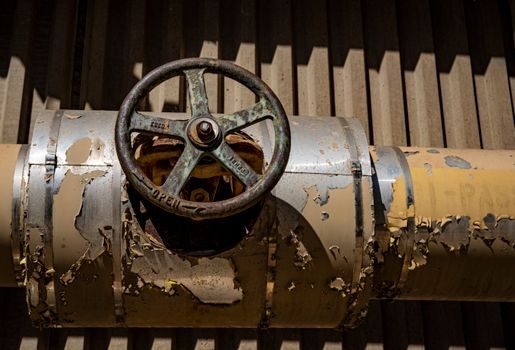
Most general-purpose knife gate valves are rated PN10 or PN16 (ANSI Class 150) because the gate geometry is fundamentally a low-pressure design — the gate is thin, the body is a wafer or lug pattern, and the bonnet is omitted. Going above PN25 (Class 300) is unusual and signals a heavy-duty mining or high-pressure slurry service where the body switches to a fabricated or lugged heavier-wall pattern [S2][S3].
End connections split into wafer, lug, and flanged; wafer is the cheapest and lightest (a single set of stud bolts clamps it between flanges), lug allows dead-end service, and flanged is specified for ease of maintenance on large-diameter lines. For face-to-face dimensions, the industry reference is the MSS SP-81 series for wafer knife gate valves, and the FCI 65-15 / ASME B16.10 pattern is sometimes used for flanged variants — but the procurement office should always confirm the manufacturer's published FTF, since the FCI 65-15 long-pattern and the MSS SP-81 short-pattern are not interchangeable in the line [S3].
Actuation: Handwheel, Bevel Gear, Pneumatic, and Electric
Handwheel operation is the default for small-bore and infrequently cycled valves; once the line size exceeds DN300 or cycle rate climbs above a few cycles per shift, bevel gearboxes step in to multiply torque and keep the rim pull under ~200 N for operator safety [S2]. Pneumatic actuation is the most common automation choice because KGVs need only a single-acting spring-return cylinder to drive the gate fully open or closed, and on/off is the dominant duty profile — modulation is a known weak point because the thin gate chatters against the seat under partial lift and rapidly destroys the resilient seal [S3].
Electric actuators with rising-stem indication are common on wastewater-plant retrofits where instrument air is unavailable, but the duty cycle must be de-rated because the open/close stroke of a DN400 KGV is several hundred millimetres and a standard on/off electric actuator takes 30–60 seconds to complete it; modulating electric actuators are rare and should be questioned on KGV duty [S3].
Slurry-Specific Failure Modes: Solids Packing, Gate Flexure, and Seat Erosion

Three failure modes dominate the in-service complaints seen on slurry KGVs: (1) solids packing under the gate in the body cavity, which prevents full closure and is solved with a deflector cone or a body-flush port; (2) gate flexure at high differential pressure, where a thin stainless gate bends permanently when closed against a pressure drop above ~6 bar in sizes above DN200 — solved by stepping up to a heavy-pattern or solid-wedge gate; and (3) seat erosion on the outlet face of resilient-seated valves handling abrasive ore slurries, which the supplier mitigates with a replaceable seat ring rather than re-machining the body [S1][S2].
The same engineering logic that drives ball valve selection on seat, body, and pressure class — match the body to the medium, match the seat to the shutoff class, match the pressure class to the working pressure — applies to KGVs, but the slurry-dimension is the extra axis that most general valve guides ignore.
Standards, Testing, and Sourcing Signals
Most export-grade KGVs are pressure-tested per API 598 or EN 12266-1, with shell and seat tests performed on every valve prior to dispatch [S3]. Material certification to EN 10204 3.1 is standard on stainless and carbon-steel bodies, and ISO 9001:2015 quality systems are the baseline on the manufacturer side — both signals are table stakes for export orders to Europe and the Americas [S1][S2][S3].
For chemical and offshore duties, NACE MR0175 / ISO 15156 sour-service compliance on the wetted parts is a separate material call-out that must be specified at RFQ stage, because it affects both the body casting (S-class requirement) and the gate/stem hardness limits — retrofitting NACE on a standard CF8M body is not possible without a full re-spec. The same pattern of "specify at RFQ, not after PO" applies to ATEX/IECEx marking on pneumatic or electric actuators in Zone 1 or Zone 21 areas [S3].
Shortlist Logic: Which KGV for Which Duty
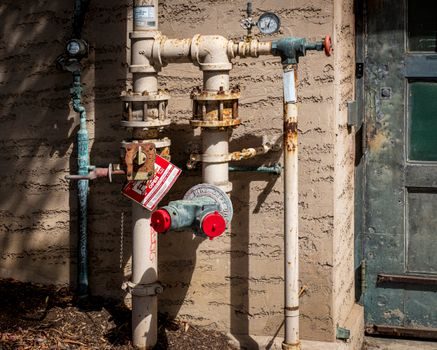
Use A216 WCB wafer, handwheel, PN10, metal seat for clean dry bulk / ash handling under ~80 °C; use CF8M wafer, pneumatic, PN10, bi-directional resilient seat (EPDM or NBR) for pulp-mill liquor and wastewater up to ~80 °C; use PTFE- or rubber-lined carbon-steel lug body, bevel gear, PN16, deflector-cone seat for mining tailings with 5–10% solids and particles above 1 mm; use CF8M flanged, electric actuator, resilient seat, NACE MR0175 compliance for chemical / offshore duties where chlorides or H2S exposure is present [S2][S3][S5][S6].
Do not specify a knife gate valve for clean steam, cryogenic, or high-pressure clean-gas service — those duties belong to gate valves, ball valves, or butterfly valves and the KGV's thin gate and resilient seat will fail. The decision to step away from the KGV on a clean-service line is as important as the decision to pick one for a slurry line, and the procurement shortlist should record both the KGV line items and the valve types that replaced KGVs on adjacent clean-service lines.