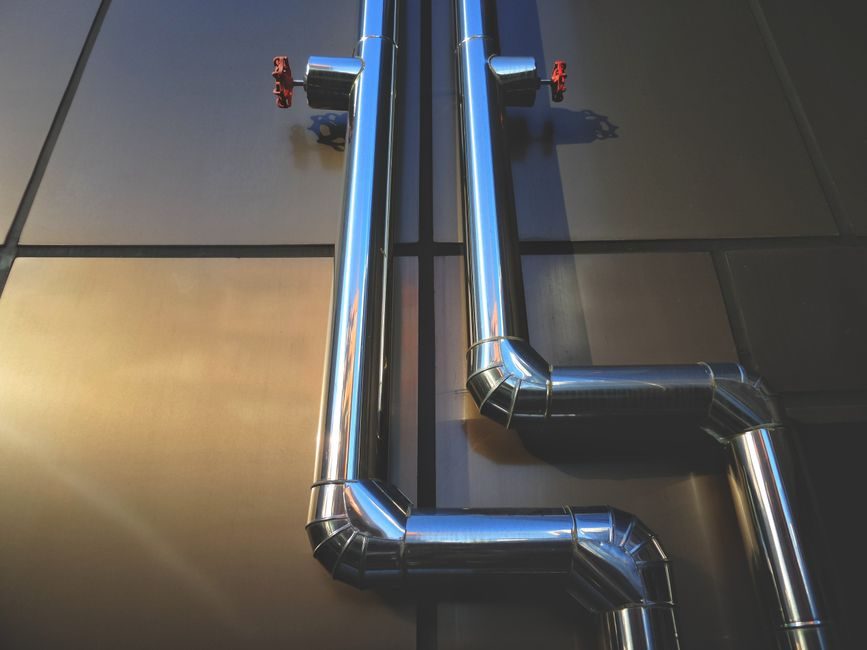
For 2026 hydronic and HVAC spec work, the practical balancing-valve envelope sits between DN 15 mm and DN 50 mm with PN 16 to PN 25 bar ratings and operating temperatures of -10 °C to 120 °C, per current DirectIndustry listings covering 45 manufacturers and 108 catalog entries [S1].
Inside that envelope, a buyer must commit to a body type (DZR brass globe, ball, piston or thermostatic diaphragm), an orifice geometry (fixed, V-port or Venturi) and a measurement interface (two self-sealing test plugs plus a digital hand-wheel memory stop) before any flow-coefficient (Kv) check is meaningful [S3][S6].
Static vs Dynamic Balancing: When Each Type Earns Its Slot
Static balancing valves are manually set once and then locked; a typical example is the ZETKAMA zSTA 221 fixed-orifice DZR brass globe with DN 15-50 mm, PN 25 bar, -10 °C to 120 °C, 40 stroke-position handwheel and two quick test points [S1]. Dynamic or automatic balancing valves instead hold a design flow as system pressure changes and are the right pick for variable-speed pumping circuits where Δp swings across the circuit.
For variable terminal-unit loads (fan-coil units, variable-air-volume boxes, modulating control valves further down the loop) the differential-pressure / flow-limiting type prevents the "starve-the-far-terminal" failure mode that static valves cannot fix after commissioning. A static fixed-orifice unit, locked at one Kv, will over- or under-deliver as the pump curve shifts — that is the textbook reason a static-only spec gets reworked within 18 months on most retrofits [S1].
Body Material, Connection and Pressure Class — Hard Gates
DZR brass (CW602N / CW511N family) is the de-facto body for hot-water HVAC at -10 °C to 120 °C because dezincification resistance protects the ½" to 2" threaded zone from intergranular corrosion in closed-loop water chemistry; the VARIMEX 221, the VIR 9515/9516, the Bonomi 200400/200500 series and the Taloar T330 all sit in this material band [S1][S3].
For steam, glycol loops above 120 °C, or district-heating primary sides, a cast-iron or steel globe body rated PN 25 is the minimum; for oilfield / hydraulic service, the comparator class is a different product entirely — a Jereh frac ball valve covers 9 in DN at 5,000-20,000 psi and -75 °F to 250 °F, and is NOT a hydronic balancing valve [S1]. Thread standards to write into the purchase order: ISO 228/1 for DN 15-20 threaded ends and ISO 7/1 Rp above, per the VIR 9515/9516 datasheet, with EN 1057 copper-tube olive-and-nut kits as an option [S1].
Orifice Geometry and Flow-Measurement Interface

A Venturi-style fixed orifice with two self-sealing pressure taps (e.g. the ½" to 2" VIR 9515/9516 or the 0.5-2 in SIMPLE VALVE D080-00500 at PN 16) is the most common 2026 build because the taps accept a standard differential manometer for Kv verification at commissioning and again at recommissioning [S1][S2]. A V-port plug on a Y-pattern body — the Taloar T330 uses exactly this layout — improves linear regulation versus an equal-percentage profile, which matters when the operator hand-wheels across a wide stroke range rather than parking at one Kv [S3].
Three measurement features separate a serious balancing valve from a generic stop valve: (1) a calibrated Venturi or fixed orifice traceable to a published Kv table, (2) two self-sealing test plugs (typically 50 mm stainless extension pipes per the Taloar datasheet) so the manometer reads differential pressure without breaking the insulation jacket, and (3) a memory-stop handwheel that locks the set position and lets the valve be closed for service and then reopened to the exact commissioned Kv without re-measurement [S1][S3].
Comparison Matrix: Main Valve Types Against 4 Decision Criteria
For HVAC spec writing, line up the four realistic options on four gates (DN 15-50 mm coverage, max PN rating, max media temperature, body material) using values that appear in current manufacturer data [S1][S2][S3][S6]:
- DZR brass fixed-orifice globe (ZETKAMA zSTA 221 / VIR 9515 / VARIMEX 221): DN 15-50 mm, PN 25 bar, -10 °C to 120-130 °C, brass — best for static hydronic balancing on hot-water heating and chilled-water loops.
- DZR brass Y-pattern V-port globe (Taloar T330): DN 0.5-2 in, 300 psi (~20.7 bar), -10 °C to 120 °C, brass with alloy internals — best where linear regulation across the stroke is required and the operator will sweep the setting rather than lock it.
- Brass piston / handwheel distribution valve (SIMPLE VALVE D080-00500): DN 0.5-2 in, PN 16 bar, brass — best for low-rise heating / cooling distribution where PN 25 headroom is not required and the budget is tight.
- Ball balancing valve with reduced port (Victaulic TA Series 78BL): shut-off plus manual throttling and measuring, IAPMO certified to ANSI/NSF 61 for cold water at 23 °C — best for potable-water risers and pre-action sprinkler branch balancing where a ball seat gives tighter shut-off than a globe [S6].
Thermostatic and Automatic Variants — Where They Fit and Where They Fail
Thermostatic balancing valves such as the Kemper 141 0G diaphragm series target DN 15-25 mm, PN 16 bar, 50-90 °C and are designed for domestic hot-water circulation (PWH-C) loops where the valve itself limits flow to keep return temperatures high enough to prevent Legionella — they support thermal disinfection cycles by design [S1].
Automatic flow-limiting balancing valves (the differential-pressure-control category) maintain a preset maximum flow regardless of pump head; they are the right pick on systems with two-way modulating control valves where the available differential pressure varies with load. They are the wrong pick on constant-flow primary loops (the differential pressure does not vary, so the limiter adds cost with no benefit) and on systems with high particulate load (the internal cartridge fails closed when fouled, a known field issue).
Who Should NOT Use a "Balancing Valve" at All
Three service profiles look superficially similar but need a different product class entirely. First, high-pressure oilfield / hydraulic service above ~50 bar continuous is a counterbalance or frac ball valve, not a hydronic balancing valve — the Jereh 9 in / 5,000-20,000 psi ball and the UZPHD10 31.5 MPa counterbalance slide are the correct categories [S1]. Second, level control in open reservoirs or sumps uses a float valve, not a balancing valve — the 106/206-F-TYPE 4 modulating float covers DN 15-1,000 mm at 1-3,500 L/s for that duty [S1]. Third, a load-holding counterbalance on a hydraulic cylinder needs a pilot-operated check, not a balancing valve, because the failure mode (uncontrolled load drop) is a safety event.
Standards, Compliance and Drinking-Water Approvals
For potable cold-water service at 23 °C, ANSI/NSF 61 certification is the gate that separates a balancing valve from a generic brass globe; the Victaulic TA Series 78BL is published as IAPMO-certified to ANSI/NSF 61 for cold +73 °F / +23 °C, which is the audit trail a US plumbing inspector will ask for [S6]. Threaded-end standards to write into the PO for European builds are ISO 228/1 (parallel) for DN 15-20 and ISO 7/1 Rp (taper) above, with EN 1057 copper olive kits as an option [S1].
Pressure-balance / regulating-piston designs that split the body into two fluid systems (balance piston + regulating piston) are patented art; the JPS59110969A reference describes exactly that two-piston architecture and is the prior art behind several current differential-pressure regulator families [S5]. Pressure-balance is also a separate concept on hydraulic workholding: the BLB series pressure-balance valve at 2-30 MPa and 0-70 °C sequences clamp pressure against actuator pressure to prevent workpiece deformation on release, which is unrelated to HVAC balancing but uses the same term [S1].
Commissioning, Memory Stops and Long-Term Service
A commissioning engineer should plan for two field activities that the valve itself must support: a first-pass Kv measurement using a differential manometer on the two self-sealing test plugs, and a lockable memory stop that returns the valve to that Kv after a future service shutdown. The 40-position handwheel on the ZETKAMA zSTA 221, the digital-setting display on the Taloar T330, and the pre-set memory stop on the VIR 9515/9516 are three implementations of the same functional requirement [S1][S3].
For a deeper cross-reference on adjacent valve categories, the ball-valve selection guide covers material and trim logic for chemical service, and the needle-valve selection guide covers the fine-control cousins to the balancing globe. For broader process-loop context, the control-valve buying guide covers sizing and trim matching that sits upstream of a balancing valve in the same pipe.
Trackable signals for the next spec cycle: (1) whether EN 12502 corrosion-testing updates expand DZR brass approval to higher chloride chilled-water loops, and (2) whether the ANSI/NSF 61 hot-water extension above 23 °C becomes a default rather than an option on ball-pattern balancing valves [S6].
The underlying component specifications are covered under balancing valve, linear guide, and crossed roller guide.