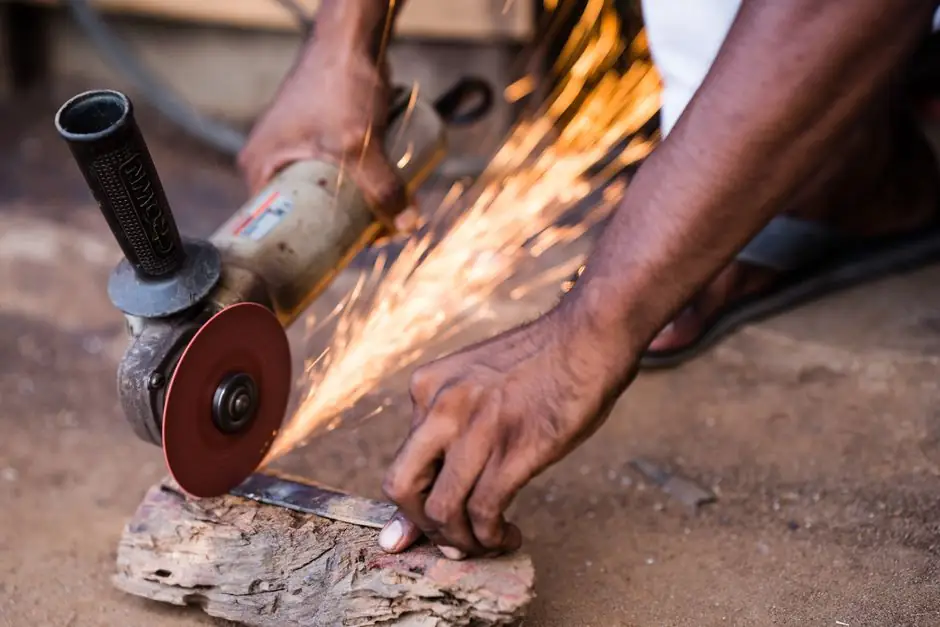
A 4.5 inch (115 mm) corded angle grinder pulling roughly 700–1100 W spins a diamond masonry blade fast enough (typically 10,000–12,000 RPM no-load) to score pavers, trim bricks and dress stone edges, which covers the bulk of one-operator landscaping work [S3][S4].
Step up to a 7–9 inch (180–230 mm) corded brushless machine, or a 40–60 V brushless cordless, when the cuts get deeper: 50 mm patio slabs, 16–20 mm rebar, and continuous dry-cutting on cured concrete. Cordless models from Hilti, Makita, Milwaukee and DeWalt now match corded torque, but they cost 2–3× the bare tool price and the battery is the bottleneck for long runs [S5].
What "landscaping" actually puts on the spindle
Three material groups drive the spec: mineral (pavers, brick, natural stone, cured concrete), ferrous metal (rebar, edging steel, fence wire) and surface-prep (mortar ridges, rust, old paint) [S3][S4].
Mineral work wants a diamond blade. Bonded-diamond and segmented-rim diamond blades are the proven choice for concrete, brick and stone, and they keep a consistent edge when the abrasive matrix is matched to the substrate [S3]. A standard abrasive cutting wheel is a false economy here: it overheats, wears fast and binds on hard stone. For the metal edges inside a landscape job, a thin (1.0–1.6 mm) Type 27/Type 41 metal cutoff wheel does the job; resin-bonded abrasive discs are the norm and typically cap at a max RPM printed on the wheel that must exceed the grinder's no-load speed [S4].
Surface-prep on the same tool needs a flap disc (paint/rust on steel edging) or a wire cup brush (heavy rust, mortar haze). The same 4.5 inch grinder that cuts pavers in the morning can deburr rebar in the afternoon by swapping the disc, which is the real reason angle grinders dominate the landscaping toolbox over dedicated cutoff saws [S4][S6].
Disc size, power and no-load RPM: the core decision matrix
Disc diameter is the loudest spec because it sets cut depth, weight and power draw in one move. The common landscaping bands are 4.5 inch (115 mm), 5 inch (125 mm), 7 inch (180 mm) and 9 inch (230 mm), and within each band higher wattage buys you torque reserve under load, not higher no-load speed [S1][S3][S7].
4.5–5 inch corded: 700–1100 W, around 11,000–12,000 RPM no-load, around 1.5–2.5 kg tool weight. The sweet spot for one-hand brick and paver trimming; can dress a 50 mm paver with multiple passes [S3].
7 inch corded (Type 27 guard): 1500–2400 W, around 8,500 RPM no-load, about 4–6 kg. Real choice for 16–20 mm rebar and 50 mm slab work where one-pass depth matters [S5][S7].
9 inch corded: 2000–2600 W, around 6,500 RPM no-load, about 5–7 kg. Overkill on pavers, justified only for heavy concrete, large rebar and stone wall work [S3][S7].
Cordless brushless (18V, 40V, 60V platforms): comparable no-load speeds to corded equivalents, but sustained torque under load drops as the battery drains. The Hilti Nuron AG 6D-22, Makita 40V max XGT GAG11, Milwaukee M18 Fuel 3672 and DeWalt 60V Max DCG460 are the current professional benchmarks named in the 2026-01 Pro Tool Reviews round-up [S5].
A 7 inch wheel must never be mounted on a 4.5 inch grinder: the arbor, guard and clutch are not rated for the higher peripheral speed, and the resulting wheel burst is a documented cause of angle grinder injury [S3].
Corded vs cordless for outdoor landscaping work
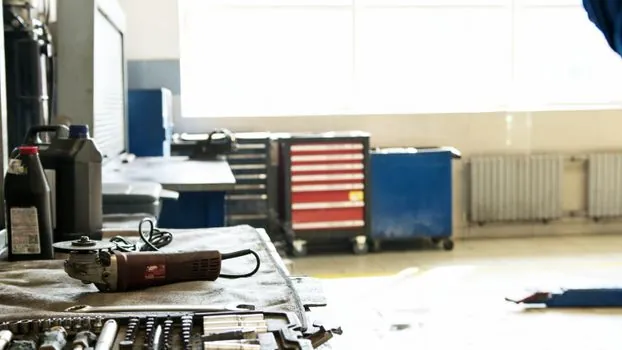
Corded wins on run time, cost per watt and sustained torque on long paver runs; cordless wins on mobility, generator-free site work and the absence of a cut-prone extension lead in wet grass [S1][S5].
Most landscaping crews carry both: a 4.5 inch corded brick/paver grinder running off a small inverter or mains, plus an 18V brushless cordless for fence rebar and quick touch-ups away from power. For the bigger 7–9 inch work, the corded brushless class (Metabo HPT G13VE2, Metabo WEPBA 19-150 Q DS M-Brush, Metabo WEPB 24-230 MVT) is still the cost-effective answer in 2026 [S5].
For a deeper cross-tool decision on power platforms, the mag drill vs impact drill selection logic uses the same brushless-versus-brushed torque rule that drives modern grinder picks.
Safety features that actually matter on a landscape site
Three features show up repeatedly in 2026 professional reviews and they are the ones to filter on: paddle (dead-man) switch vs slide switch, kickback / active torque control, and a brake that stops the wheel in under 2 seconds after the trigger is released [S1][S5].
Paddle switch: releases to zero RPM the moment grip is lost. Slide switch: latches on and keeps spinning if dropped. For one-operator work at chest height on a paver pile, a paddle switch is the safer default. The Hilti Nuron AG 6D-22 uses a 3D Active Torque Control that senses kickback in any direction plus a SensTech handle-grip sensor, the strongest safety package in the 2026 cordless class [S5].
Wheel guard, side handle, eye protection (Z87+), gloves, hearing protection and a face shield for dry diamond cutting are not optional. Dry diamond blades on cured concrete generate crystalline silica dust: a respirator rated for silica and, where possible, water-fed cutting or a dust shroud with HEPA extraction are required by silica rules in most US states and EU jurisdictions [S3].
Comparison of grinder classes for landscaping work
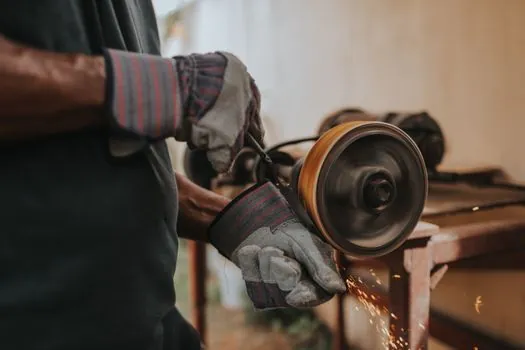
4.5 inch corded (700–1100 W): best price/W; cuts paver, brick, stone up to ~50 mm in passes; lightest at 1.5–2.5 kg; weakest for continuous rebar; cheapest discs. Right for a homeowner or first-year crew member doing finish work [S3][S5].
7 inch corded brushless (1500–2400 W): one-pass 50 mm slab, clean rebar cuts, heavier at 4–6 kg and more fatiguing above the shoulder; needs a 180 mm guard and 180 mm wheels. Right for the crew's main workhorse [S5][S7].
9 inch corded (2000–2600 W): heaviest, most aggressive on concrete and large rebar, slowest to spin down, hardest to control one-handed. Right for dedicated slab and wall work, not for finish landscaping [S3][S7].
Right when there is no clean power source, when working at height on a suspended working platform, or when extension leads are a trip hazard on uneven ground [S5].
Where the spec falls short: landscaping failure modes
Dry diamond cutting without dust extraction destroys lungs, loads the motor and burns the blade bond. Wet cutting without an RCD/GCFI on a generator-fed cord is an electrocution risk; the cord and grinder must be on the same isolated supply [S3].
Substituting a wood-cutting or metal-only blade on stone is the most common landscaping mistake: the bond sheds, the disc glazes, the workpiece cracks, and the wheel can shatter. Match the blade to the substrate every time, and inspect the wheel for cracks, glazing and expiry date before mounting [S3][S4].
Selecting a grinder by peak wattage or sticker RPM is the second mistake. Torque at the working load, kickback protection, switch type and the warranty/service network matter more over a 2–5 year landscaping season than a 200 W difference on the spec plate [S5].
Standards, sourcing and what to verify before purchase

For trade use in the EU, a grinder specified for landscaping should carry a CE mark under the Machinery Directive, with EN 60745-2-3 governing hand-held grinders; for ATEX or dust-explosion environments, IEC 60079-0 / IEC 60079-11 series compliance is the filter, but it is not required for normal outdoor landscaping [S1].
For abrasive wheels, ANSI B7.1 (US) and EN 12413 (EU) are the reference safety standards for bonded abrasive products; the maximum operating speed marked on the wheel must be greater than or equal to the grinder's no-load RPM. Diamond blades fall under EN 13236 in the EU and ANSI B7.1 in the US, and they should arrive with a clear substrate-match recommendation printed on the label [S4].
Trackable signals to watch in the next six to twelve months: the roll-out of higher-capacity 21700-cell battery packs (extending 18V platform run time into the 7–9 inch cordless class), tighter crystalline-silura enforcement on dry masonry cutting, and more mid-tier brands adopting paddle-switch and electronic brake as standard rather than premium features [S5]. For the broader power-tool ergonomics context that affects how a grinder is used on a landscaping crew, the suspended working platform selection logic addresses the same battery-vs-corded decision for a different tool category.
The underlying component specifications are covered under angle grinder, fettling grinder, and floor grinder.