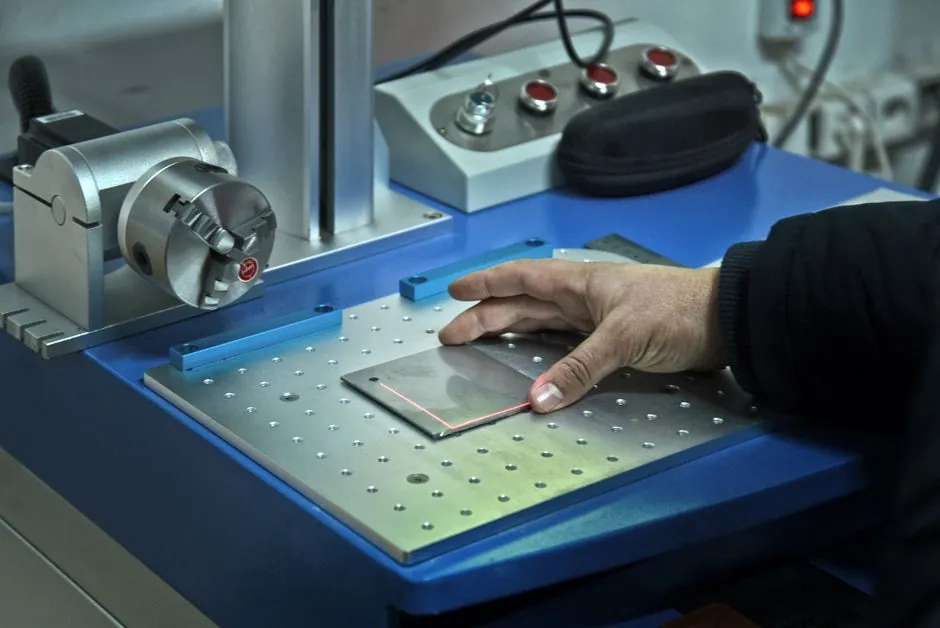
Specifying a laser cutting machine in 2026 comes down to four hard numbers: maximum carbon steel thickness, hourly power draw, working area, and effective (not peak) cutting speed; then price, then service [S1][S5].
This playbook walks through the technology split, the 1-12 kW fiber spec ladder, CO2 and UV niches, working-area geometry, and the failure modes that show up in low-tier sourcing runs [S1][S3][S5].
Technology Split: Fiber, CO2, UV in 2026
Fiber laser cutters emit around 1.06 micrometers through a ytterbium-doped fiber gain medium, making them the most efficient choice for carbon steel, stainless steel, aluminum, brass, and copper sheet work, and they now account for roughly 82% of global industrial laser cutting installations [S1][S5]. CO2 machines emit about 10.6 micrometers from a CO2 gas medium and remain the default for non-metals: wood, MDF, acrylic, leather, rubber, and paper, with over 132,800 CO2 units installed globally and a 2024 market near $1.7 billion, projected to $2.587 billion by 2033, and the Asia-Pacific region alone holding 49% of installed units [S3].
Practical split for a sheet-metal buyer: fiber for any metal-heavy shop above 1 mm; CO2 for signage, craft, and packaging work; UV only when the application forces sub-millimeter heat control.
The 1-12 kW Fiber Spec Ladder
2026 mainstream fiber models line up cleanly across four power tiers, with carbon steel cutting ceilings of 6 mm, 16 mm, 25 mm, and 50 mm respectively for 1 kW, 3 kW, 6 kW, and 12 kW units, and 1 mm carbon steel cutting speeds of 25, 60, 90, and 120 m/min on the same ladder [S1]. Hourly power draw tracks almost linearly with nameplate: roughly 3.5, 8.2, 14.5, and 26 kWh respectively [S1]. Average 2026 market prices land at $8,500, $18,200, $32,000, and $58,000 across the same four tiers [S1]. The target buyer shifts from hobby and small signage at 1 kW to heavy structural steel and shipyard plate at 12 kW [S1].
Underwrite the choice with the workload: a job shop running mostly 1-3 mm stainless needs 3 kW, not 6 kW; a structural steel shop running 20 mm+ plate needs 12 kW because lower-wattage machines simply will not pierce cleanly at that thickness [S1].
Working Area Geometry and Material Flow
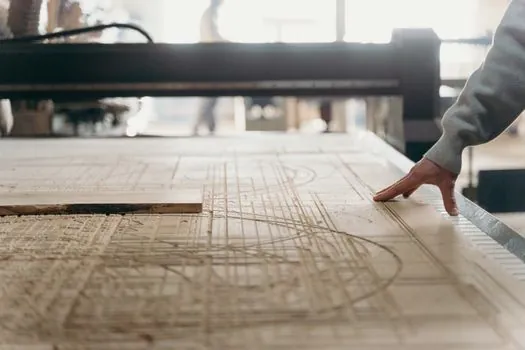
Flatbed working area must match the standard sheet sizes in your supply chain, with 1220 x 2440 mm and 1500 x 3000 mm as the two most common reference sizes [S5]. Industry segmentation puts small format at 300 x 500 to 600 x 900 mm, medium format at 900 x 1300 to 1300 x 2500 mm, and large format at 1500 x 3000 mm and above [S5]. For CO2 platforms the equivalent bands are 600 x 400 mm desktop, 900 x 600 mm small business, 1300 x 900 mm mainstream commercial, and 1300 x 2500 mm and above for large-format work, with a conveyor table preferred for roll-fed or line-integrated production [S3].
Nesting density and material handling flow beat raw table size: a 1300 x 900 mm bed with auto-loading will out-produce a 1500 x 3000 mm manual-load bed on most short-run sheet work [S5].
CO2 Spec Bands: Speed, Power, and the Real-vs-Peak Trap
Entry-level CO2 machines cut at roughly 300-500 mm/s, while high-end industrial CO2 platforms reach 1000 mm/s or above, with power options spanning 40 W to 6000 W [S3]. The trap is nominal speed versus effective cutting speed: complex paths and frequent direction changes cut real throughput dramatically, and going from 5 mm to 20 mm acrylic can multiply cycle time several times over [S3]. CO2's natural edge is its roughly 10.6 micrometer wavelength, which is strongly absorbed by wood, acrylic, leather, fabric, paper, MDF, and rubber, but it cuts highly reflective thick metals poorly and demands more frequent mirror, lens, and gas-tube maintenance than fiber [S3][S5].
For non-metal shops, a 100-150 W CO2 tube with a 1300 x 900 mm bed is the 2026 mainstream commercial baseline; below 80 W you lose acrylic edge quality, above 300 W you start paying for capacity the duty cycle will not consume [S3].
Decision Matrix: Fiber vs CO2 vs UV Across Four Criteria
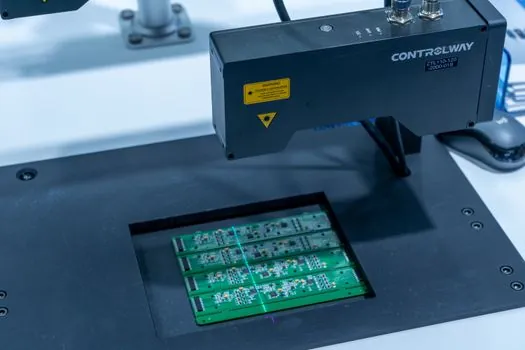
Against the four procurement criteria that actually drive ROI, the technology split looks like this. On metal cutting efficiency, fiber wins outright; CO2 is slow on thick metal and UV is unsuited to bulk metal [S1][S3][S5]. On non-metal edge quality, CO2 wins for acrylic, wood, and leather; UV wins for flex PCB and thin glass; fiber is generally not specified for non-metals [S3][S5]. On operating cost and maintenance, fiber has no optical-path service for over 10 years and almost no daily consumables, reducing long-term maintenance cost by over 60% versus plasma; CO2 needs regular mirror, lens, and gas-tube work; UV sits in a specialist maintenance envelope [S1][S3]. On initial price, 1 kW fiber starts around $8,500, while CO2 spans a few thousand dollars for desktop units to industrial six-figure installations [S1][S3].
The procurement rule is simple: match the technology to the dominant material, not the other way around, because retrofitting the wrong source class later is more expensive than buying the right class now.
Five Acceptance Tests Before Releasing Payment
Run the machine through five on-site checks before signing the final acceptance document. First, cut a 1 mm carbon steel coupon and measure kerf, edge straightness, and dross with a magnifier and feeler gauge; precision on thin metal should land around ±0.02 mm [S1]. Second, time a 1 mm carbon steel full-bed nest and compare it against the nameplate speed rating, because nominal and effective speeds diverge sharply on complex paths [S1][S3]. Third, pierce 6 mm, 16 mm, 25 mm, and 50 mm carbon steel progressively to confirm the tier-appropriate ceiling with the chosen assist gas [S1]. Fourth, log kilowatt-hours at the main breaker during a one-hour full-cut cycle and compare against the published hourly consumption of roughly 3.5, 8.2, 14.5, or 26 kWh for 1, 3, 6, or 12 kW models respectively [S1]. Fifth, cut a standard 1220 x 2440 mm or 1500 x 3000 mm sheet and verify nesting software output and remnant flow against your real material mix [S5].
These five checks catch the three common failure modes in 2026 sourcing: exaggerated peak-speed claims, overstated thickness ceilings, and inflated power-consumption figures.
Common Sourcing Failure Modes and How to Filter Them
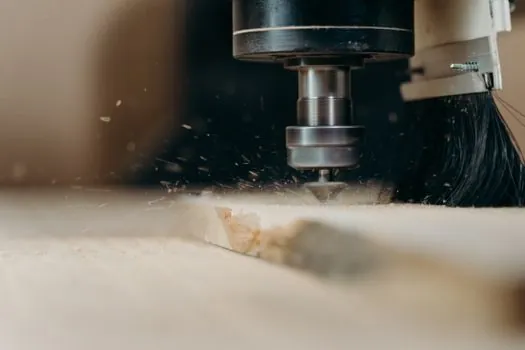
The 2026 fiber laser market is in a price-war phase with severe homogenization and exaggerated spec sheets, so a structured filter saves money [S9]. Reject any vendor who cannot document the hourly kWh figure at the nameplate cutting duty cycle, because that single number exposes whether the laser source is genuine or relabeled [S1][S9]. Reject any quote that lists only nominal m/min without disclosing effective speed on a standard nested pattern, since nominal-versus-effective is the most common line-item distortion [S3][S9]. Reject any working-area claim that is not matched to a real sheet size in your supply chain, because oversize beds waste floor space and undersize beds throttle throughput [S5]. For the wider machine tool procurement context, the sourcing playbook for industrial gearboxes from China follows the same spec-first filter logic that applies here. Buyers also looking at motion components for the cutting gantry should review the linear guide selection guide for automotive lines, since the gantry's guide and drive choice sets the practical accuracy ceiling of any fiber or CO2 platform.
For a fuller mechanical-spec view across the cutting machine category, the cutting machine encyclopedia entry covers adjacent processes including plasma, waterjet, and mechanical shear comparison, which matters when fiber is not the right answer.
Reference specifications: [S1] ZCLASER 2026 spec and price guide; [S3] AccTek CO2 selection factors; [S5] Intela workshop selection guide.
For the relevant spec sheets and selection criteria, see riser cutting machine, and linear guide.