
A laser level is an emitting reference tool, not a measuring one in the metrological sense: it projects a fixed plane or line and lets a receiver or human eye read the offset against a known benchmark, so the spec that actually matters is the closed-loop accuracy you can prove on site, not the laser diode's milliwatt label [S1][S2].
Selection breaks cleanly into four envelopes — interior line/point lasers (typically 15–30 m visible), multi-line 3D lasers (up to ~50 m with receiver), rotary lasers (300–800 m diameter with detector), and pipe/utility lasers for trench work — and the wrong envelope is the most common buying mistake on a 2026 jobsite [S1][S2].
Self-Leveling Range and Accuracy Bands Across the Four Envelopes
Electronic self-leveling pendulums in the 2026 OEM/ODM line typically compensate ±3° to ±5° of out-of-level before the unit locks and flashes, a hard guard rail that prevents the operator from trusting a tilted plane [S1]. Accuracy is published as a vertical deviation per meter or per 30 m run, and the realistic on-site figure with a calibrated detector lands between ±1.5 mm/10 m for interior line lasers and ±2.4 mm/50 m for survey-grade rotary units [S1][S2].
Receiver-matched rotary kits sold through specialist dealers are dispatched factory-checked and recalibrated, and a typical 2026 dealer spec sheet quotes ±1.5 mm/30 m horizontal with a working diameter of 800 m when paired with a digital receiver [S2]. Manual-only pendulum leveling lines, by contrast, lose the auto-lock behavior and rely on bubble vials, which is why they survive only in low-cost 15 m interior work where a mis-set plane costs an hour, not a pour [S1].
Working Range, Beam Color and Detector Pairing
Visible green beams (515–530 nm) read on bare concrete and timber at roughly twice the distance of red 635 nm diodes under the same ambient light, which is why 3D and rotary catalogs now default green for interior concrete and formwork [S1]. Beyond 30–50 m indoors, or any outdoor use, the published "range" is meaningless without a detector — a 635 nm red rotary that goes 30 m by eye will go 500–800 m diameter with the matching receiver, and a 515 nm green unit typically extends to 600 m diameter under the same detector pairing [S1][S2].
Pipe and utility lasers are a different optics family: they project through a target plate inside a manhole or pipe invert and are specced by centering accuracy (typically ±2.5 mm/30 m) and by minimum invert diameter, not by visible line length [S1]. A flat contractor working a slab pour should not be paying for pipe-laser optics, and a sewer crew should not be trying to interpolate a rotary beam against a pipe invert — the cross-talk is where schedules slip.
Power, Battery System and IP Rating for Site Conditions
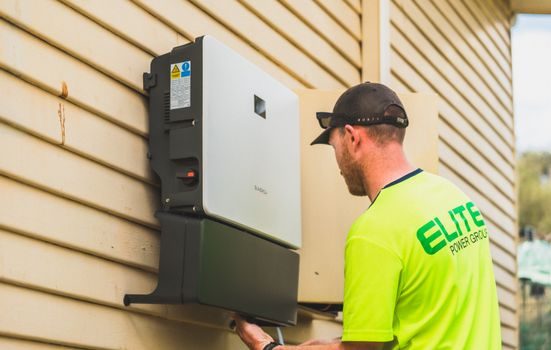
Current OEM line and rotary lasers ship on Li-ion packs with 8–25 h run time and a separate AA-battery tray as cold-job fallback, and the published drop spec is typically 1 m onto concrete [S1][S2]. IP-rated sealing clusters at IP54 for interior lines, IP65 for rotary site units, and IP67 for pipe and machine-control receivers that see mud and wash-down, and a 2026 OEM datasheet will print those numbers alongside the operating temperature band, normally −10 °C to +45 °C for the Li-ion variants [S1].
For trench and concrete-pour environments, the rotary + machine-control receiver combination used in automated screed work is the same detector family that a laser screed rides on, and the IP/accuracy spec you accept for the screed's laser source should match the handheld rotary on the same pour, otherwise the slab and the form pins will not agree. Detector refresh rate, typically 5–20 Hz on 2026 receivers, decides how fast a skid-steer mounted receiver can travel before the beam is missed, and that figure appears on the receiver datasheet, not the transmitter's [S1][S2].
Selection Decision Matrix: Interior Line vs 3D vs Rotary vs Pipe
Lining the four envelopes against the four deciding criteria — working range, accuracy budget, visibility source, IP — gives a clean cut: interior line lasers win on price and 15–30 m visibility, 3D multi-line lasers win on 360° wall/ceiling layout, rotary lasers win on long horizontal pours and machine control, and pipe lasers win on trench invert work [S1][S2].
For a slab pour, the rotary paired with a laser level detector is the only honest spec, because machine-control receivers on a screed need the same ±1.5 mm/30 m budget the rotary publishes; a green 3D line laser indoors is fine for cabinet fit-out but fails a 60 m exterior run even with its receiver, because the line, not the dot, is the limiting geometry. Trimble/Somero-grade automated concrete placing systems documented in 2024 teardown coverage ride on the same rotary + receiver pairing as handheld units, which is why the rotary spec is the anchor for any pour [S3].
What a 2026 OEM/ODM Catalog Actually Lists
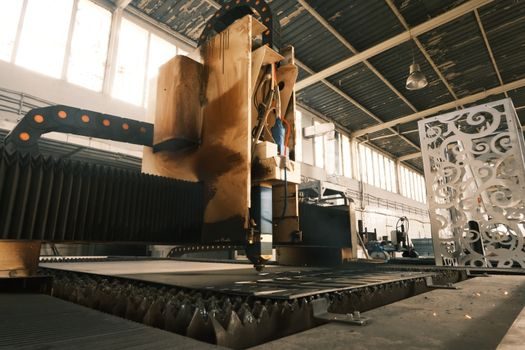
The 2026 OEM/ODM line splits into Electronic Leveling Line Lasers, Pendulum Leveling Line Lasers, 3D Lasers, Rotary Lasers, Survey Instruments (Total Station, Theodolite, Auto Level), and accessories (Detector, Tripod) — and the same supplier lists machine-control detectors that are electrically distinct from handheld survey receivers, even when the optical wavelength matches [S1]. Specialist dealer catalogs add the calibration and pre-dispatch verification that the OEM catalog does not promise, and they bundle receiver + tripod + staff + Li-ion kit as a single working kit [S2].
Accessory list under-spec is a common 2026 failure: a rotary sold without its matched detector, or with a tripod that drifts under wind load, will not hold the published ±1.5 mm/30 m, and the buyer pays the difference in re-work. The dealer-side pre-dispatch check is a real line item because rotary collimation does drift in shipping, and a 2026 dealer spec sheet will quote the post-check accuracy, not the factory-floor number [S2].
Who a Laser Level Is For — and Who It Is Not For
Laser levels are for layout, elevation control, and machine guidance where a reference plane or line is acceptable as the truth source; they are not for precision metrology, not for surveying over kilometers (where a total station or GNSS reigns), and not for as-built scanning [S1][S2]. A floor-grinder crew flattening a 200 m² slab does not need a rotary — they need a stationary reference and a flatness check, and a reference to the four spec gates that actually decide a floor grinder selection is more useful than another laser class.
For concrete placement specifically, the rotary + receiver + screed pairing is the only spec that survives a 2026 production pour, and a contractor who treats the laser as a consumable rather than a calibrated instrument will own the slab's FF/FL numbers for the next 20 years. The published dealer workflow — checked, calibrated, dispatched with paperwork — is what converts a milliwatt label into a defensible accuracy figure on the day of the pour [S2].
Standards, Calibration and Sourcing Signals
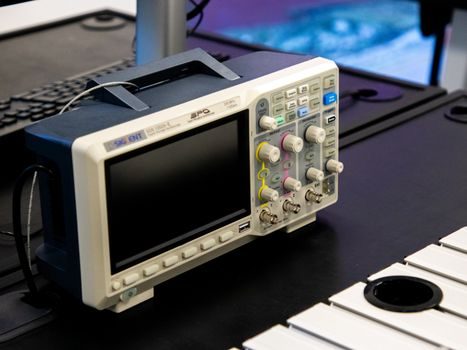
No single ISO or IEC standard governs the laser level as a product, but the relevant engineering anchors are IEC 60825-1 for laser classification (Class 2 / Class 3R are the typical 2026 construction-site ratings), manufacturer-claimed accuracy under ISO 17123-series procedures for the survey-grade total stations and theodolites in the same catalog, and the dealer's documented calibration check on the rotary [S1][S2]. Buyers who need a traceable certificate should ask for a calibration report against a named receiver and a stated temperature, not just a "factory calibrated" sticker.
Trackable signals into 2026 H2: continued migration of the 3D and rotary catalogs from red to green diodes, expanded Li-ion + AA fallback as standard, and tighter IP65/IP67 differentiation between handheld rotary and machine-control receiver lines [S1][S2]. A buyer evaluating a quote should pin the working diameter at a stated detector model, the accuracy at a stated run length in mm, the IP code on the transmitter (not just the receiver), and the calibration document scope — those four numbers resolve 90% of the spec ambiguity on a 2026 laser level purchase.
For component-level specifications, see laser marker.