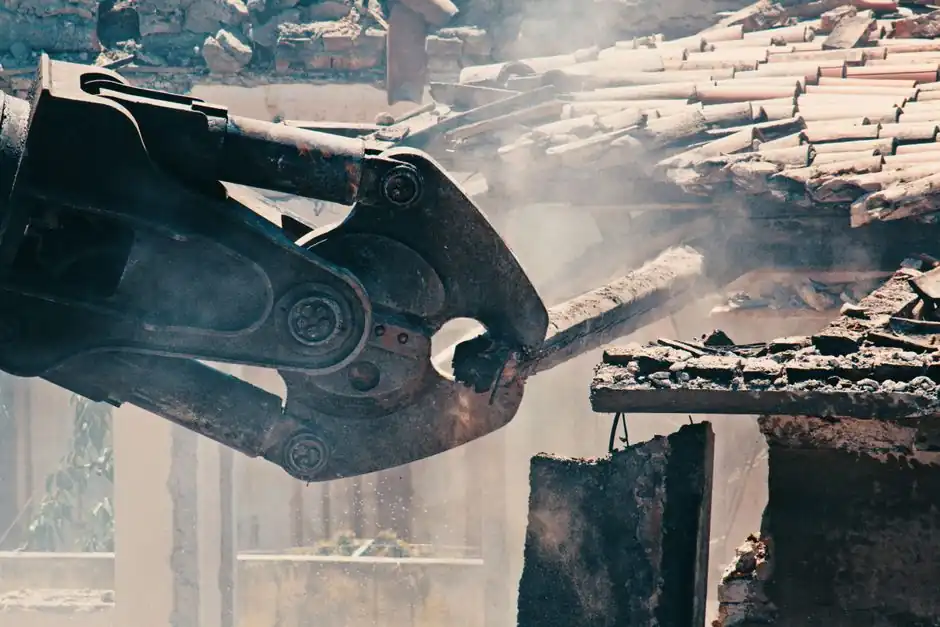
Mechanical rebar couplers used on demolition and alteration jobs are governed first by ISO 15835 strength and slip tests, then by whether the bar end can be rotated, threaded, or only accessed from one side [S2][S3]. Data from a 2024 MDPI study shows the T-threaded coupler for one rebar over two floors delivered 56% higher labor productivity, 15% shorter assembly time, 17% lower cost, and 26% lower CO2 versus lap splicing [S1].
Demolition differs from new-build because the host bar is already embedded, often corroded, and frequently cannot be rotated. Selection therefore hinges on three spec-driven axes: certification class (Type 1 vs Type 2 under ISO 15835), bar-end preparation (cold-forged upset, tapered thread, shear-bolt, grout sleeve), and installation access (Type A free-rotation, Type B limited-rotation, Type C non-rotatable) [S2][S3][S4].
Standards Anchor: ISO 15835 and the Type 1 / Type 2 Split
ISO 15835 is the baseline reference for mechanical splices, defining two performance classes: Type 1 delivers 125% of specified yield strength, while Type 2 develops the full specified tensile strength of the parent bar, often exceeding 125% of yield and reaching 150% in some designs [S2][S3]. For demolition, specifying Type 2 is the safer default where residual bar capacity is unknown.
Couplers should also carry third-party traceability: CARES (UK) and CREAM approvals are cited as the common certification marks, with each unit marked by an embossed serial number that traces back to raw material and production batch [S2]. Demolition specifiers should request slip and fatigue test reports per ISO 15835 before purchase, not after a failure on site.
Five Coupler Families Compared on Demolition-Relevant Criteria
The five commercial coupler families each map to a different field condition. Taper-threaded couplers require the bar to be rotated into the sleeve and work best on column/wall verticals with open access; parallel-threaded couplers use cold-forged upset ends with straight threads and suit high-strength structural connections where slip must be minimized [S3].
Bolt-on or shear-bolt couplers need no bar-end prep: serrated rails grip the bar as the high-strength bolts shear at a preset torque, making them the fastest field install for cut-and-splice demolition where the bar end is dirty or out-of-round [S3]. Grouted sleeves use non-shrink grout around plain bar ends, ideal for precast connections, retrofit dowels, and confined-space pockets where threading is impossible. Weldable couplers transition between rebar and structural steel, useful at demolition-to-steel interface points.
For a quick field comparison, the criteria that matter most on a demolition cut-and-replace are: bar-end prep time, tolerance to misalignment, slip under cyclic load, and minimum concrete cover. Taper-threaded scores well on cyclic performance but needs rotation clearance; shear-bolt wins on prep time but adds bolt inventory; grouted sleeve accepts the widest misalignment band but adds a 24-72 hour cure window before the splice is rated [S3][S5].
Installation Type A, B, C and Why Demolition Is Mostly Type C

The three installation types defined for threaded systems are direct consequences of bar rotation access: Type A rotates the bar itself into a standard coupler, Type B rotates the coupler onto a half-threaded bar, and Type C rotates the coupler onto an extended-thread bar and locks it with a counter-nut because the bar cannot turn at all [S4]. On demolition and alteration work, embedded bars sticking out of a cut slab or wall almost never have free rotation, so Type C is the dominant case.
This is where cold-forged upset bar ends and chamfered coupler edges pay off. Cold forging work-hardens the bar end so the root thread area matches the parent bar's tensile capacity, an essential property in seismic zones where plastic hinges form at the splice [S2]. A chamfered coupler edge tolerates axial misalignment of a few degrees, which is common when the protruding rebar is bent or partially corroded after demolition cutting [S2].
Material and Process Specs That Survive a Demolition Site
Coupler body stock is typically medium-carbon steel (C45 / 1045 class) machined on CNC lathes to hold thread concentricity within tight tolerances, because off-center threads introduce bending moments under load [S2]. For corrosion-prone environments (coastal demolition, chemical-plant decommissioning), the T-epoxy filled sleeve coupler was identified in the 2024 MDPI study as the best performer on seismic durability, corrosion resistance, and long-term performance [S1].
For bar-end prep, a rebar threading machine sized to the on-site bar diameter range is non-negotiable: a demolition crew cutting #8 (25 mm) and #11 (36 mm) bars needs a machine whose chuck and die set cover both, otherwise the splices fall back to lap splices and the congestion problems return. Threading machines with CNC-controlled cut depth and cold-upset stations are referenced in current OEM documentation as the standard prep path for Type B and Type C installations [S5].
When a Coupler Is the Wrong Tool on a Demolition Job
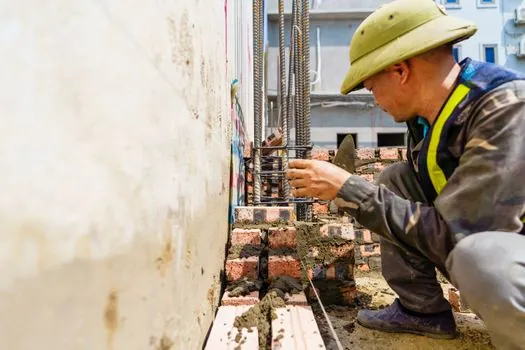
Couplers are not the answer when the parent bar's remaining length is too short to engage the threads, when the bar has lost section to deep corrosion (typically more than 10-15% section loss), or when the structural element is being removed entirely rather than spliced into a new pour [S3]. In those cases, the practical move is a demolition hammer or rebar cutter to expose sound steel further back, then re-splice from a fresh bar stub.
Couplers also underperform on highly congested splices where multiple bar diameters intersect in the same plane, because the coupler bodies add their own OD (typically 1.5 to 2x bar diameter) to the congestion problem. Here a grouted sleeve with a smaller body diameter and a wider misalignment tolerance often beats a threaded system, at the cost of cure time [S3][S5].
Field Inspection and Common Failure Modes
Inspection follows three checkpoints: verify coupler marking and batch certificate before install, confirm thread engagement length with a gauge (full engagement is non-negotiable), and torque to the OEM's spec value with a calibrated wrench [S5]. Common failure modes in the field are under-engaged threads, mismatched bar grades across the splice, and contamination of the bar end with concrete dust or oil before threading [S5].
On a demolition site the contamination risk is higher than new-build because cutting water, slurry, and rust scale coat the bar end. The fix is mechanical: wire-brush and degrease the bar end before threading, and use a coupler with a chamfered lead-in to avoid cross-threading on the first turn [S2][S5].
Sourcing Trackable Signals for the Next Buying Cycle

Two signals worth tracking through 2026: ISO 15835 revision activity (the standard underpins both Type 1 and Type 2 performance classes, and any tightening of cyclic-slip requirements will reshape approved-product lists), and the spread of CNC cold-forged upset stations at regional rebar-prep shops, because that capacity controls whether Type B and Type C threaded couplers are available on short lead times. A useful adjacent reference is this spec-driven rebar threading machine roundup for bridge construction for the prep-side tooling that pairs with the couplers covered here. [S3]