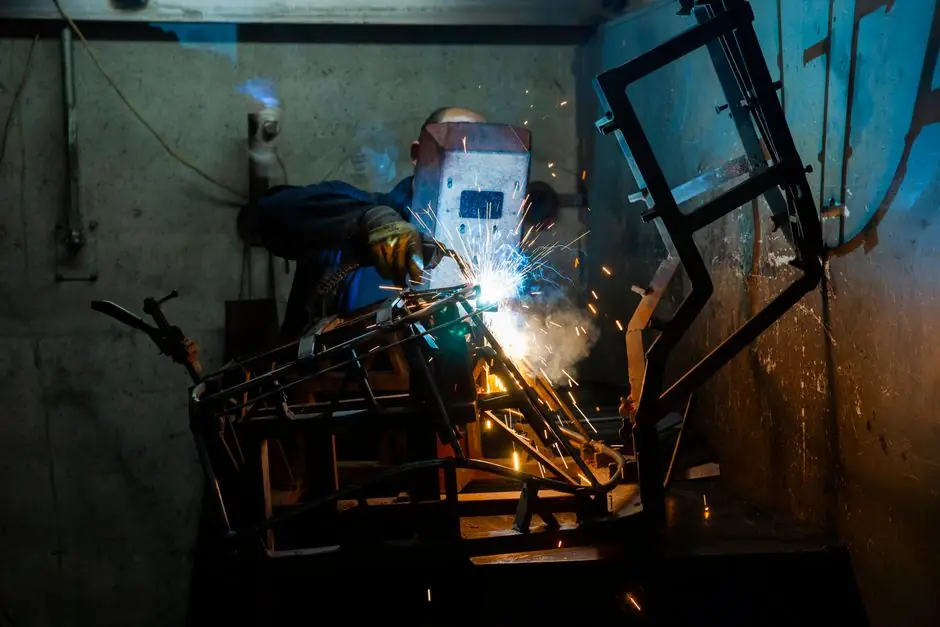
For concrete composite construction, the stud welder you specify must be a drawn-arc (arc) machine, not a capacitor discharge (CD) unit, because the application is thru-deck shear connector welding onto structural steel beams [S1][S3].
Concrete work in this context means composite slabs, bridge decks, and rebar anchorage to steel base metal, where weld cycle is measured in milliseconds and the stud diameter routinely runs 12-25 mm [S2][S3]. The selection logic below is process-driven, not brand-driven, and is grounded in how the stud fuses to the parent material.
Drawn-Arc vs Capacitor Discharge: Pick the Process, Then the Machine
Drawn-arc stud welding is the dominant process for shear connectors on composite steel-concrete construction, because it delivers the weld energy needed to fuse 12-25 mm headed studs through galvanized metal deck into the supporting beam [S1][S3]. Capacitor discharge (CD) stud welding is limited to small-diameter studs on thin sheet and is unsuitable for structural thru-deck applications where the base metal is a hot-rolled beam flange [S1][S2].
Concrete anchorage, seismic rebar studs, and bridge shear connectors all sit on the drawn-arc side of the line, with arc initiation, a brief melt phase, and forge-plunge consolidation producing a full-penetration fillet around the stud base [S2][S3]. The CD alternative uses rapid capacitor discharge and spring-loaded plunge, which keeps heat input low, but caps the stud diameter too low for composite slab work [S1].
Selection shortcut: if the stud base sits on a structural beam flange or thick base metal and the stud is over 10 mm diameter, draw-arc; if the stud is under 10 mm and the base metal is under 2 mm sheet, CD is acceptable [S1][S2]. For more on the process family and equipment variants, the stud welder reference page covers both drawn-arc and CD machine classes.
Stud Diameter, Weld Current, and Stud Material Match
Shear studs in composite concrete work are typically welded through metal deck into supporting steel beams to create composite action between the steel and concrete, with arc stud welding that may employ a protective flux or shielding gas [S2][S3]. Common diameters are 12 mm, 16 mm, 19 mm, 22 mm, and 25 mm, with weld currents typically in the 800-2500 A range and weld times of 0.3-1.2 seconds, depending on diameter and base metal thickness [S2].
Material compatibility on the stud side: low-carbon and stainless steel studs are the normal choices, with high-carbon steels (above roughly 0.25% C) flagged as unsuitable for either drawn-arc or CD because of HAZ cracking risk [S2]. For dissimilar metal pairs, drawn-arc tolerates a wider range, but operators should still verify thermal expansion match and pre-heat if base metal carbon equivalent demands it [S1][S2].
Stud welder selection overlaps with general arc welder sizing because the power source must sustain high inrush current without droop; a weak source produces cold welds that fail bend tests. For thinner cleanup work on the deck surface, a separate TIG welder on the truck is common for tack and repair, but it does not replace the stud welding gun.
Base Metal, Deck Profile, and Surface Prep Rules
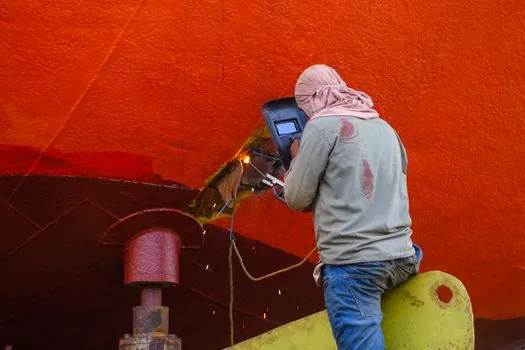
For thru-deck welding the metal deck must sit in firm, gap-free contact with the beam flange, with no rivets, spacers, or paint ridges in the weld zone, because the drawn-arc process relies on a consistent return path and a stable arc [S3]. Painted or galvanized deck coatings are burned off by the arc itself in the immediate weld footprint, but heavy primer or bituminous coatings must be ground locally first or the weld quality drops [S1][S3].
Base metal grade is usually structural steel S235, S275, S355 under Eurocode 4 design, or equivalent ASTM A36/A572 grades in North American practice, all of which draw-arc handles cleanly within the same parameter window [S3]. The weld side requirement is access only: the stud welding gun sits on the deck top surface, and the back side of the beam does not need to be reached, which is a key reason the process is preferred for composite floor plates [S1][S2].
Earthing is a hard site requirement: the welding lead and earth clamp must land on the same structural member being welded, with lead length kept short to avoid voltage drop, and rigs must reach the work without standing on freshly placed concrete [S3]. If access is awkward, an elevated work platform rated for the deck load is the right support tool, and the aerial work platform or aerial work truck reference pages can guide the lifting spec.
Concrete Reinforcement, Rebar Studs, and Seismic Connections
Concrete reinforcement using stud welding means rebar studs welded to a steel base plate or embedded plate, providing ductile anchorage for seismic shear walls, beam-column joints, and plate-to-concrete connections [S2]. The stud is typically deformed bar stock, not a headed shear connector, and the process is still drawn-arc, but with parameters adjusted for the bar diameter and the bar's deformed geometry.
Earthquake-resistant concrete structure connections rely on the ductility of the rebar stud, so weld geometry must develop the full bar tensile capacity rather than acting as a brittle shear pin [S2]. For heavy rebar (16 mm and up), weld current climbs into the 1500-2500 A range, and the stud welding machine must be sized for sustained duty at that current, not peak only [S2].
Bridge construction uses the same drawn-arc process for shear connectors on steel girder top flanges, often with the stud welded directly to clean flange metal before deck placement, or thru-deck where the design calls for it [S2]. Either way, the machine class does not change; only the stud layout, pitch, and diameter are driven by the structural design.
Selection Criteria Comparison: Drawn-Arc vs CD for Concrete Work
Decision matrix for stud welder selection on concrete-related tasks, lined up against the criteria that actually move a buy: stud diameter range, base metal thickness, typical concrete work use, and operator skill floor. [S2]
Drawn-arc stud welder: stud diameter 6-25 mm typical, base metal 3 mm and up, concrete work use is composite slabs, bridge decks, rebar anchorage and seismic connections, operator skill floor is moderate with proper training [S1][S2][S3].
Capacitor discharge (CD) stud welder: stud diameter typically 3-10 mm, base metal 0.5-3 mm sheet, concrete work use is limited to thin-sheet cladding, insulation pins, and light ductwork, not structural composite slabs, operator skill floor is lower, but the application range does not cover concrete work [S1][S2].
The matrix makes the choice simple: any concrete composite, bridge, or seismic rebar task is drawn-arc territory, and a CD machine is the wrong tool even if the price is right. For process-engineering readers cross-checking heavy welding processes used in plant and shipyard work, the electroslag pressure welder reference covers a different but related heavy-section process used in thick-plate vertical joints.
Site Checks, Quality Control, and Common Failure Modes
A stud that snaps off is a cold or contaminated weld, and the machine parameters plus surface prep must be revisited before more studs are placed [S1][S3].
Common failure modes on concrete composite floors: cold welds from excessive travel speed or low current, porosity from wet or dirty ferrules, and cracking at the HAZ when base metal carbon equivalent is high and no pre-heat is applied [S1][S2]. The first two are operator and consumable issues; the third is a metallurgical issue that pushes the design back toward low-carbon base metal or a different connection method.
For demolition work tied to bridge or deck replacement, a separate spec exercise applies, and the demolition hammer spec map for bridge construction article covers the breaking side of that workflow. Where stud welding meets slab edge forming, circular saw selection also matters for deck trim cuts, and the circular saw for masonry reference is a useful cross-check on blade match rules.
Standards, Codes, and Sourcing Notes
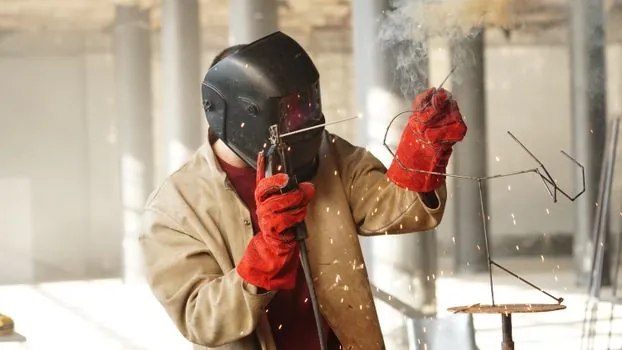
For UK and EU structural work, shear stud welding on composite slabs typically falls under Eurocode 4 (Design of Composite Steel and Concrete Structures) for design, with welding procedure and operator qualification to ISO 9606-1 and the relevant part of ISO 14555 for stud welding [S3]. In North America, AWS D1.1 covers structural welding and AWS C5.4 covers stud welding specifically, with stud material to ASTM A108 or equivalent [S2].
Sourcing: stud welding machines for concrete work are sold as complete kits (power source, stud gun, leads, ferrules) and are also commonly rented for project-based work, which keeps the spec simple and avoids a long-term capex line for a one-bridge contractor [S2]. Used rental fleets frequently carry the higher-amperage drawn-arc units that match 19-25 mm shear stud work, which is the segment most new buyers under-spec on first pass [S2].
Trackable signals to watch on future updates: any revision to Eurocode 4 Part 1-1 composite connection rules, any change to AWS C5.4 stud welding qualification requirements, and the entry of higher-amperage inverter-based drawn-arc power sources that shrink the machine weight class without lowering the current ceiling.