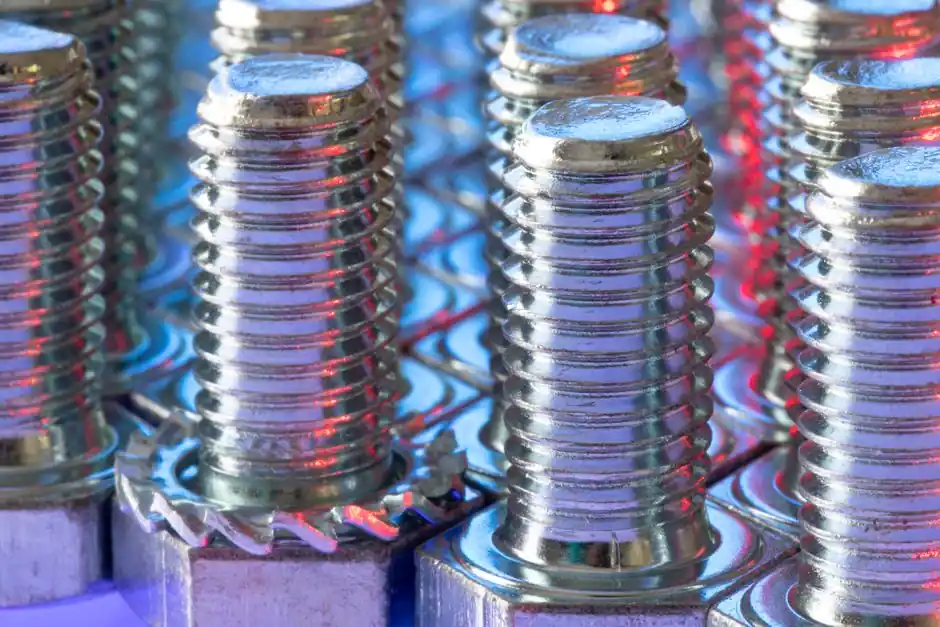
Pulp and paper actuators work inside steamy dryer hoods, white-water pits, and chemical mix rooms, so a lead screw spec that ignores corrosion and contamination fails within months, not years. Process engineers should treat the lead screw like a bearing: the contaminant decides the material, the temperature decides the lubricant, and the duty cycle decides the nut choice [S2][S3].
Mill-floor guidance from bearing specialists converges on the same operating envelope: dryer-section roll temperatures above 150 deg C, hood steam above 90% RH, and stock chemistry that swings between acidic (pH 4-5.5) and alkaline (pH 10-12) depending on furnish [S3]. A standard carbon-steel ACME screw with petroleum grease that works fine on a packaging line will gall and corrode inside three months in a kraft digester area. For a primer on lead screw geometry and the standard ACME vs square-nut trade-off, see the lead screw reference page.
Service Environment and Contamination Map
A paper machine is not one environment; it is six stacked environments, and the lead screw in each one faces a different enemy [S2]. The wet end (forming, press) runs at 40-60 deg C with constant white-water splash carrying fiber fines, starch, and sizing chemicals; the dryer section sits at 100-180 deg C surface temperature with 80-95% RH inside the hood; the calender stack hits 200 deg C at the roll surface; the reel and winder run dry but see paper dust; the pulp mill (digester, bleach plant) swings between hot caustic and acid chlorine dioxide; and the stock prep area carries abrasive grit.
NSK's paper-machine team lists high heat causing inner-ring expansion, water and pulp contaminating lubricants, and sudden fractures as the three dominant failure drivers across the machine, which maps directly onto the constraints a lead screw has to survive [S3]. The Interface sensor overview adds that screw press torque sensing and bearing-housing load monitoring are now standard practice for catching friction and misalignment before they cascade into a mechanical failure [S2]. For a process-side comparison of actuator selection in a different heavy industry with similar heat-and-dust constraints, see the lead screw selection for cement plants reference, which uses the same gate-by-gate structure.
Material Selection: Stainless, Plated Carbon, or Bronze-Nut Pairing
Material choice in a paper mill follows the contamination map, not a single rule. For wet-end and stock-prep actuators that see constant water and chemical exposure, specify 300-series stainless (typically 304 for general wet-end, 316 where chlorine dioxide or peroxide bleaching is present); the higher chromium and nickel content survives pH 4-12 swings and resists pitting from chloride carryover [S3]. For dryer-section and calender actuators where the screw runs hot but dry, electroless nickel-plated carbon steel (ENP, 25-50 micrometer coating) over a 1045 or 4140 substrate is the common cost-effective path; the plating prevents oxidation at 150-200 deg C while the carbon-steel core keeps cost and machinability reasonable.
For nut material, the standard pairing rules apply: a hard screw (HRC 50+ stainless or case-hardened carbon steel) runs against a softer, self-lubricating nut, typically bronze (C932, C954) for moderate loads or PTFE-filled or polyamide (Nylon 6/6, Acetal) for low-load, corrosion-heavy wet-end applications. NSK highlights that advanced carbonitriding on bearing inner rings delivers fracture resistance at temperatures up to 200 deg C, a metallurgical approach that translates directly to screw hardening for the same thermal regime [S3]. Avoid bare 12L14 or untreated low-carbon steel anywhere in the machine; these will rust in days in a paper-mill environment.
Lubrication, Envelope, and Duty Cycle
Lubricant choice is where most paper-mill lead screws fail, not the metal. In dryer-section service above 120 deg C, standard lithium or calcium-soap greases oxidize and harden, so specify high-temperature synthetic grease with a drop point above 250 deg C (PFPE or silicone-based) or solid-film lubrication (MoS2 or graphite) for actuators that cannot be re-greased in place. In wet-end and bleach-plant service, specify food-grade or H1-rated grease because the actuator is often directly above open stock flow and NSF/ANSI 51 food-grade certification is the conservative default even when the mill does not make food-grade paper. [S4]
Envelope constraints in a paper machine are severe: the fourdrinier, press, and dryer frames are crowded with piping, felt rolls, and vacuum boxes, so a 1.5-3.0 kW actuator is typical for slice, profile, and felt-stretcher positioning, with ball screw or roller screw variants reserved only where the duty cycle exceeds 50% (continuous calender profile adjustment, for example). For most positioning tasks under 25% duty, a properly specified ACME lead screw with a bronze nut holds the line on cost. The standard envelope metric is critical speed, typically capped at 80% of the calculated value to avoid whip in long dryer-section screw-driven traverse mechanisms; an ungreased or seized screw will go from spec to scrap inside one PM interval.
Failure Modes Specific to Paper-Mill Service
The four failure modes that show up repeatedly on the mill floor are: (1) corrosion pitting on exposed thread roots in wet-end and bleach actuators, (2) grease washout followed by galling in stock-prep area screws, (3) thermal expansion jamming of dry-running screws in unvented housings at calender stacks, and (4) abrasive wear from fiber fines and filler (kaolin, calcium carbonate) ingress in unprotected wiper zones [S2][S3]. The Interface article on mill sensor practice describes how torque sensing on screw presses and bearing-housing load monitoring catch the friction and misalignment signatures that precede each of these failures, which is why the leading mills are pairing lead-screw retrofits with strain-gauge or torque-watch instrumentation [S2].
What a lead screw is NOT for in a paper mill: it is not the right choice for a wet-end suction box or vacuum roll positioning, which sees constant vibration and requires a sealed ball screw or a hydraulic actuator; it is not the right choice for high-speed winder dancer or tension control, which is a servo-driven ball-screw or linear-motor application; and it is not the right choice for a digester or blow-tank isolation valve, which is a knife-gate or rotary valve application entirely [S6]. A standard 300-series stainless lead screw with PTFE-nut or bronze-nut pairing is, however, the workhorse for slice opening, felt and wire stretcher, calender profile, doctor blade traverse, and reel drum positioning across most mills.
Comparison: Three Lead Screw Configurations for Paper-Mill Service
Engineers selecting a lead screw for a paper-machine retrofit should line the three common configurations against the constraints that actually decide the buy: 300-series stainless with PTFE-filled nut, ENP-plated carbon steel with bronze nut, and case-hardened carbon steel with polyamide nut. On corrosion resistance, stainless with PTFE wins across pH 4-12 wet-end and bleach service; ENP-plated carbon steel is adequate for dryer and calender; case-hardened carbon steel with polyamide is unsuitable for any continuously wet or chemical-exposed zone. On temperature, all three survive 150 deg C, but only stainless with PTFE or solid-film lubrication holds the line at 200 deg C calender-stack surface. On cost, ENP-plated carbon steel with bronze sits at roughly 1.0x baseline, stainless with PTFE at 1.6-2.2x, and case-hardened with polyamide at 0.7-0.9x, which explains why cost-driven buyers pick the third option for dry areas only. On expected service life in a typical dryer-section actuator, ENP-plated carbon steel with bronze and high-temp grease delivers 18-24 months before re-lubrication; stainless with PTFE delivers 30-48 months; case-hardened with polyamide in a dry zone can reach 36 months but is unforgiving of lubrication neglect. For a parallel actuator-selection decision structure in another hygienic, washdown-heavy industry, see the lead screw selection for packaging lines reference. [S4]
Specification Checklist and Sourcing Notes
The minimum spec sheet a mill maintenance engineer should send to a vendor for a replacement lead screw: shaft material and hardness (e.g. 17-4 PH H1150, HRC 32-36, or 316L annealed), thread form and lead (ACME 1 x 0.25 in or trapezoidal per ISO 2908, depending on standard), nut material (C954 aluminum bronze, PTFE with bronze backing, or Nylon 6/6), surface finish on the thread (Ra 0.4-0.8 micrometer for dry-running PTFE nut service), lubrication interface (grease fitting per ISO 8083, sealed-for-life, or solid-film), operating temperature range, expected duty cycle, axial load, and critical speed requirement [S1][S3]. Lead-time and aftermarket support matter: Martin Sprocket's industry page lists the breadth of power-transmission and conveying components a mill sources in parallel, which is the same vendor pool from which most lead-screw retrofits are pulled, so coordinating the screw buy with the existing conveyor and gearbox vendors typically shortens the quotation cycle [S1].
For traceability, ask the vendor for a mill cert (EN 10204 3.1) on the bar stock, a heat-treatment cert on the case-hardened or precipitation-hardened screws, and a documented grease compatibility statement when the screw will run next to food-grade paper or hygienic tissue stock. Trackable signals for the next 6-12 months: the published revision cycles of ISO 3408 (ball screws) and ISO 2908 (trapezoidal threads) which govern the thread-form data sheets, and any mill-specific updates to the ANSI/TAPPI standards (T 205, T 220, T 494 series) that govern furnish chemistry and the wet-end environment a lead screw has to survive. For the broader actuator and materials decision framework used across heavy industry, the construction machinery and equipment and ball screw reference pages round out the engineering context.