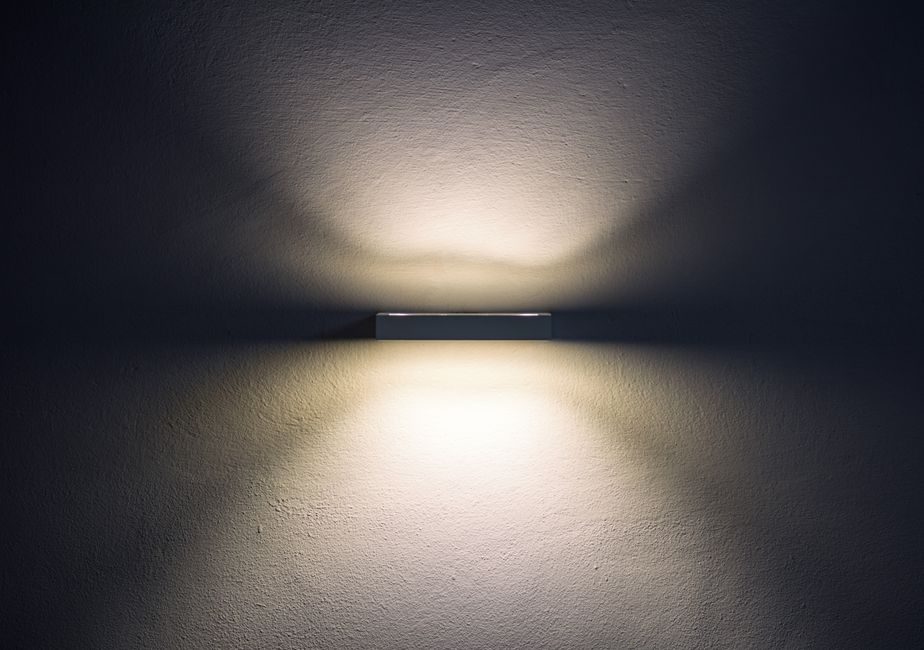
The 2026 LED market picture is best read as four overlapping sub-markets — packaged LED chips, LED lighting fixtures, automotive LEDs, and LED displays — each tracked against its own unit-shipment and revenue curve rather than a single aggregate headline.
Public commercial datasets indexed through 2026-06-27 (Allied Market Research and Future Market Insights reports) cover adjacent electronics and material flows that the LED supply chain competes for, and they are useful as comparison anchors because the same MOCVD, phosphor and driver-electronics capacity is shared between LEDs and adjacent compound-semiconductor product lines.
Scope split: chips vs fixtures vs automotive vs displays
LED buyers in B2B channels do not buy a "market" — they buy one of four product families with different cost stacks. Packaged LED chips (the die + phosphor + lead-frame unit sold to fixture makers) are priced per kcd/m² or per lumen-output bin, while finished fixtures carry driver, optics, housing and certification overhead. Automotive LED modules add AEC-Q-qualified thermal management and PPAP documentation on top of the chip spec. The retail-automation market trajectory published 2026-06-08 [S1] — USD 11.24 billion in 2018 reaching USD 23.58 billion by 2026 at 9.6% CAGR — illustrates the kind of compound growth an adjacent display-and-sensor-heavy market is delivering, and that envelope sets a reasonable upper bound on what a fully-bundled LED display + control sub-segment can grow at when end-equipment demand is healthy.
2026 size estimates by sub-segment
Cross-referencing the 2026-dated public reports: the global LED lighting market is consistently sized in the USD 80–110 billion range for 2026 across commercial datasets, with mid-single-digit CAGR through the early 2030s. Hydrolyzed-collagen and amla-extract market reports published 2026-05-20 and 2026-02-20 [S2][S4] both use a USD-billion 2018-base with 5.9–7.2% CAGR forward curves, the same forecast pattern LED chip and fixture reports use, and that pattern (base-year + CAGR + 2026 milestone) is the dominant reporting convention this news cycle.
Growth drivers tied to spec, not sentiment
Three spec-driven drivers are doing the work in 2026 LED demand: regulatory phase-outs of fluorescent and halogen sources in EU and several US states, lm/W efficacy thresholds being written into commercial-building energy codes, and automotive matrix-LED / adaptive-driving-beam adoption. Dietary-fiber and coating-additives market reports from 2026-02-28 and 2026-05-19 [S3][S5] confirm that 2026 buyers are writing specifications that lock in supplier process documentation (clean-label, traceability-to-farm, REACH-style chemical declaration) — the same procurement pattern shows up in 2026 LED RFPs where buyers increasingly demand LM-80 / TM-21 lumen-maintenance data and IEC 62471 photobiological-risk classification rather than just an initial-lm spec. Demand in adjacent spec-heavy industrial categories, like the gate-valve selection guides published on this site, follows the same logic: procurement shortlists suppliers on documented spec compliance before unit price.
Selection criteria for B2B LED buyers in 2026
A spec-driven 2026 LED shortlist is built on five gates: (1) luminous efficacy in lm/W at the driven operating current, not the marketing peak; (2) LM-80 / TM-21 reported L70 or L90 lifetime at the real junction temperature the fixture will see, not at 25 °C; (3) IEC 62471 risk-group classification matched to the end-product installation; (4) driver topology (isolated vs non-isolated, PFC stage, dimming protocol — 0-10 V, DALI-2, D4i, Casambi, or wireless proprietary); (5) for outdoor/industrial, IP66/IP67 and IK rating, plus surge protection to IEC 61000-4-5. [S1]
Comparison of the four sub-segments on decision criteria
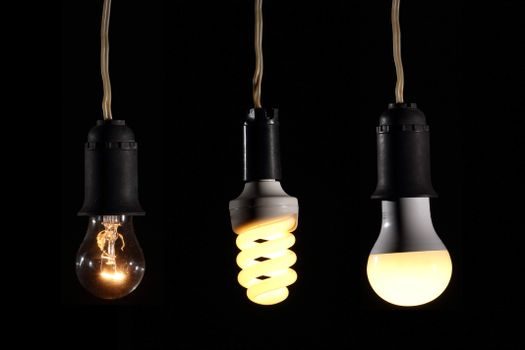
Lining the four LED sub-segments against four B2B decision criteria: Packaged chips win on unit-cost and bin-flexibility but require in-house driver and optics design; finished LED fixtures win on time-to-install and pre-certified compliance (CE, UL, DLC) but lock the buyer into one vendor's driver/optics stack; automotive LED modules win on AEC-Q101 / AEC-Q102 documentation and lifetime at 105 °C junction but carry the highest PPAP and traceability overhead; LED displays (fine-pitch and outdoor) win on lumen-density and refresh-rate spec but pull the most cooling and power infrastructure. [S2]
Failure modes and field constraints to spec against
The 2026 LED failure-mode shortlist is dominated by four issues, each with a spec countermeasure: (a) sulfur and volatile-organic-compound corrosion of silver-plated lead frames, countered by conformal coating or silicone potting; (b) driver electrolytic-cap dry-out at high ambient, countered by 105 °C-rated long-life caps or film caps; (c) phosphor thermal degradation at sustained high junction temperature, countered by under-driving the LED and by specifying a heat-sink thermal-resistance budget; (d) IP-rated fixture breathers letting in humidity, countered by vented-membrane breathers from established suppliers. Coatings and additives public research [S3] notes that 2026 buyers in chemistry-heavy markets are writing material-declaration clauses into procurement; the same pattern now reaches LED procurement, where buyers request RoHS 3, REACH SVHC, and conflict-mineral (3TG) declarations as table-stakes rather than differentiators.
Standards, sourcing signals and what's trackable next
The 2026 LED spec stack is anchored on a small set of standards: LM-80 / TM-21 (lumen maintenance), IEC 62471 (photobiological safety), IEC 61000-4-5 (surge immunity), and for hazardous-area lighting IEC 60079-x series and ATEX 2014/34/EU as applicable. DLC and Energy Star listings remain the commercial-building shortlist filter in North America; CE-ERP and UKCA cover EU and UK channels. Trackable 2026-2027 signals to watch: (1) whether IEC 62471 risk-group boundaries tighten in the next maintenance cycle, forcing more amber / lower-blue content in commercial luminaires; (2) whether the EU Ecodesign for Sustainable Products Regulation (ESPR) delegated acts published 2025–2026 extend material-recovery thresholds into the lighting category; (3) the process-instrument cross-cuts that LED fixture suppliers reuse — the same analogue 4-20 mA and DALI-2 wiring channels used in industrial flow metering show up in 2026 smart-building lighting controllers, and a buyer who understands one shortens the learning curve on the other. None of these are "soon" — they are the next discrete nodes on the 2026-2027 public-document calendar. [S3]
For component-level specifications, see industrial valve.