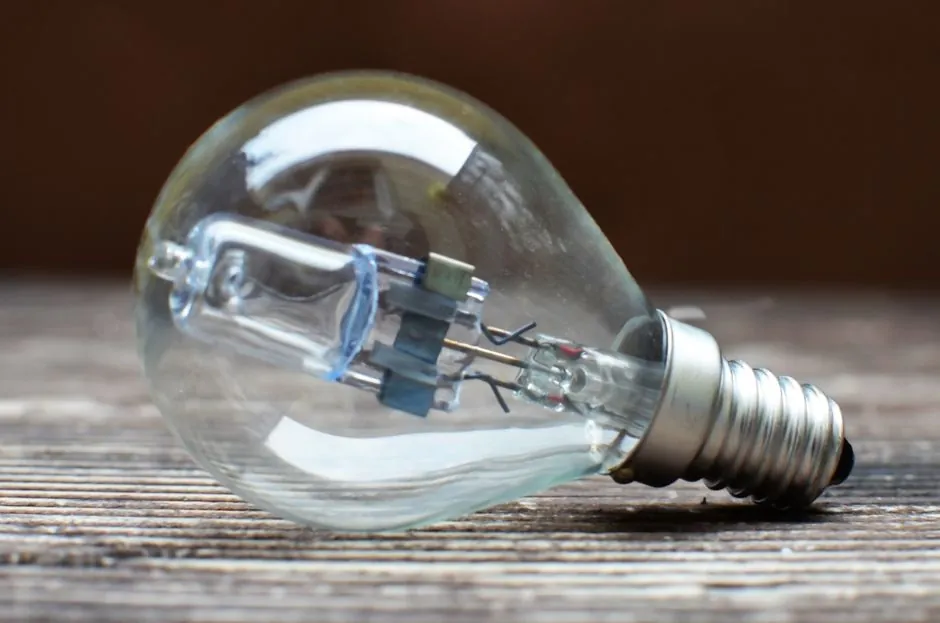
Global LED supply chains are no longer single-tier: packaged LED chip and driver volumes concentrate in Chinese, Japanese, and Korean manufacturers, while secondary optics and display materials split across US, European, Japanese, Korean, and Chinese vendors [S3][S4][S8].
China is the largest global export base for LED lighting drivers and a major production center for indoor and outdoor LED display cabinets, with multiple Shenzhen- and Dongguan-based factories operating in the 40,000 m² class [S5][S8].
Packaged LED and Driver Vendors
LED lighting driver supply is led by manufacturers headquartered in China, with a long tail of regional and European suppliers serving specialised segments [S8]. The LED lighting driver market is reported with the same regional cut as the broader LED market: North America (US, Canada, Mexico), Europe (Germany, France, UK, Russia, Italy), and Asia-Pacific (China, Japan, Korea, India, Southeast Asia) [S8]. Within that split, China is described as the largest global export quantity and supply source for LED drivers, a position consistent with the broader LED display manufacturing footprint in Guangdong province [S5][S8].
For LED display cabinets, the manufacturer tier is dominated by Chinese factories (Shenzhen, Dongguan, plus surrounding supply chain) that compete on cost and on rapid customisation, with export markets listed as North America, EU, Japan, India, and Australia [S5]. The product mix covers stage rental LED displays, advertising posters, highway guidance signs, and stadium perimeter LED screens, all running from a shared SMT/QA stack [S5].
LED Secondary Optics: PMMA, PC, Glass
LED secondary lenses are split across three material families: PMMA LED secondary lens, PC LED secondary lens, and glass LED secondary lens, with applications covering street lighting, commercial lighting, architectural lighting, indoor lighting, and automotive lighting [S3]. The vendor list runs 17 names and includes US, European, and Chinese optical houses: Ledlink Optics, Carclo Optics, Auer Lighting, LEDIL Oy, FRAEN Corporation, GAGGIONE (Lednlight), Bicom Optics, Darkoo Optics, Aether Systems Inc, B&M Optics Co, ShenZhen Likeda Optical, HENGLI Optical, Brightlx Limited, Kunrui Optical, FORTECH, Chun Kuang Optics, and Wuxi Kinglux Glass Lens [S3].
Carclo Optics and LEDIL Oy are European design houses typically used by European luminaire OEMs; Ledlink and FRAEN serve US-spec commercial and architectural projects; the Chinese cohort (ShenZhen Likeda, HENGLI, Brightlx, Kunrui, Chun Kuang, Wuxi Kinglux) supplies cost-optimised PMMA and PC optics for street and commercial tiers [S3]. No single vendor in the listed cohort is identified as exceeding roughly one-fifth of segment revenue, and the report's market share figures for the five-year forecast are masked as "xx" in the public summary [S3].
Display Material Suppliers Behind LED and LCD Panels
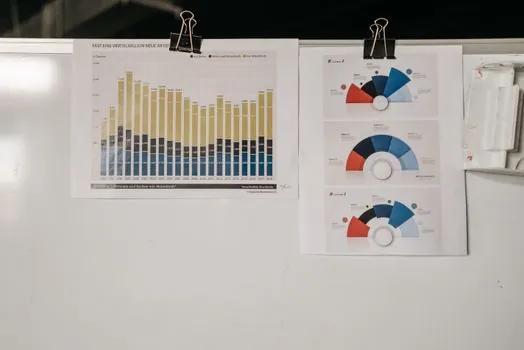
The display material market that feeds both LED backlit LCD and OLED lines is sized at a 4.1% CAGR through 2023 in the public GIR summary, with vendor list dominated by Japanese, Korean, US, and German chemical majors [S4]. Named suppliers are Corning, Nitto Denko, Sumitomo Chemical, Merck, LG Chem, Samsung SDI, Universal Display Corporation, Asahi Glass, Idemitsu Kosan, DowDuPont, Toray Industries, DIC Corporation, Hodogaya Chemical, JSR Corporation, and Nissan Chemical [S4].
Material categories covered are polarizer, substrate, color filter layer, liquid crystals, backlighting unit (BLU), and other LCD materials, applied across television, smartphone and tablet, laptop, desktop, signage / large format display, and automotive displays [S4]. APAC display panel plant construction and upgrades drive the demand, with OLED penetration in televisions and smartphones cited as the structural pull on these material volumes [S4].
LED Outdoor and Hybrid Lighting Channel
Hybrid street lighting systems pair solar or wind input with an LED or CFL luminaire on a pole, and the named vendor list in the 2018-2023 GIR report covers Eolgreen, Guangzhou HY Energy Technology, Phono Solar, Shanghai Ghrepower Green Energy, and UGE [S2]. Applications are infrastructure, shopping plaza, industrial area, and public road, with Asia and Africa listed as the highest-growth adoption regions for off-grid solar-plus-LED poles [S2].
Growth drivers cited in the report are government subsidies for solar street schemes, the absence of margin compression for vendors under those programmes, and rising urbanisation pushing municipal lighting coverage [S2]. The same report flags collaboration between local governments, international organisations, and regional NGOs as a procurement channel that keeps LED share in this segment tied to public-tender outcomes rather than free-market share [S2].
LED Display Cabinet and Stadium Tier
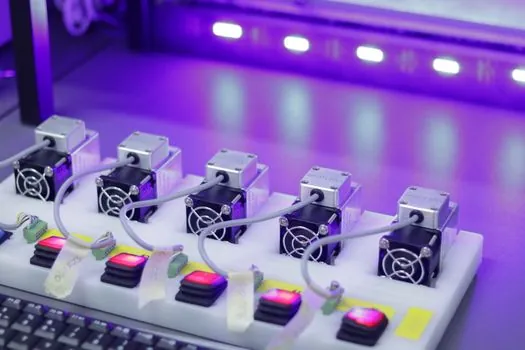
The stadium and rental LED display tier is concentrated in Chinese OEMs with 40,000 m²-plus production bases, ISO 9001 quality systems, and certification stacks including UL, CE, FCC, RoHS, and CQC [S5]. One named vendor, Shenzhen MuenLED Co., Ltd, reports 118 export countries, 3,000+ projects, 72,000+ m² of installed display surface, and 1,000+ remote technical support events for LED display screen users [S5].
Internal certifications are tracked across IQC, IPQC, FQC, OQC, and QA stages under the 7S management model, with utility model patents and CQC certification milestones documented from 2019 onward [S5]. For process engineers sourcing LED cabinets for stadium or transportation-facility use, the industrial valve selection logic and the flow meter spec gates used on plant instrumentation offer a useful parallel: define the operating envelope first, then audit the supplier's QA chain against that envelope.
Automotive LED Daytime Running Light Vendors
Automotive daytime running lights (DRLs) are classified as front, side, and rear vehicle lighting and signaling devices, with the 2018-2023 GIR report scope covering North America, Europe, Asia-Pacific, South America, Middle East, and Africa [S7]. The DRL supplier base sits at the intersection of tier-1 automotive lighting vendors and LED chip packaging houses, with the regional cut parallel to the LED lighting driver report [S7][S8].
Adoption in this segment is driven by safety regulation (mandatory DRL fitment in the EU since 2011) and by styling differentiation in newer vehicle programmes, which keeps the vendor list narrower than the general lighting driver segment [S7]. For plant and process engineers sourcing LED-based signaling and indicator hardware, the pressure transmitter and pressure sensor vendor maps on industrial sites use the same logic: a small set of qualified tier-1 suppliers for safety-rated channels, and a wider long tail for non-safety signalling.
Selection Criteria for LED Sourcing
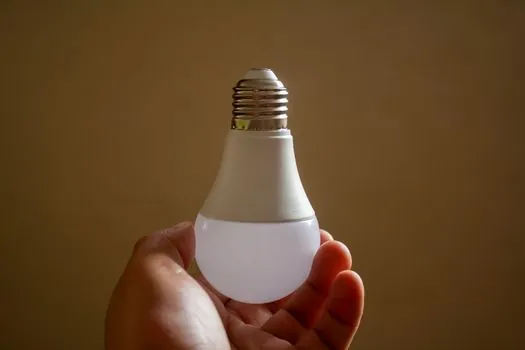
Three engineering criteria dominate LED vendor selection in 2026: certification stack (UL, CE, FCC, RoHS, CQC, ISO 9001), QA chain granularity (IQC, IPQC, FQC, OQC, QA stages), and export coverage with documented install base in m² and project count [S5]. For the secondary optics tier, material choice (PMMA, PC, glass) is the first split, with glass lenses used where operating temperature and UV exposure exceed PMMA and PC limits, and PC lenses used where impact resistance is required [S3].
A practical comparison for the secondary optics segment: PMMA LED secondary lens suits indoor and architectural lighting with stable temperatures and lower UV load; PC LED secondary lens suits commercial and street lighting with impact risk; glass LED secondary lens suits high-temperature, high-UV outdoor and automotive lighting [S3]. For the broader LED supply chain, the PLC and servo motor vendor maps in industrial automation offer a comparable tiering: a small number of tier-1 names for safety-rated channels, and a long tail of regional suppliers for non-safety loads. Related reading on plant-side selection logic is in petrochemical production line design spec gates, which uses the same envelope-first, supplier-second reasoning for process equipment. The vertical integration of Chinese LED cabinet vendors from chip packaging to cabinet assembly is a structural feature that has held the LED display export price floor since 2018, with no comparable vertical stack outside of Korea and Taiwan.
Trackable signals for the next reporting window are the public release of the 2024-2025 GIR LED lighting driver market share update (currently masked in the 2019-2024 summary) and any new CQC or UL certification filings from Shenzhen- and Dongguan-based LED cabinet vendors, which would shift the named-vendor list in the next [LED market share by manufacturer] update. For related process-engineering selection logic, see the pharma VLM containment and validation gates write-up, which applies the same QA-stage and certification-stack reasoning used in LED sourcing.