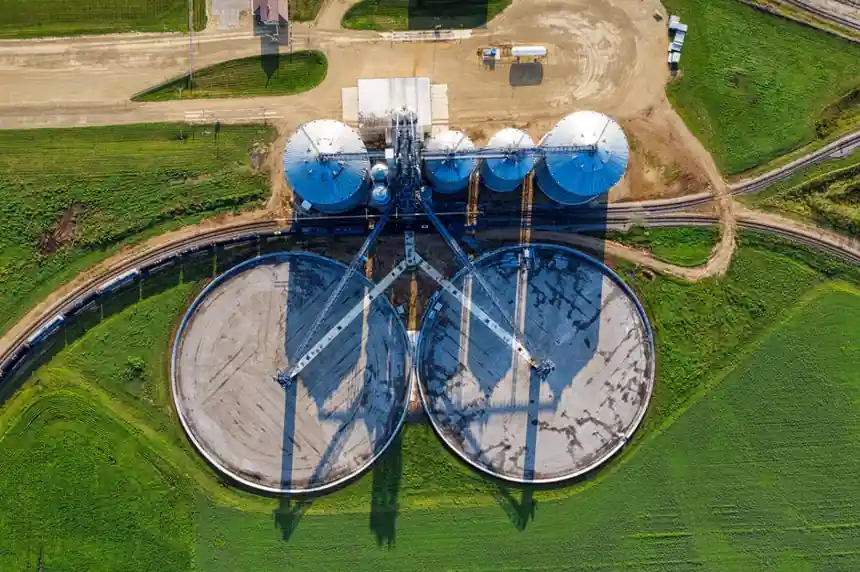
Global utility-scale battery storage installations reached 108 GW in 2025, a 40% year-on-year increase, with LFP cells accounting for approximately 90% of new capacity per the IEA Global Energy Review 2026 [S1].
U.S. developers plan to add 24 GW of utility-scale battery storage in 2026 versus the 15 GW commissioned in 2025, with Texas, California, and Arizona collectively representing roughly 80% of that pipeline (EIA February 2026 generator inventory) [S1].
2026 Capacity Baseline and Pipeline Numbers
The ACP and Wood Mackenzie U.S. Energy Storage Monitor recorded 3.3 GW / 8.4 GWh installed across all U.S. segments in Q1 2026, 54% above the prior first-quarter record, of which 2.3 GW / 6.8 GWh sat in the utility-scale bucket [S1]. Morgan Lewis tracking puts total installed U.S. battery storage on track to approach 40 GW by year-end 2026, with 10.9 GW / 33.7 GWh added in Q3 2025 alone, the largest single quarter on record [S3]. Approximately 17 states have now adopted some form of energy storage policy, and 13 of those have hard procurement targets [S3].
California and Texas together absorbed 80%–85% of new U.S. utility-scale storage additions during 2025, a concentration that has direct implications for interconnection queue timing and transformer supply for procurement teams operating in those ISOs [S3]. Global deployments grew roughly 36% year-on-year through the first three quarters of 2025, adding 49.4 GW / 136.5 GWh, according to BloombergNEF and the IEA [S1].
Chemistry and Format: LFP Defaults, Turnkey Cabinets
Industry guidance in 2026 frames LFP as the default chemistry for utility-scale procurement on the basis of thermal stability, a documented 6,000+ cycle life, and lower cost per kilowatt-hour than NMC or lead-acid [S2]. The same source notes a clear buyer preference for turnkey, all-in-one BESS cabinets that integrate battery modules, the Power Conversion System (PCS), thermal management, and fire suppression, displacing the older practice of sourcing battery, PCS, and EMS separately [S2].
Cell sourcing now hinges on direct Tier 1 manufacturer relationships, with CATL and EVE cited as the dominant cell suppliers, and procurement checklists increasingly require evidence of those upstream ties to manage cell-level quality and lead-time risk [S2]. The U.S. DOE FEMP BESS Procurement Checklist is referenced as the federal reference framework that aligns these chemistry and integration decisions with bankability requirements [S2].
Scope Definitions That Drive Quotation Comparability
Procurement teams consistently see the same pricing distortion: a "1 MW battery" price is meaningless until duration, scope, and integration depth are defined, because a 1 MW / 1 MWh, 1 MW / 2 MWh, and 1 MW / 4 MWh system represent 1 h, 2 h, and 4 h discharge durations respectively and a 4x energy-content delta [S4].
Three quotation tiers appear across RFP responses: battery-side equipment (cells, modules, racks, BMS, cabinets, cooling, fire protection); integrated BESS equipment (adds PCS, EMS, transformer, switchgear, monitoring); and turnkey project price (adds engineering, freight, civil works, cabling, installation, grid interconnection, commissioning, testing, local compliance, and site acceptance) [S4]. Comparing the lowest battery-side number against a turnkey EPC figure systematically understates the real cost gap, a pattern that recurs across 1–4 MWh commercial procurement [S4].
Selection Criteria: Duration, C-Rate, and Dispatch Model
Duration choice is now a primary specification, not a derived value, because it determines the revenue stack a project can chase (energy arbitrage, ancillary services, capacity, transmission deferral) [S5]. A Malaysian utility-scale PV-BESS study found that a 4 MWh BESS (2 h of a 2 MW PV plant's full export capacity) is required for the PV plant to discharge at full export capacity for 1 h, enabling at least one contingency reserve service event per day [S5]. The same study showed that allocating 50% of generation from a 2 MW PV plant is sufficient to restore a 2 MWh BESS within a day, defining a practical SOC restoration envelope for dispatch design [S5].
Engineering teams planning PV-BESS projects can reference the related TOPCon procurement playbook for upstream PV module cost context, since the PV side of a PV-BESS plant sets the dispatch window that the BESS must follow. For factory-level decisions on cell format and pack assembly, the cathode material equipment spec map provides a parallel reference for LFP cathode line scale-up. Process instrumentation for upcoming solid-state and LFP pilot lines is covered in the solid-state battery process control article, which sets a measurement baseline applicable to new BESS factory QA.
Contract Structures: PPA, EPC, BTA, and Financeability
State-level storage policy and project financeability now sit at the centre of every 2026 procurement, with PPAs, EPC contracts, BTAs, tariffs, and lender requirements treated as interlocking rather than separable workstreams [S3]. The One Big Beautiful Bill Act (OBBBA) has introduced fresh uncertainty into federal tax and trade policy for storage, but state-level procurement targets in 13 states continue to anchor near-term demand [S3].
Lender requirements increasingly demand bankable supply chains, fixed-price conversion guarantees on cells, and clearly defined degradation curves, which is why Tier 1 cell sourcing and integrated cabinet delivery are gaining share over fragmented component orders [S2]. Procurement teams should validate that any battery supply agreement defines augmentation rights, end-of-warranty state-of-health thresholds, and thermal-runoff containment before signing, because these clauses determine lifecycle bankability more than headline price per kWh.
Lead-Time, Interconnection, and EPC Bottlenecks
A larger project pipeline does not remove delivery risk, because concurrent construction compresses supply of transformers, switchgear, medium-voltage equipment, qualified EPC contractors, interconnection-study capacity, commissioning crews, and utility approval windows [S1]. Procurement schedules in 2026 must therefore confirm transformer and PCS lead times, grid-connection milestones, factory acceptance testing scope, site energisation responsibilities, and commissioning resource allocation at the RFP stage, not after award [S1].
California and Texas are the practical stress tests: with 12.9 GW of 2026 build planned in Texas alone, transformer and switchgear queues in those ISOs set the realistic COD date for adjacent projects [S1]. Lead-time variance on a single 100 MVA transformer can move a project's commercial operation date by 2–4 quarters, which is why integrated EPC offers with secured BoP equipment often win over lower battery-side bids.
What to Ask a Supplier Before Signing

A serious 1 MW–100 MW BESS supplier should first ask duration in MWh, then confirm whether the quote is battery-side, integrated, or turnkey, because the response defines what is actually being priced [S4]. Required documentation includes cell manufacturer identity and Tier 1 status, BMS topology, PCS oversizing ratio, liquid-cooling versus air-cooling design, fire suppression gas agent, UL 9540A test report, and warranty structure covering capacity, round-trip efficiency, and augmentation [S2].
For utility-scale procurement, additional required evidence includes a documented dispatch model that maps MW and MWh ratings to the targeted revenue stream, an interconnection-study status report, and an EPC parent-company guarantee that survives cell-supplier default [S3]. Independent feasibility, sizing, ROI modelling, and EPC-selection consulting remain available from specialised BESS consultancies, and engaging one prior to RFP release is a common practice for IPPs that have not previously built storage [S6].
Trackable next nodes for procurement teams: the U.S. EIA monthly generator inventory updates for 2026 build progression, state PUC storage-target compliance filings, and UL 9540A large-scale fire test data releases from cell and cabinet suppliers, all of which reset lead-time and price benchmarks within the next two quarters.
Spec-level background on the components involved: linear guide, crossed roller guide, and storage cage.