
Linear actuators fall into six primary drive classes — electric (motorized), pneumatic, hydraulic, piezoelectric, voice-coil, and direct-drive linear-motor — each occupying a distinct band of force, stroke, speed, and accuracy [S2].
Across the 2026 industrial catalog, electric actuators dominate 12V/24V DC compact applications up to 1000 N, while ball-screw and linear-motor stages serve automation requiring sub-micron precision and strokes measured in meters [S8][S2].
Six Drive Classes and Where Each One Wins
The six-class taxonomy is the cleanest way to compare options: ball or lead screws deliver high force with good accuracy; direct-drive linear motors add high speed, zero backlash, and no mechanical wear parts; voice coils give very high dynamics over short travel; piezo actuators resolve to nanometer and sub-nanometer steps; pneumatic and hydraulic actuators remain the default where plant air or high-pressure fluid already exists [S2].
Thomson has shipped electric linear actuators for over 50 years, anchoring the industrial mid-range, while igus drylin belt- and screw-driven units use self-lubricating polymer liners to eliminate external grease in dirty environments [S4][S9]. Kollmorgen's frameless and direct-drive linear motor lines (Cartridge DDR, D/DH housed, and direct-drive linear motors) target machine builders integrating the motor into the stage structure [S1].
Force, Stroke, and Speed Bands You Can Quote
Compact electric push-pull actuators cover the 800 N to 2,500 N envelope at 12V/24V DC with IP66 housings and built-in limit switches, which is the workhorse range for mobile equipment and patient lifts [S8][S5]. The LINAK LA23, for example, is rated up to 2,500 N push or pull in a compact form factor with exchangeable cables for serviceability [S5].
At the precision end, piezoelectric and piezo-motor-driven stages resolve to nanometer and sub-nanometer steps over travel ranges that PI categorizes as "microscopic motion," with direct-drive ironless linear-motor stages handling the long-travel high-speed tier of the same family [S2]. Ball-screw and roller-bearing guidance let the electric mid-range hit strokes in the 100 mm to 1,000 mm band at repeatable positioning that suits packaging, format adjustment, and conveyor diverters [S4][S9].
Selection Criteria: Force, Speed, Accuracy, Environment

Pick the drive class by ranking four numbers first: peak force in newtons, full-stroke length, peak velocity, and bidirectional repeatability. A 24V DC ball-screw unit at 1000 N is a different machine from a 24V DC belt-driven unit at the same load — the screw holds position with the motor de-energized (self-locking), while the belt must be braked [S9][S8].
Environment comes second: IP66 is the common baseline for outdoor or washdown 12V/24V actuators [S8], while food-grade lines such as Kollmorgen's AKMH stainless and AKMA washdown series address sanitary plants, and ATEX/IECEx zone-rated servos (Kollmorgen EP, AKME, Goldline EB/EBH) cover explosive atmospheres [S1]. Guidance quality then settles the accuracy question — air bearings for frictionless metrology, crossed-roller bearings for stiffness under load, flexures for short-travel nanopositioning [S2].
Application Map: Mobile, Industrial, Medical, Precision
Mobile and agricultural machinery — tractors, harvesters, active façades — uses compact electric actuators with weatherproofing and field-replaceable cables; elero-linear, LINAK TECHLINE, and similar suppliers serve this segment [S6][S5]. Medical patient lifts and adjustable beds use the same 24V DC push-pull form factor at 2,000–2,500 N with safety-critical cabling and limit-switch redundancy [S5].
Factory automation — packaging."
Factory automation — packaging conveyors, EV battery assembly, tire and rubber lines, food and beverage, pharmaceutical, and postal sorting — is the volume tier, dominated by electric rod and belt-driven actuators from Thomson and igus alongside Kollmorgen servo-driven linear modules [S4][S9][S1]. At the top of the stack, semiconductor inspection, photonics alignment, laser machining, and microscopy rely on piezo and direct-drive linear-motor stages from PI, where encoders, interferometers, and capacitive sensors close the loop to nanometer scale [S2].
Linear Encoder, Linear Guide, and Linear Module: How They Stack
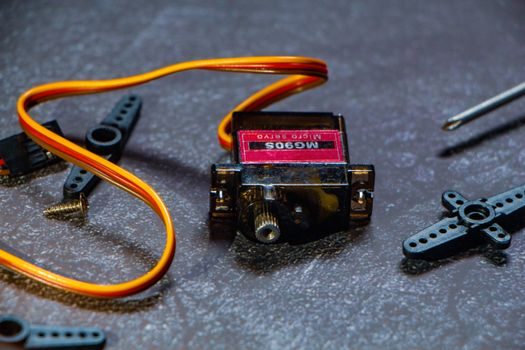
Closed-loop feedback is the difference between an open-loop rod actuator and a precision stage. A linear encoder measures carriage position so the drive compensates for thermal drift, load change, and stick-slip — without it, ball-screw and belt-driven units lose their rated repeatability under varying loads [S2].
That encoder reads against a linear guide, and the carriage, guide, drive, and feedback together form a linear module. The module concept is what lets a buyer compare belt-driven, screw-driven, and linear-motor stages on the same datasheet columns: stroke, repeatability, peak force, and max velocity — rather than mixing motor, screw, and bearing specs from three vendors.
Where Pneumatic and Hydraulic Still Beat Electric
Despite the electric surge, pneumatic actuators remain the right answer where clean dry plant air is already plumbed, cycle rates are high, and unit cost dominates; the 12V/24V actuator vendors themselves position electric units as a "replacement to traditional pneumatic or hydraulic systems, especially where precise positioning and reduced size are paramount" [S3]. Hydraulic actuators still lead above ~5,000 N where force density per cubic centimeter matters more than control bandwidth.
Linear motor and voice-coil stages — and their non-contact cousins, linear motor and air-bearing guidance — become mandatory when backlash, friction, and particulate generation are unacceptable, such as in cleanroom semiconductor and photonics alignment [S2].
Limitations, Failure Modes, and Sourcing
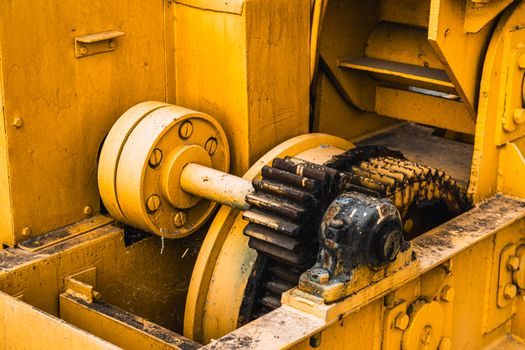
Common failure modes trace back to four causes: seal failure letting contaminants into a ball-screw nut, brake wear on a belt-driven stage that lacks a self-locking screw, encoder contamination on an open optical linear encoder, and overcurrent trip on a 12V/24V DC motor stalled at end-of-stroke because the limit switch failed [S4][S9]. IP66 ratings help the first and fourth; field-replaceable cables and grease-free polymer bearings help mean-time-to-repair [S5][S9].
For sourcing, suppliers split into three tiers: catalog 12V/24V compact actuators (ATO, LINAK TECHLINE, elero-linear) for OEM volume [S8][S5][S6]; industrial electric rod and belt actuators (Thomson, igus) for machine builders [S4][S9]; and direct-drive linear motor and piezo nanopositioning stages (PI, Kollmorgen) for high-end automation and instrumentation [S2][S1]. For factory safety circuits on machines using these actuators, the two-hand control selection guide and the safety mat spec-level breakdown cover the guarding hardware that pairs with linear motion.
Track two signals through the rest of 2026: piezo and linear-motor stage pricing per millimeter of stroke, which historically gates adoption in mid-tier metrology, and 48V DC actuator availability as mobile machinery moves off 12V/24V leads.