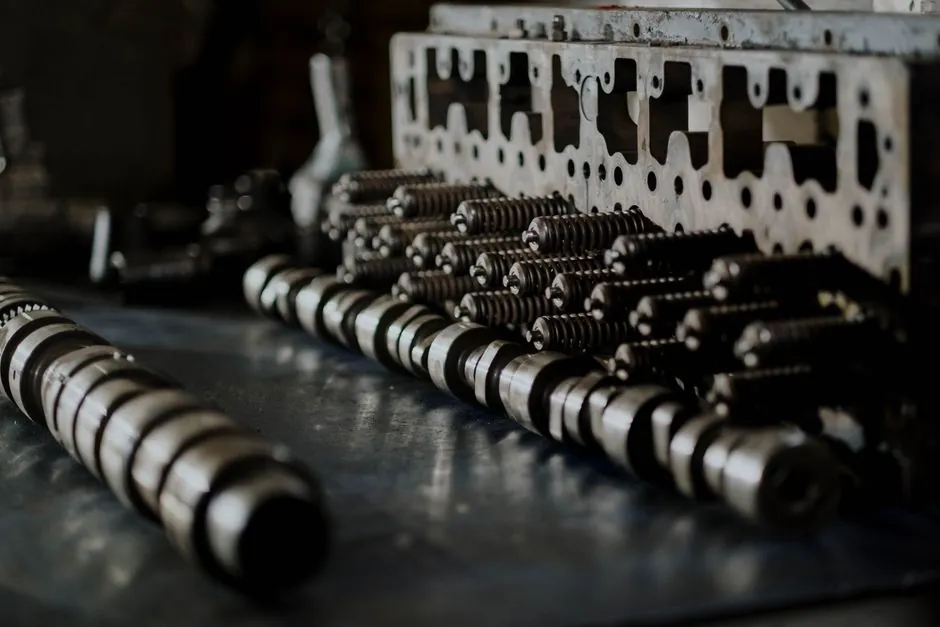
Linear ball bearings are rolling-element bearings that run on a hardened shaft or rail, with a closed recirculating ball loop that lets the carriage travel effectively unlimited stroke with low friction [S3][S6]. Plain linear bearings, sometimes called sleeve or dry-running bearings, depend on sliding contact between two surfaces with no rolling element, trading higher friction for higher static load capacity, lighter weight, and shock absorption [S3][S4].
The two families are not drop-in replacements: a linear ball bearing is specified for high-speed precision on a precision-ground shaft, while a plain linear bearing is specified for heavy, slow, dirty, or lubricated-for-life duty. Several manufacturers have published 2024-2025 selection notes that line up closely on this load-versus-speed split [S1][S3][S8].
Mechanism and Contact Geometry
Linear ball bearings use steel balls as the rolling element, with point contact between ball and raceway; they deliver low rolling friction and high travel speed on a hardened shaft or rail [S3]. Recirculating designs keep the load riding on a fresh set of balls in a closed loop, while non-recirculating designs hold the rolling elements in a fixed cage for short-stroke precision [S3][S6].
Plain linear bearings have no rolling element: the bearing surface slides directly against the shaft, so the contact patch is line- or area-contact rather than point-contact, which raises static load capacity at the cost of friction and wear rate [S1][S4]. Where a roller is used instead of a ball, line contact raises load capacity further versus a point-contact ball bearing, at the expense of speed ceiling [S5][S7].
Load, Speed, and Precision: Decision Matrix
Manufacturer guidance published in 2024-2025 converges on the same four-axis comparison, summarized below from [S1], [S3], [S5], [S7], and [S8]:
Load capacity: plain linear bearings are preferred for large static and impact loads; linear ball bearings carry a lower static load but handle repeated dynamic duty on hardened shafts; roller-element linear bearings sit between the two on load and below ball bearings on speed [S1][S3][S5][S7].
Speed: linear ball bearings are the right call for high-speed reciprocation and continuous travel, and recirculating ball bushings are common in CNC, 3D printing, and pick-and-place stages [S1][S3][S8]. One published 2024 product spec sheet states a positional accuracy of ±0.00045" on high-speed robotic linear axes, with dynamic load capacity up to 3,820 N and a synthetic-resin retainer that reduces friction roughly 30% versus standard retainers [S2].
Precision and repeatability: linear ball bearings generally provide higher positioning accuracy and lower starting/stopping torque than plain linear bearings, because rolling friction is much smaller than sliding friction [S1][S3].
Friction and efficiency: plain linear bearings have higher kinetic friction and lose more energy to heat, but absorb shock and vibration that would damage a precision ball circuit [S1][S3][S4].
Environment, Lubrication, and Maintenance
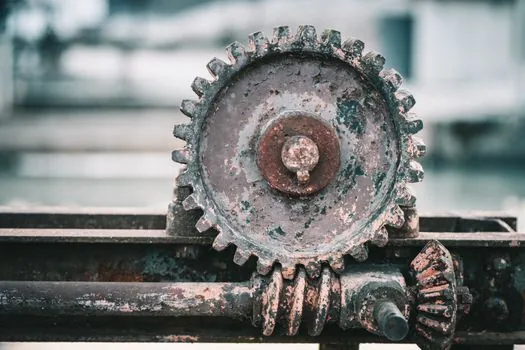
Linear ball bearings running on precision-ground shafts need filtered lubricant and sealed housings; a single particle of grit large enough to sit in the contact zone can mark the raceway and trigger a failure, so sealing is non-negotiable in dirty process areas [S1][S5]. Plain linear bearings tolerate dust, washdown, and liquid contamination better, and dry-running PTFE or polymer plain bearings are widely used where lubricant would contaminate the product [S1][S4].
Maintenance cadence reflects that split. Plain linear bearings are usually greased or run dry with periodic re-lube and are inspected for wear on a scheduled interval; linear ball bearings run longer between services but demand clean lubricant and intact wipers, and any contamination event usually forces a full bearing replacement [S1][S3]. Acoustic behavior follows the same pattern: at low speeds both are quiet, but at high duty cycles recirculating ball bearings can become loud enough to drive a noise-and-failure diagnosis, while roller-element linear bearings run quieter at comparable speed and are preferred in medical and laboratory automation [S5].
Use-Case Routing
Specify a linear ball bearing for CNC machine slides, 3D-printer gantries, semiconductor handlers, pick-and-place stages, and metrology axes where speed, repeatability, and low friction dominate, paired with a hardened-and-ground shaft or profile rail [S1][S3][S8]. The same selection logic is reflected in the broader spec-first map for linear bearing types, materials, and applications, which covers shaft hardness, raceway geometry, and seal selection side by side.
Specify a plain linear bearing for slow or static heavy loads, shock- or vibration-loaded slides, dirty or wet process areas, food and medical equipment where lubricant-free contact is required, and low-cost OEM builds where initial cost matters more than efficiency [S1][S2][S4][S8]. For harmonic-drive-driven linear stages that mix slow traverse with high positioning resolution, the bearing upstream of the carriage often controls life, as detailed in the harmonic drive RFQ spec map for linear motion stages.
Do not specify a linear ball bearing for heavy impact, dirty washdown, or sealed-for-life applications where re-lube is impossible; do not specify a plain linear bearing where repeatability below 0.01 mm or sustained high speed is required [S1][S3][S5].
Cost, Lead Time, and Sourcing Reality
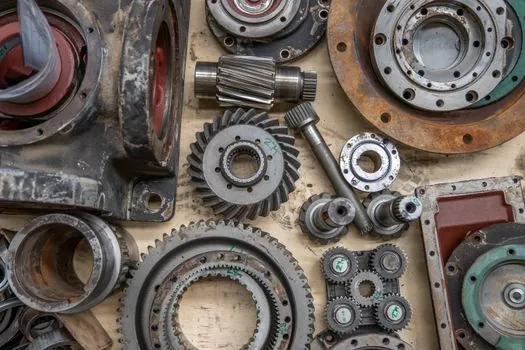
Plain linear bearings have a lower unit price and simpler construction, so they win on initial cost and on build simplicity for non-precision frames [S1][S2]. Linear ball bearings cost more up front and are more complex, but the higher initial spend is offset by lower friction losses, longer service intervals, and tighter machine-level performance; total cost of ownership over a 5-10 year horizon is the more honest number to compare [S1][S2].
Lead time and modularity are the hidden variables. Several 2024-2025 vendor catalogs now offer modular sizing on linear ball bushings and profile rails, with in-house custom-length cutting and precision grinding to avoid machining delays, which is the practical lever when an OEM is trying to consolidate SKUs across SKUs of similar envelope [S2]. Sourcing the right shaft hardness (typically 58 HRC or above for ball-bearing duty) and the right seal stack is what separates a reliable axis from an early failure, more so than the bearing brand itself [S1][S5].
For build specifiers, the cleanest first-pass rule: confirm load (static vs dynamic), peak speed, required repeatability, contamination class, lubrication access, and ambient temperature, then match the contact geometry (point vs line vs area) before shortlisting brands [S1][S3][S5][S8].
Trackable signals to watch through the rest of 2026: vendor releases of longer-stroke recirculating ball bushings for cleanroom automation, more polymer plain-bearing options rated for higher continuous temperature, and any cross-over releases that pair a ball spline nut with a plain-bearing style housing for combined linear and rotary duty on a single shaft.