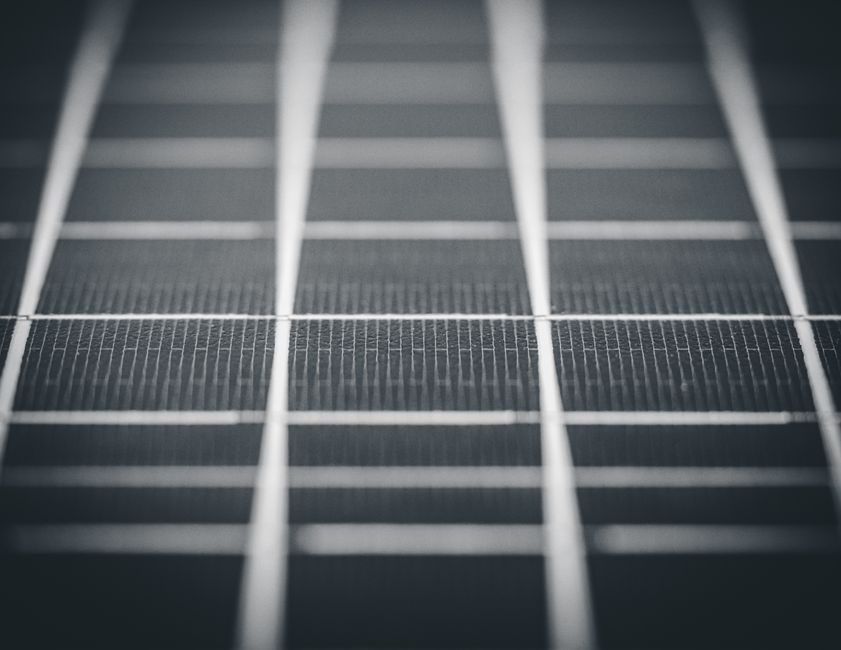
Linear encoder selection is governed by four hard constraints: measuring length, resolution, sensing principle, and output protocol, and the wrong choice on any one of the four will burn budget on retrofit or scrap.
The global catalog of glass-scale linear encoders alone lists 24 products from 9 manufacturers, with optical models dominating 20 of 24 entries versus 4 magnetic [S2]. For deeper cross-technology guidance, see the linear encoder reference page; for a quick rotation-to-linear translation primer, see rotary encoder.
Measuring length and resolution define the baseline
Glass-scale optical encoders span 70 mm to 6,000 mm in stock lengths, with the GIVI MISURE GVS 206 S covering 170-6,000 mm at 0.1-5 µm resolution and process temperatures of -20 °C to +80 °C [S2]. At the short end, the GVS 508 holds 70-2,040 mm and pushes linear speed to 180 m/min on the same -20 °C to +70 °C window [S2]. The Lika SME11 magnetic ring targets linear motors and emphasizes Hi-flex cable and a status LED for clearance error, with optional tape-cleaning wipers for dirty cells [S1].
Resolution ceilings diverge sharply by technology: GIVI MISURE's GVS 600 incremental optical scale reaches 0.01 µm resolution with ±5 µm accuracy grade in the standard version and ±2 µm in the high-accuracy build [S2]. Research-grade absolute encoders combining magnetic indexing and optical fine channels have demonstrated sub-5 µm accuracy over 2 m of calibrated scale [S5]. When the application is a long gantry (≥3 m) with sub-micron feedback, optical glass-scale is the only realistic path.
Optical glass vs. magnetic: a four-criteria comparison
Use the matrix below to shortlist before you price. Each cell pairs a sensing principle with a decision criterion grounded in the manufacturer data. [S7]
Optical glass-scale encoders (incremental, e.g. GIVI GVS 600): 0.01 µm resolution, ±2-5 µm accuracy over 70-6,000 mm, up to 180 m/min speed, vulnerable to condensation and oil mist on the scale [S2]. Magneto-resistive incremental (e.g. ED34): contactless, 1 mm pole pitch, 0.4 mm air-gap tolerance, internal sine/cosine interpolation with A/B quadrature, suited to harsh factory cells where oil and chips rule out exposed optics [S6]. Magnetic ring encoders for linear motors (e.g. Lika SME11, Magnescale BS78): exposed, non-contact, high-accuracy compact form, with status-LED diagnostics and Hi-flex cabling for cable-track duty [S1][S4]. Glass-scale absolute (e.g. GIVI GVS 206 S): SSI-style protocol, true absolute position, no reference homing needed, 0.1-5 µm resolution, -20 °C to +80 °C [S2].
For axis integration context where a linear actuator carries the read head, the speed and acceleration envelope of the actuator is the binding constraint; verify m/min, not just mm.
Output protocol and electrical interface
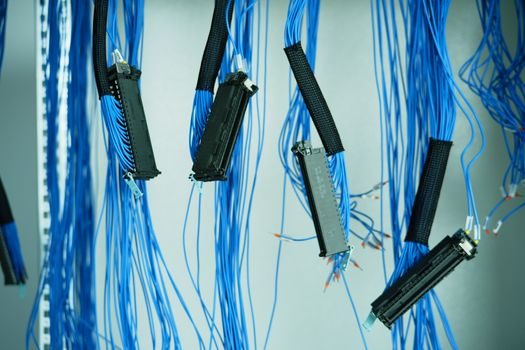
Three interface families dominate the 2026 catalog. Incremental A/B quadrature (TTL or 1 Vpp sine/cosine) is universal on optical glass scales; the ED34 magneto-resistive unit embeds the interpolation block on-board and emits A/B quadrature directly from a 1 mm magnetic pole pitch [S6]. Absolute serial protocols (SSI, BiSS, EnDat, PROFIBUS, PROFINET) appear on the GIVI GVS 206 S and LA-series units, eliminating the homing sequence after power loss [S2]. Draw-wire and follower-wheel rotary encoders wired for linear measurement deliver pulses per unit length, used where the moving axis cannot host a glass scale.
For dirty environments where the read head must survive coolant, the BS78 incremental optical unit is sold as non-contact and exposed, with non-magnetic construction and analog, digital, or sine-wave outputs to suit downstream counters [S4]. On a linear module, specify the output before you specify the cable: a 1 Vpp sine output needs a shielded twisted pair and a high-impedance receiver, while a TTL line-driver output needs 26LS31/32-style termination.
Environment, protection, and duty cycle
Process temperature windows in stock glass-scale products cluster at -20 °C to +70 °C or +80 °C [S2]. The magneto-resistive ED34 tolerates wider mechanical clearances (up to 0.4 mm) and is built for the same factory-floor abuse that destroys exposed optics [S6]. IP sealing matters most at the cable gland and read-head housing; magnetic and magneto-resistive scales typically ship IP67 or higher because the scale itself is sealed metal tape. Optical glass scales are usually IP53-IP65; if the cell floods with coolant, plan for a purge or migration to a sealed magnetic scale.
Lika's optional tape-cleaning wipers on the SME11 address the most common failure mode on exposed magnetic rings in woodworking, stone-cutting, and metal-cutting cells: debris buildup on the read surface that drives clearance error [S1]. For cleanroom or laboratory metrology, glass-scale absolute with 0.05 µm resolution (LA-series) is the de facto choice [S2].
When NOT to pick the mainstream option

Skip a glass-scale optical encoder when the axis length exceeds the catalog maximum of 6,000 mm or when the environment is oil-flooded; switch to a magnetic scale with absolute serial output [S2][S6]. Skip an exposed magneto-resistive encoder (ED34-class) when you need true absolute position at power-up, because incremental protocols require a homing move and lose the datum on every power cycle [S6]. Skip a draw-wire linear measurement on a vertical axis longer than 5 m: cable sag and stretch destroy the accuracy budget, and a glass scale is cheaper than the cable replacement cycle.
For more displacement-sensor guidance on a related sensing technology, see LVDT displacement sensor selection; for motion-train context beyond the encoder, see gear motor selection: a spec-driven buyer's map for 2026.
Sourcing, standards, and signal-integrity checklist
Three verifiable signals to track on the next RFQ: confirm the metrological certificate ships with the scale (standard on GIVI MISURE GVS 508) [S2]; verify the read-head cable is rated for cable-track flexing at the bend radius your axis demands (Lika Hi-flex on SME11) [S1]; confirm the interpolation module supports the resolution you ordered, because sub-µm numbers like 0.05 µm or 0.01 µm depend on the external interpolator, not the scale alone [S2]. The Magnescale BS78 is sold as compact, high-accuracy, and high-resolution with analog, digital, or sine-wave outputs, intended for industrial linear-motor use [S4].
For multi-axis rigs that pair the encoder with a linear guide or linear bearing, lock the encoder output protocol before you lock the motion controller: mixing 1 Vpp sine with a TTL-only counter card forces a compromise interpolator into the signal chain and adds jitter. The selection logic that closes the shortlist is: measuring length, resolution, sensing principle, output protocol, environment, in that order. Get those five right and the vendor list reduces itself to two or three.