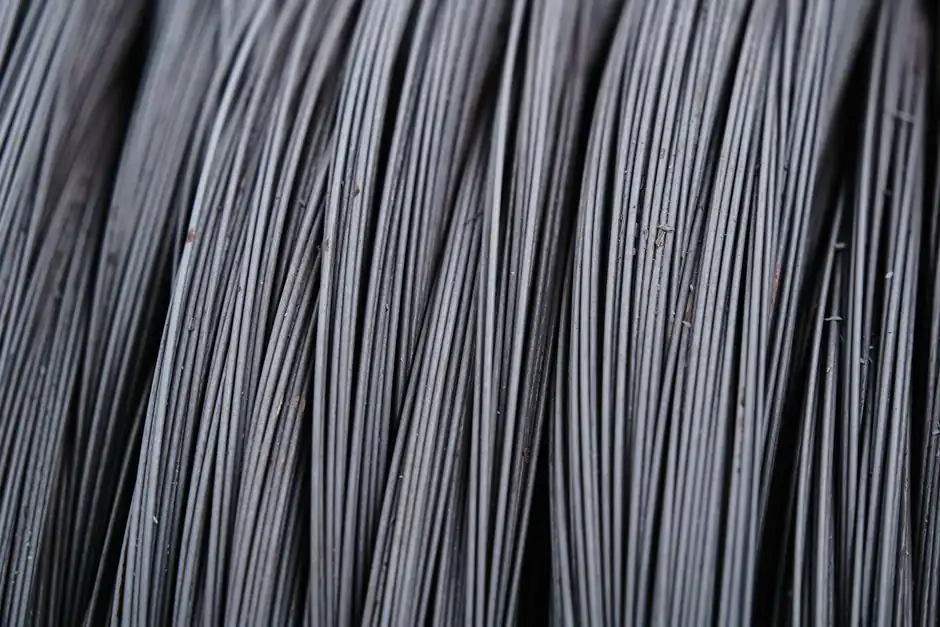
Control cable sourcing in 2026 is dominated by two non-overlapping product families: multi-core electrical control and instrumentation cables rated to 1.1 kV per IS 1554 (Part 1) and JSS 51034 [S2], and mechanical push-pull assemblies built from 1x19 stranded carbon or stainless steel for motion transfer [S3].
The two camps share almost no suppliers, share almost no test standards, and address entirely different engineering questions. Buyers who treat them as one category routinely over-spec the wrong cable. This map breaks the families apart, lines up the governing standards, and gives a decision grid a process engineer can run against an RFQ [S1].
Defining the two control cable families
Electrical control cables are flexible multi-core instrumentation cables designed for measuring, control, or regulation signals in process automation, typically transmitting DC or low-frequency AC on circuits up to 1.1 kV [S2]. Construction is generally Cu/PVC/PVC, Cu/XLPE/PVC, or Al/XLPE/PVC, with armoured variants using aluminium or steel strip/wire armour for direct burial or plant-grade mechanical protection [S2].
Mechanical control cables transmit force and motion, not current. A push-pull assembly is a flexible mechanical system that moves a lever, valve, throttle, or gear at a remote location through a translating inner member inside an outer conduit, commonly built from 1x19 strand carbon or stainless steel with low-friction internal liners and optional lubricated elements [S3]. Conductor size, stranding, and conduit material are the load-bearing parameters, and there is no voltage rating in the electrical sense.
The encyclopedia entry for control cable sits at the cross-section of both, which is precisely why it confuses new buyers; cross-check selection rules on the control cabinet and access control reference pages for adjacent scope.
Standards and spec gates that decide a bid
For electrical control cables, the common spec stack is IS 1554 (Part 1) for PVC up to 1.1 kV, IS 9968 for elastomer-insulated cables, JSS 51034 for defence-grade panels, and IEC 60502-1 for the international equivalent [S2]. High-temperature constructions push into silicone-silicone at 200 deg C, Teflon-Teflon at 260 deg C, and Kapton-fiberglass-Almylar-fiberglass at 400 deg C, each with its own dielectric loss and bend-radius trade-off [S2].
For mechanical push-pull cables there is no equivalent harmonised IEC product standard. The decision gates are stroke length, actuation force, bend radius, and mounting envelope, matched against the material of the inner member (carbon steel for indoor dry service, stainless steel for marine or chemical exposure) and any low-friction or lubricated liner option [S3]. Buyers should treat the manufacturer's cycle-life and environmental data sheet as the de-facto spec, not a generic IEC clause.
Plant buyers should also note that the cross-discipline vocabulary causes disputes on RFQs: a request for "control cable, 12 core, armoured" almost always means electrical, while a request for "control cable, 3 m, M10 end fittings" almost always means mechanical. Mismatch on the enquiry stage costs two to three weeks of clarification [S1].
Material and construction comparison

Electrical control cable conductor choices are copper (Cu) for lower voltage drop and flexibility, or aluminium (Al) for weight and cost on long horizontal runs; insulation is typically PVC (90 deg C) or XLPE (90 deg C continuous, 250 deg C short-circuit), with armour options in aluminium strip, aluminium wire, steel strip, or steel wire depending on the installation environment [S2]. Inner-sheath and outer-sheath combinations are commonly PVC/PVC or XLPE/PVC, and the armoured family follows the same matrix [S2].
Mechanical push-pull cable construction is dominated by 1x19 strand geometry in the inner member, with carbon steel (cost-effective, indoor) and stainless steel (corrosion-resistant, outdoor/marine) as the two main material options, paired with reinforced conduit designs and protective coatings for moisture or chemical resistance [S3]. Performance-enhancing features include low-friction internal liners for smooth actuation, lubricated elements for reduced wear, and reinforced conduit for heavy-duty cycles [S3].
The four-criteria comparison below is the quick grid to run against an incoming datasheet:
1. Function: electrical cables carry signal or low-voltage power, mechanical cables carry force and motion. 2. Governing standard: IS 1554 / IS 9968 / JSS 51034 / IEC 60502-1 versus a manufacturer cycle-life datasheet. 3. Key parameter: conductor size (sq mm), core count, insulation temperature, and armour type versus stroke length, actuation force, bend radius, and end fitting. 4. Failure mode: insulation degradation, voltage breakdown, or armour corrosion versus liner wear, strand fatigue, and conduit kinking.
Selection criteria for process and OEM buyers
For process automation buyers (panel builders, DCS retrofits, control cabinet wiring), the gating parameters are core count (commonly 2 to 61 cores), conductor cross-section (0.5 to 2.5 sq mm for signal, 4 to 10 sq mm for control), insulation system (PVC 70 deg C or 85 deg C, XLPE 90 deg C, HR PVC, silicone, or Teflon), and whether armoured construction is required for the cable tray-to-tray routing [S2]. High-temperature zones (foundry floors, near furnace dampers, boiler inspection platforms) should default to silicone or Teflon insulation, with the upper temperature limit checked against the OEM datasheet, for example 260 deg C for Teflon-Teflon and 200 deg C for silicone-silicone [S2].
For OEM and industrial machinery buyers (agricultural equipment, marine throttle linkages, construction machinery and equipment controls, special-purpose vehicles), the gating parameters are stroke length in millimetres, peak actuation force in newtons, minimum bend radius, mounting envelope, and environmental exposure, with carbon steel specified for dry indoor service and stainless steel specified for marine, chemical, or wash-down duty [S3]. Custom end fittings, conduit length, and travel tolerance are the typical engineering interface, and prototype runs before volume orders are the standard risk-control step [S3].
Vendor landscape and how to read supplier data sheets
On the electrical side, Indian and Asian manufacturers dominate the multi-core control cable segment at the 1.1 kV level, with products covering Cu/PVC/PVC, Cu/XLPE/PVC, Al/PVC/PVC, and Al/XLPE/PVC families in both armoured and un-armoured builds, plus the full HR (silicone, Teflon, Kapton) range for high-temperature panels [S2]. Cross-reference against lighting equipment and electric lamps projects for plant-grade PVC and the lamps and light fittings reference for adjacent low-voltage wiring rules when panels feed lighting contactors.
On the mechanical side, US-headquartered specialist manufacturers like Lexco Cable focus on push-pull assemblies for OEM and industrial customers, with explicit support for prototype-to-volume customisation, marine, automotive, and specialty-equipment applications, and engineering assistance on stroke, force, and routing constraints [S3]. The GlobalSpec industrial component index lists control and instrumentation cable suppliers across multiple geographies and is a usable cross-check for second-source qualification [S1].
A practical RFQ habit is to demand the following five data points in every quote: (1) standard reference with revision year, (2) conductor material and cross-section, (3) insulation system and continuous operating temperature, (4) for armoured runs, armour type and minimum bend radius, and (5) for mechanical cables, cycle-life curve at the rated load [S2][S3]. Quotes missing any of these should be treated as non-comparable.
Use cases, limitations, and common failure modes
Electrical control cables are routinely specified for panel-to-field wiring of solenoid valves, limit switches, motor starters, signal marshalling, and inter-cabinet tie-ins in process plants, with armoured versions used for outdoor tray runs and direct-burial sections, and un-armoured versions used inside control cabinet interiors and conduit [S2]. The standard failure modes are insulation embrittlement from sustained temperature, moisture ingress at un-glanded joints, and armour corrosion on outdoor runs; specifying XLPE over PVC, sealing all joints to IP67, and selecting stainless or aluminium armour appropriate to the soil chemistry addresses all three.
Mechanical push-pull cables are routinely used for remote throttle actuation, gear shift linkages, valve actuation, hood and latch release, and PTO engagement on industrial and construction machinery and equipment, with stainless steel specified for marine, wash-down, and chemical plants [S3]. Standard failure modes are inner-member strand fatigue at the bend radius, liner wear causing rising actuation force, and conduit kinking at sharp routing, all of which are managed by staying above the manufacturer's minimum bend radius, using low-friction or lubricated liners on high-cycle duty, and adding a protective coating on chemical-exposure routes [S3].
Limitations to flag in any specification: electrical control cable datasheets rarely state a cycle-life figure because the duty is static, while mechanical cable datasheets rarely state a voltage rating because the duty is mechanical. If a vendor tries to sell one product in place of the other, the data sheet gap is the first red flag.
Decision grid: which family matches the RFQ
Match the RFQ to the family with three binary questions. Is the cable carrying current or signal? If yes, it is an electrical control cable and the standard stack is IS 1554 / IS 9968 / JSS 51034 / IEC 60502-1 with the relevant voltage and temperature class [S2]. Is the cable transmitting force or motion? If yes, it is a mechanical push-pull assembly and the spec is a cycle-life and force-versus-stroke curve, not a voltage rating [S3]. Does the RFQ mention core count, sq mm, or armour? That anchors the question to the electrical family [S2]. Does the RFQ mention stroke, end fittings, or actuation force? That anchors the question to the mechanical family [S3].
For a 12-core, 1.5 sq mm, armoured, PVC/PVC panel tie-in cable, expect IS 1554 Part 1 construction, copper conductor, PVC insulation, PVC inner and outer sheath, steel-wire armour, and a 1.1 kV rating; bid it against multi-core control cable lines from Indian and Asian vendors [S2]. For a 2 m, M10 end-fitted, stainless-steel throttle cable for a marine engine, expect a 1x19 stainless inner member, low-friction liner, and OEM cycle-life data from a push-pull specialist [S3].
2026 sourcing signals worth tracking
Two trackable signals through end of 2026: the spread of silicone and Teflon control cable lines at 200 deg C and 260 deg C respectively into European and Middle Eastern process plant packages, which is now a routine high-temperature panel requirement, and the rising share of stainless-steel push-pull assemblies in marine and off-highway OEM quotes, where carbon steel defaults are being re-evaluated against salt-spray life-cycle data [S2][S3].
For related buyer-side decisions, the bimetal thermometer sizing and selection spec map covers the field-instrument side of the same control loop, the UPS market share and modular split piece covers the power side of the control cabinet, and the BMS process control and instrumentation sensor stack article covers the building-side integration of these same cable types.