
Li-ion and primary lithium cell manufacturing treats the dry room as the first control loop: dew points are commonly specified at -40 °C to -60 °C (10-60 ppm moisture by volume) to protect the electrolyte from hydrolysis and to suppress HF generation inside the cell [S3].
Across electrode coating, calendaring, cell assembly, electrolyte filling, formation, and aging, instrumentation is dominated by PLC/SCADA platforms with multifunction process calibrators for loop commissioning and ISA-style HART/4-20 mA field devices, with vendor data from Chinese cell manufacturers confirming production ranges of Li-SOCl₂ ER cells from ER14250 to ER341245 and CR Li-MnO₂ cells from CR2 through CR26500 [S3].
Dry-Room Moisture and Electrolyte Filling Control
Electrolyte filling and cell sealing must occur in a dry room held below -40 °C dew point, with electrolyte water content typically capped below 20 ppm to prevent LiPF₆ hydrolysis and HF attack on the SEI layer [S3].
Capacitive and chilled-mirror hygrometer probes are the two dominant sensing choices; chilled-mirror is favored as a periodic reference against the more drift-prone capacitive sensors, and a relative-humidity specification of below 1 % RH at 20 °C corresponds to the same operational regime. Weighing systems on filling lines resolve to 0.01 g per cell, and inline leak testers on the sealed pouch detect pressure-decay rates below 10⁻⁶ mbar·L/s, which is the same acceptance threshold used in hermetic control valve helium-snug testing on chemical service.
Electrode Coating Grammage and Calendaring Closed-Loop
Coating grammage on Li-ion lines is held within ±1.5 % to ±2.0 % of target areal weight, and a beta-gauge or X-ray fluorescence gauge upstream of the drying oven feeds a PLC setpoint that adjusts the slot-die flow rate in real time [S3].
Calendaring presses compress the dried electrode to a target porosity of 30-35 % for graphite anodes and 25-30 % for NMC/LFP cathodes, with a load cell resolution of 0.1 kN and a closed-loop tolerance of ±2 µm on the final coating thickness. This same loop is what the field calls a control cable-driven tension and speed cascade on a slitting line, where the encoder feedback, the dancer position, and the drive setpoint are the only three signals that matter for coat-weight stability. In-line defect cameras flag pinholes, agglomerates, and edge cracks at line speeds of 60-100 m/min, with reject rate targets below 0.5 % by area.
Formation Cycling and Aging as a Long-Duration Control Loop
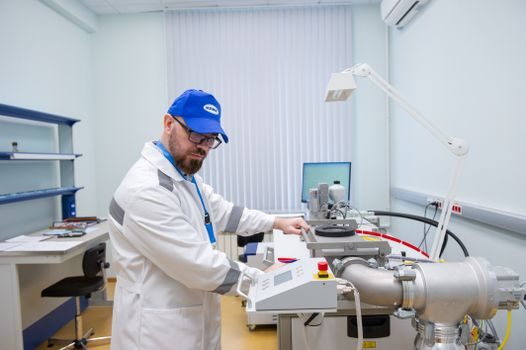
Formation cycling is the longest single control step in Li-ion production: a fresh cell is charged at 0.05-0.2 C to its formation voltage, held, and then cycled 2-5 times at 0.2-0.5 C to grow the SEI layer, with each channel of the formation cabinet logging voltage to ±1 mV and current to ±0.1 % of full scale [S3].
Aging follows for 7-21 days at 25-45 °C, with intermediate OCV measurements and DCIR (DC internal resistance) screening, where cells outside the population's 3-sigma IR envelope are binned for second-grade use. The formation cabinet itself behaves like a large two-hand control interlock in safety logic: the cell cannot be charged unless the cabinet's door interlock, the channel's contactor feedback, and the BMS hardware trip are all HIGH, and the cabinet's mass-flow-controlled N₂ or Ar purge holds O₂ below 1000 ppm during formation to suppress fire risk.
Comparison: Primary vs Rechargeable Lithium Process Control
Primary lithium lines (Li-SOCl₂ and Li-MnO₂) demand less SEI management but tighter gas-handling: SOCl₂ is toxic, so assembly areas are kept under negative pressure with HF-resistant ductwork and H₂ scrubbers, and the production range spans cylindrical cells from ER14250 to ER341245 plus CR123A-class coin formats [S3].
Rechargeable Li-ion and Li-polymer lines are dominated by dry-room dew point, coating grammage, formation, and aging, and the same vendor catalog also lists ultra-pulse capacitors (UPC) and Li-polymer pouches for the security, medical, and transportation & logistics applications [S3]. A Nature Reviews Materials review article on solid-state electrolytes provides a background overview and discusses the state of the field for electrochemical energy storage technologies [S5]. Until that point, the control stack remains dew point + coating grammage + formation cycling + aging OCV/IR, and the same control strategy extends to access control on the dry-room door interlocks to keep the room at a single occupancy class for moisture-load control.
Standards, Traceability, and Failure-Mode Anchors
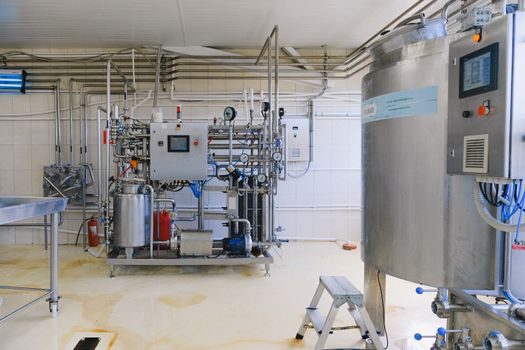
Process instrumentation on a lithium line is anchored to IEC 61508 SIL logic for the safety interlocks (formation cabinet, electrolyte dosing, dry-room door interlocks), ISO 9001 for production data traceability, and the OEM-published test reports for cell-level UN 38.3 transport, IEC 62133, and UL 1642 safety compliance [S3].
Process control failure modes that process engineers see most often: dew-point probe drift, which the chilled-mirror reference catches; coating-die lip contamination, which the XRF feedback catches as a grammage excursion; electrolyte-fill underweight, which the 0.01 g scale catches; and formation-channel contactor failure, which the cabinet's hardware trip catches. The HART/4-20 mA layer on the dry-room and formation cabinet is verified at commissioning with a multifunction process calibrator sourcing voltage, current, and RTD to confirm loop accuracy. Vendor catalogs continue to list UL- and IEC-aligned certificates for the ER Li-SOCl₂ and CR Li-MnO₂ ranges, with the Li-MnO₂ pouch cell being a unique Chinese product class for primary chemistries [S3].
Track the next two signals: solid-state electrolyte scale-up data from the Nature Reviews Materials 2017-02 paper [S5] and the next lithium battery production capacity planning update, which together decide whether the formation/aging step shrinks in cycle count and whether the dry-room dew-point spec tightens below -60 °C for sulfur-based or solid-state electrolyte lines.