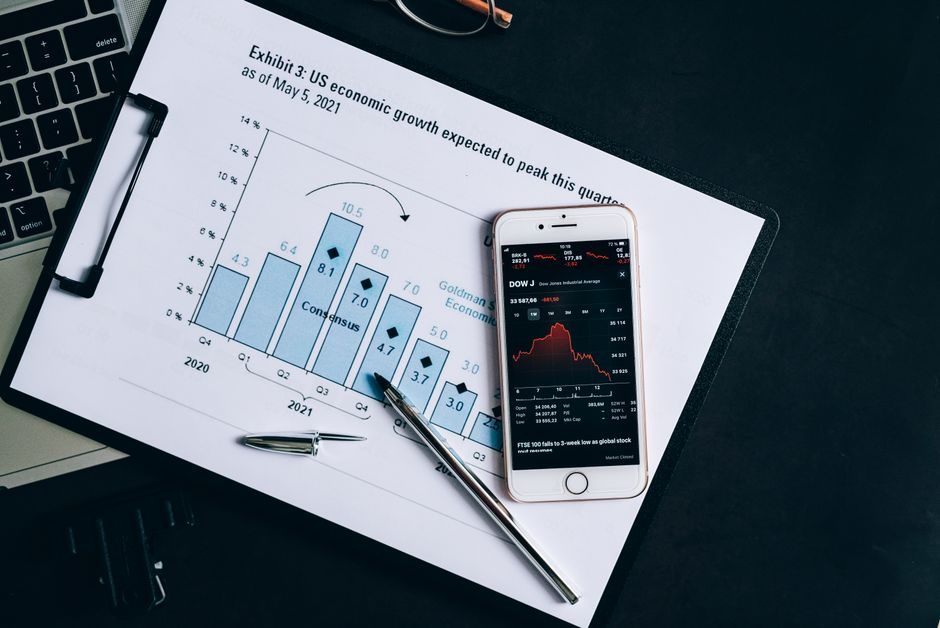
The global lithium-ion battery market is expected to surpass 400 billion U.S. dollars by 2032, compared with a market size of approximately 50–60 billion U.S. dollars in 2023, driven by EV, stationary storage and industrial traction demand [S1].
Adjacent segments are moving in step: the forklift battery market is projected to grow from 5.9 billion USD in 2022 to 11.2 billion USD by 2032 at a 6.5% CAGR [S4], and the mobile battery report suite tracks lithium-ion, lithium-polymer, NiCd and NiMH splits across smartphone and non-smartphone sales channels for a 2026 view [S6]. Lithium hydroxide — the upstream feedstock for nickel-rich NMC cells — is covered in a parallel 2022–2027 forecast [S5].
Headline 2023–2032 sizing for Li-ion packs
The single most-cited number in any 2026 sourcing deck is the trajectory: roughly 50–60 billion USD in 2023 expanding to above 400 billion USD by 2032 [S1].
For a process engineer sizing a plant's UPS or AGV fleet, the practical read is that $/kWh continues to fall while total addressable spend balloons. That combination is exactly why stationary storage, light-mobility and industrial traction are now competing for the same lithium hydroxide feedstock covered in parallel forecasts [S5].
Chemistry split: NMC, LFP, NCA and the lithium-hydroxide link
Cell chemistries split by cathode material carry very different upstream risk profiles. NMC (nickel-manganese-cobalt) and NCA (nickel-cobalt-aluminium) cells require battery-grade lithium hydroxide, while LFP (lithium-iron-phosphate) cells use lithium carbonate and tolerate lower-grade feedstock. Hydroxide plants are the binding constraint on nickel-rich cathode capacity, which is why a parallel 2022–2027 lithium hydroxide forecast [S5] moves in lockstep with high-nickel cathode announcements.
For industrial buyers — forklifts, AGVs, stationary UPS, telecom backup — LFP is now the default because of thermal stability and cycle life. For EV and high-energy-density mobility, NMC still wins on energy density. The mobile-battery report cuts the same cake by sales channel and by smartphone vs non-smartphone, giving a consumer-side view that complements the industrial numbers [S6].
Industrial traction: forklift packs and warehouse electrification
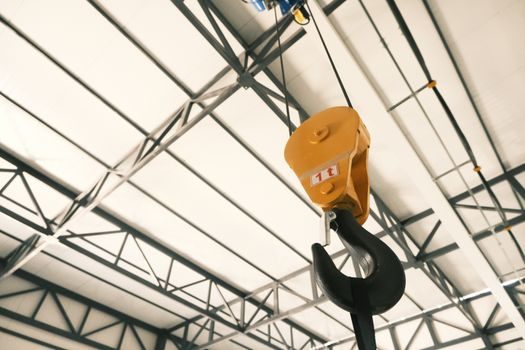
The global forklift battery market was valued at 5.9 billion USD in 2022 and is projected to reach 11.2 billion USD by 2032, growing at a CAGR of 6.5% from 2023 to 2032 [S4]. This is a useful proxy for the entire class-1 to class-3 electric material-handling segment and aligns with the structural shift from lead-acid to Li-ion in distribution-centre fleets.
For a buyer specifying packs for a 30-truck DC, the read-across is direct: lead-acid capex is being displaced by Li-ion on cycle-life grounds, and the same DC is also adding servo-motor and PLC upgrades that increase per-truck peak demand. That lift in truck electrical load is what tips the TCO math toward Li-ion even at a higher sticker.
Mobile and consumer demand: smartphones, non-smartphones, IoT
The mobile battery market is reported across four chemistries (lithium-ion, lithium-polymer, nickel-cadmium, nickel-metal-hydride) and two end-industry splits (smartphone, non-smartphone), with online vs offline sales channel breakdowns for 2026 [S6]. This is the dataset to cite when a buyer needs to size a procurement plan for replaceable handset packs, power-tool batteries, or IoT sensor cells.
For an OEM sourcing manager, the two numbers to watch are unit ASP by chemistry and online-channel share growth; the report quantifies both for 2026, which feeds directly into contract pricing for the next 12–24 months. The non-smartphone slice covers power banks, hotspots, point-of-sale terminals and handheld scanners — a category that grew through 2024–2025 as IoT device counts expanded.
Stationary storage, BESS and the grid-side pull

Stationary battery energy storage systems (BESS) are the third leg of demand alongside EV and industrial traction. LFP dominates this segment because cell cost is more sensitive than energy density at the pack level, and large-format prismatic or square cells scale better than 18650/21700 cylindrical formats for megawatt-hour containers. [S1]
For a substation or a wind-farm spec, the practical gate is the pressure-transmitter and flow-meter instrumentation on the thermal-management loop: cell-level coolant flow, refrigerant pressure drop, and fire-suppression line pressure are the failure modes that drive warranty cost. Sizing these against the BESS nameplate is now part of standard EPC scope.
Sourcing risks: feedstock, offtake and capex
Three risks dominate a 2026 Li-ion procurement plan. First, lithium hydroxide supply concentration — covered in parallel 2022–2027 forecasts [S5] — where spot price has historically swung by factors of 3–5× in 24 months. Second, cell-offtake clauses that lock pricing in USD/kg-of-LCE-equivalent terms but expose buyers to FX. Third, capacity concentration: a handful of cell makers hold the majority of qualified automotive and BESS capacity, so dual-sourcing by cell maker is now standard practice.
For an industrial buyer, the right control levers are chemistry choice (LFP vs NMC), cell format (cylindrical vs prismatic vs pouch), and contract indexation (fixed $/kWh vs LME-linked). These three levers decide whether a 2026 quote is hedgeable.
Decision criteria: which cell for which application

A simplified selection map for 2026: choose LFP prismatic for stationary BESS and most forklift/AGV duty cycles where cycle life and thermal stability outweigh energy density; choose NMC cylindrical (21700 or 46xx) for high-power EV and high-drain power tools; choose NMC pouch for space-constrained consumer electronics and certain drone applications; choose LTO (lithium-titanate) only where sub-10-minute fast-charge and extreme cycle counts override the energy-density penalty. [S2]
Cost ranking runs LFP < LTO < NMC < NCA for the same Ah-throughput on a $/kWh-delivered basis, but the gap is narrowing as cell makers converge on 100 Ah+ large-format formats. Lead-acid remains relevant only for low-duty, low-budget standby applications where weight is not a constraint.
Standards and compliance gates for 2026 procurement
Cells and packs shipped into industrial buyers in 2026 must clear UN 38.3 transport testing, IEC 62133-2 for portable cells, and IEC 62619 for industrial lithium cells. For EV packs, IEC 62660 series and country-specific rules (GB/T 31467 in China, SAE J2464 in the US) apply. For BESS containers, UL 9540 and IEC 62933 remain the dominant installation standards, with NFPA 855 governing siting in the US. [S3]
For hazardous-area deployments — chemical plants, refineries, mining — cell and pack design must also respect the relevant IEC 60079 family for intrinsic safety, even though most industrial Li-ion packs are installed in non-classified spaces. Sourcing teams should require cell-level UN 38.3 reports and pack-level IEC 62619 summaries as table-stakes deliverables.
What to track between now and end-2026
Three signals are worth monitoring for the second half of 2026: lithium hydroxide spot vs contract spread (a widening spread indicates spot-market tightness, [S5]); cell-offtake announcements from the top three Asian cell makers, which set the de-facto price ceiling for the whole market [S1]; and forklift battery ASP movement, which is the cleanest read on industrial Li-ion adoption [S4]. A 10% shift in any of these on a year-on-year basis will reset 2027 budgets.
For related coverage, see Roller Conveyor Price 2026: Roller Diameter, Load Class, and Frame Steel Drive the Quote.